The Graffiti Kid Who Became a Graphic Designer
Christian McMahon reverse paints old cartoons and old slang onto mirrors, around a full-time design job. A film about graffiti, 40 kids every Tuesday, and why nothing has to be perfect.
“I sort of love the chaos.”
Hand in a lot of pies
Christian McMahon goes by Works by Christian. Ask what that covers and the answer runs long: artist, graphic designer, illustrator. “I feel like I’ve got my hand in so many pies sometimes,” Christian told me, “where it’s hard to put a finger on it.”
That’s about ten years of graphic design, with the art never stopping alongside it. The two worlds keep running into each other. “It’s definitely colliding,” Christian said, “but I sort of love the chaos.”
Upside down
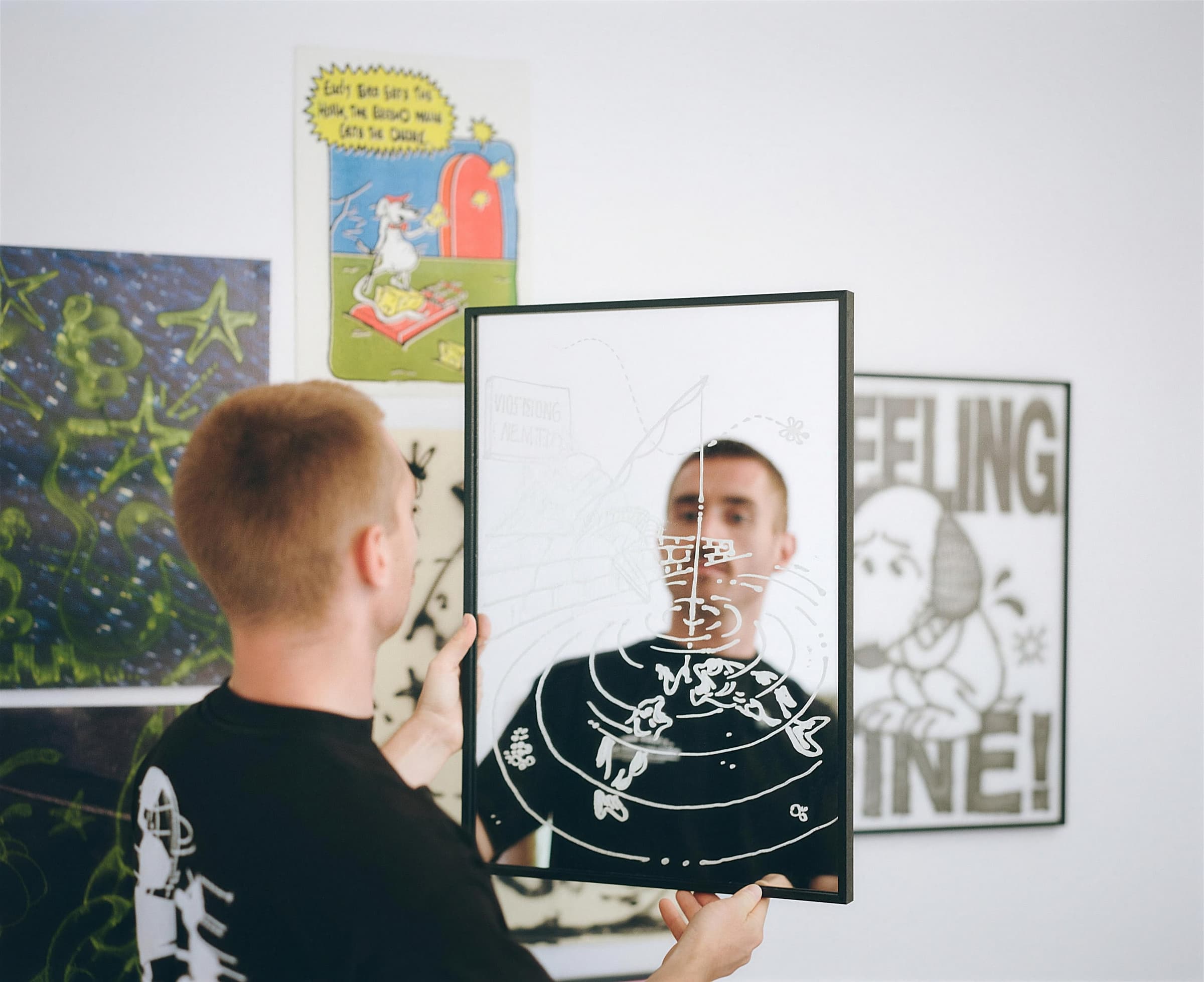
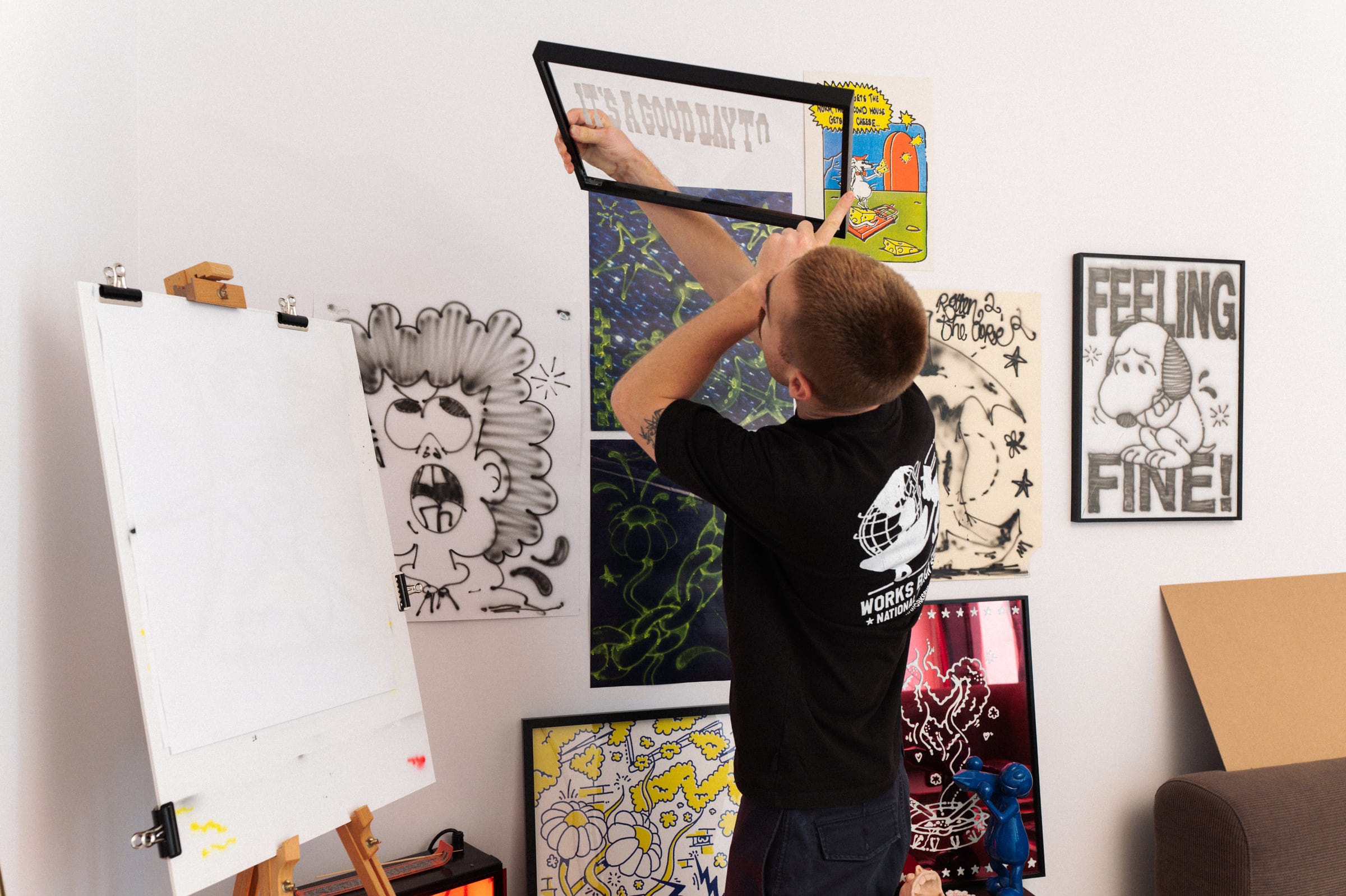
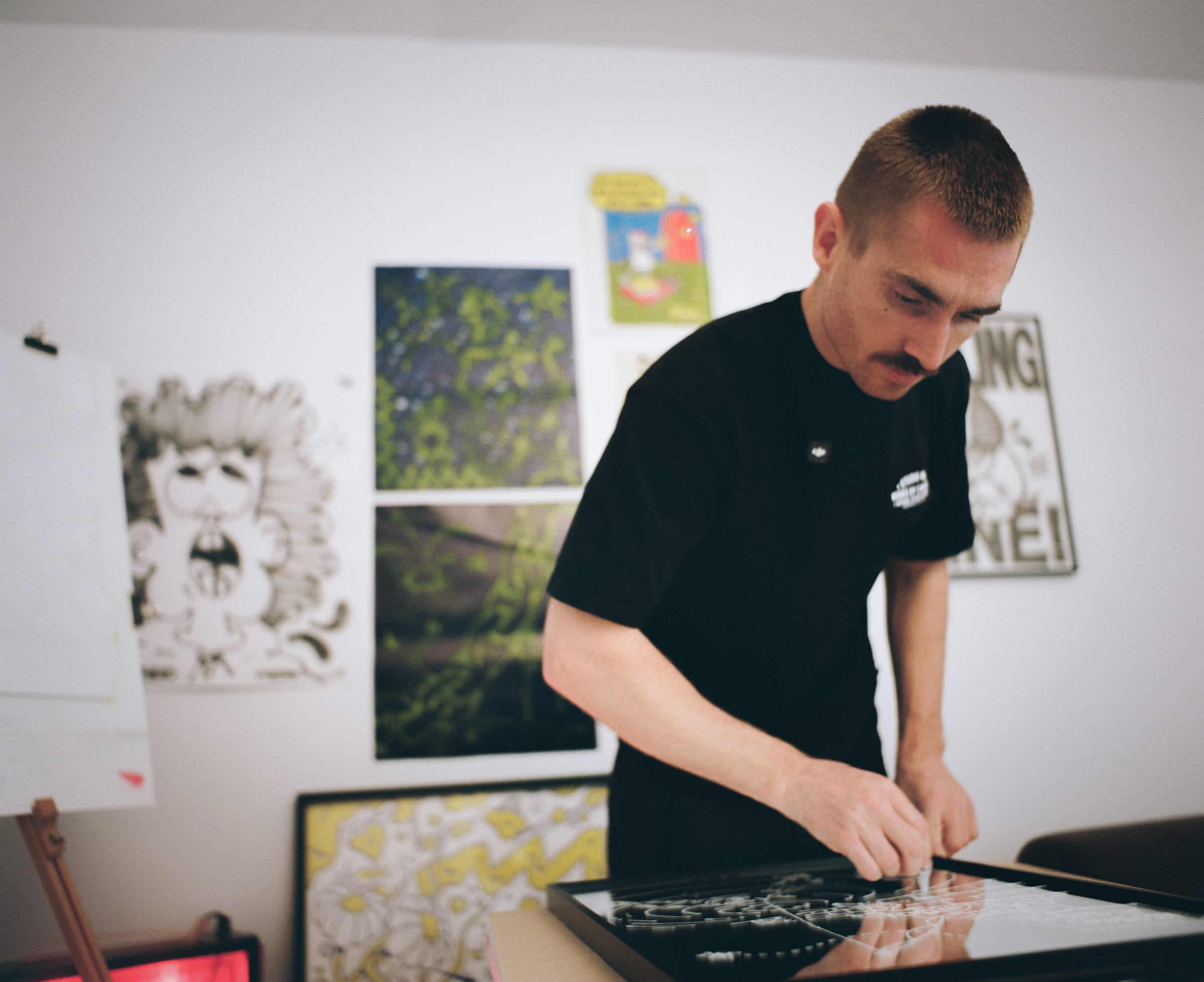
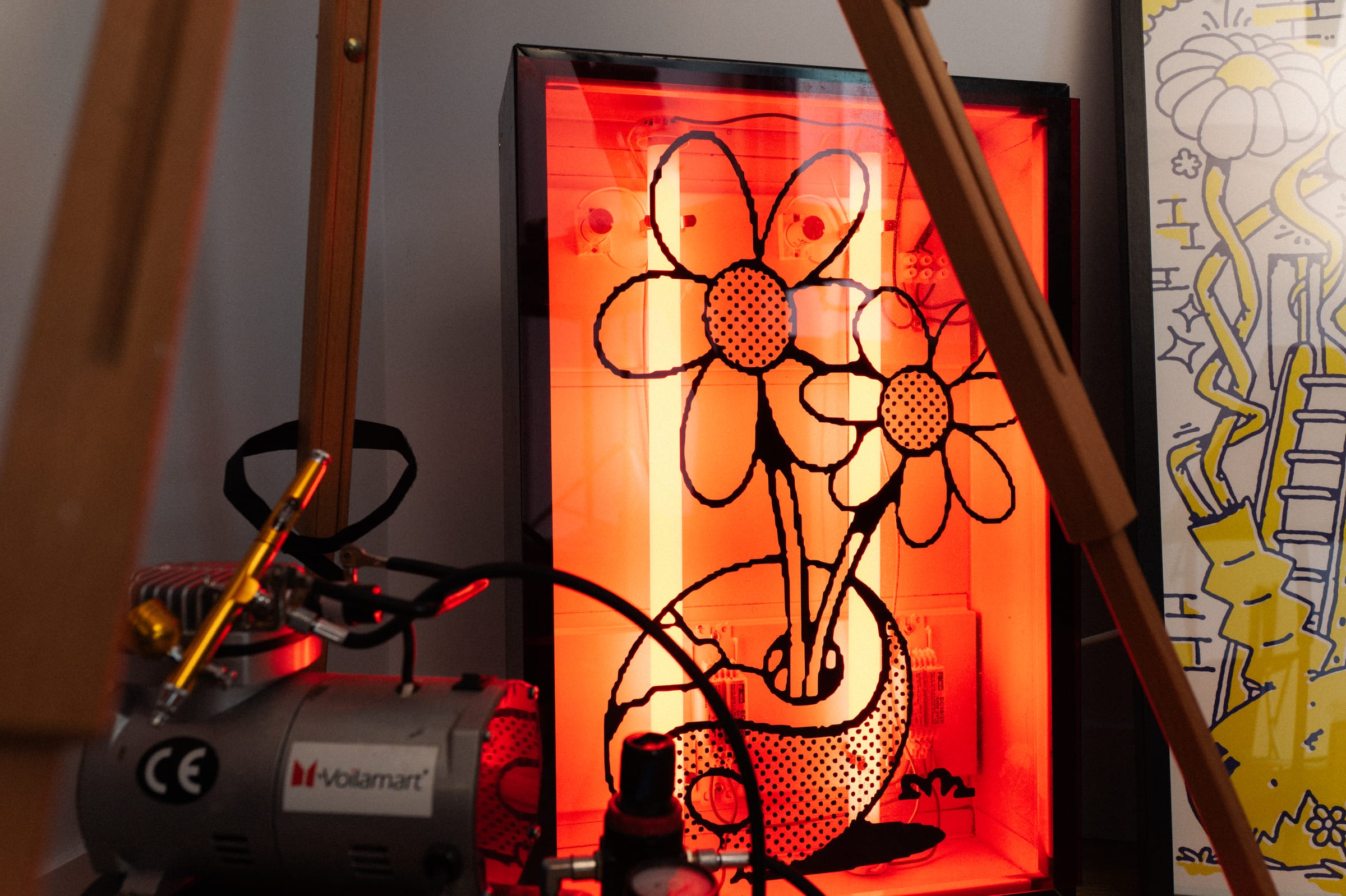
The mirrors start on a screen. Everything is designed on an iPad or laptop and printed out, then painted in reverse onto the inside of the glass, in acrylic thinned down with a flow medium. Once the paint is on, the mirror goes in behind it.
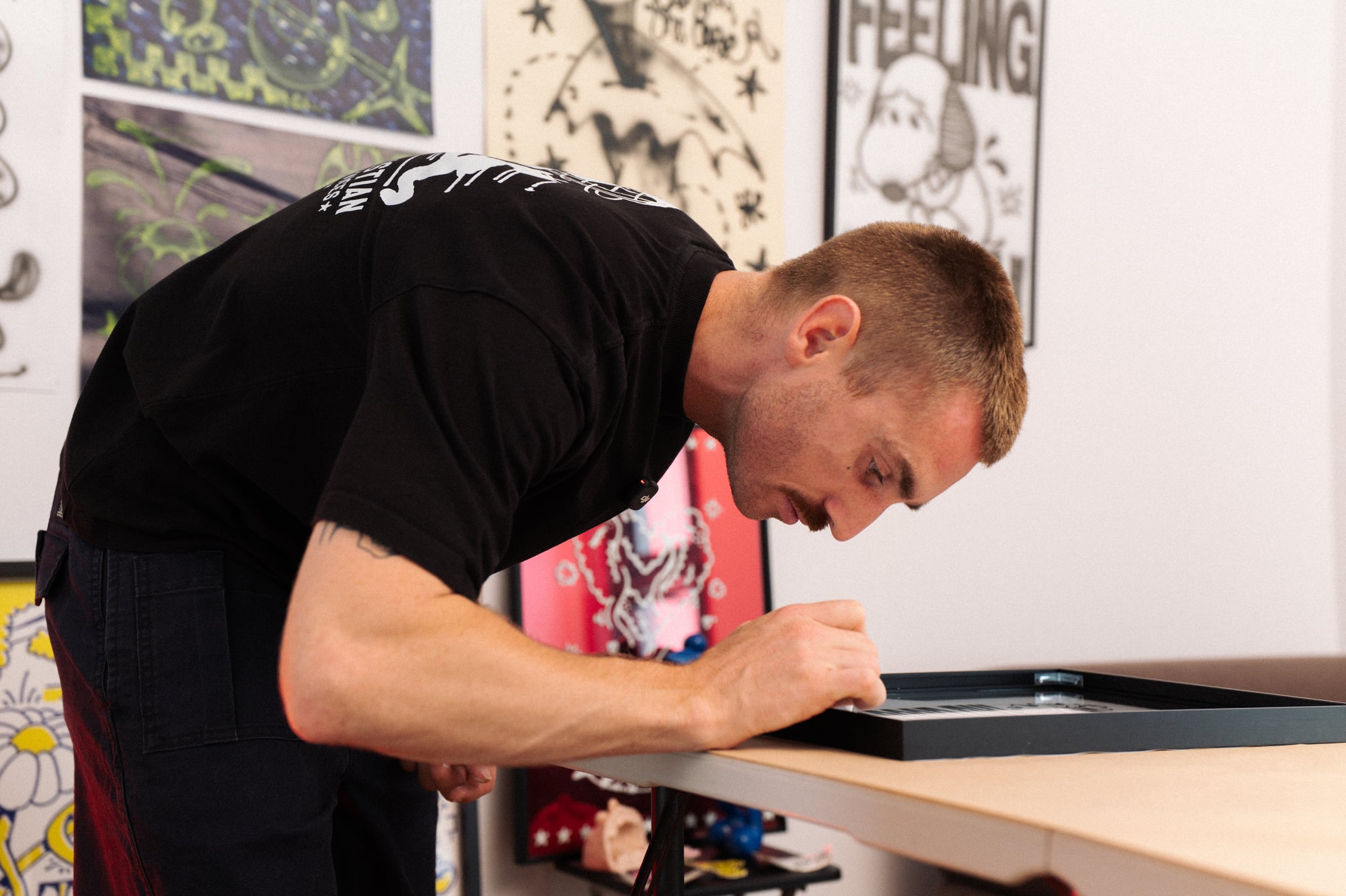
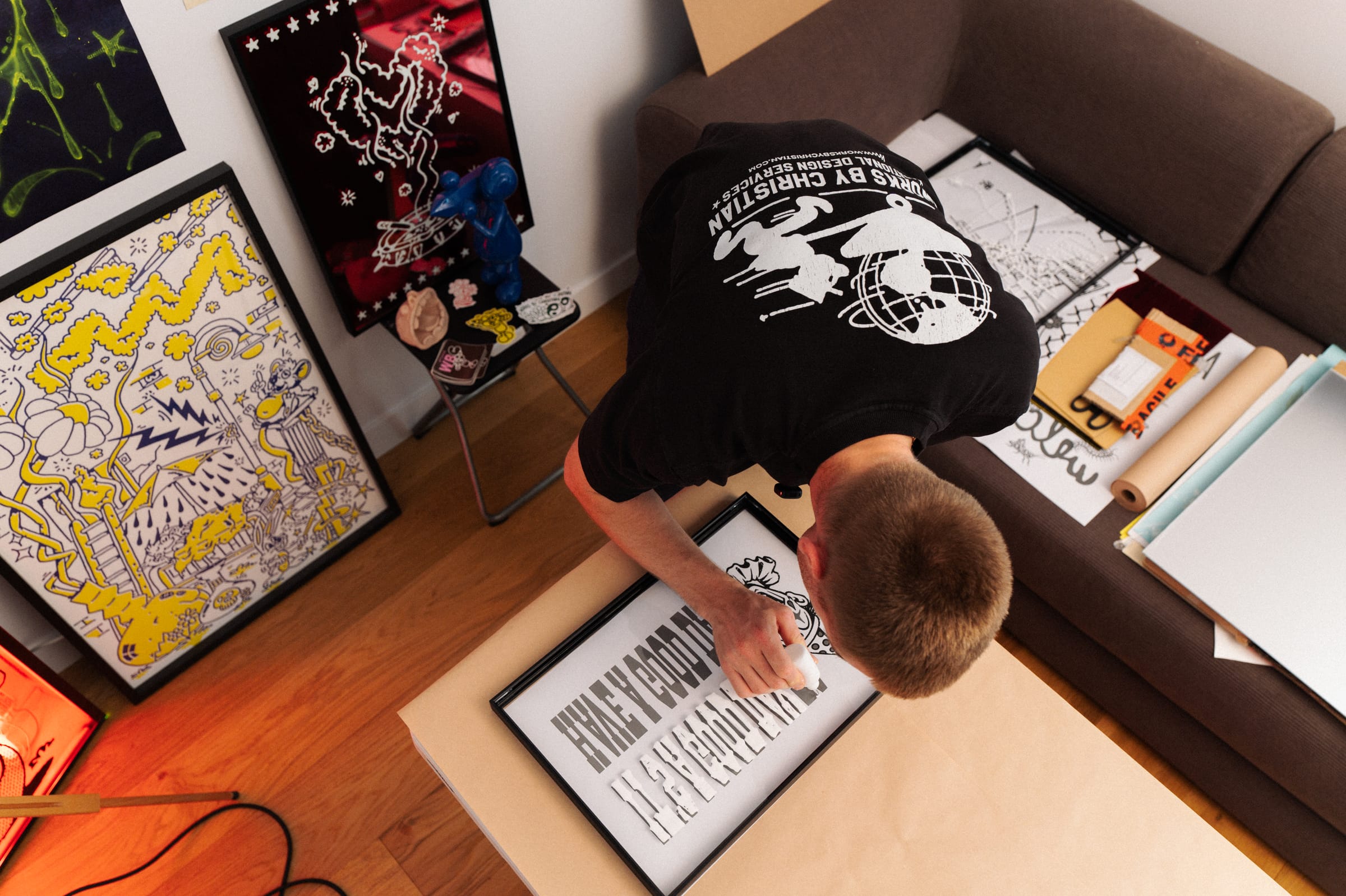
The computer gets the design, but not the finish. “You can’t really beat the hand touch,” Christian said. “On a computer everything can be so pristine.” Some techniques have to be made by hand, because they’re “hard to imitate.”
“In this world of AI, I feel like we’re now going to be moving back into a world where you can see the connection to the artwork.”
Something you live with
The mirrors came out of festival work. Christian was painting a lot of festivals, and the crew doing the stage design had CNC and laser cutters. In their workshop, they showed off a mirrored acrylic they could cut. “I’ve always had a fascination with mirrors,” Christian said. That was two or three years ago, and “it hasn’t gotten old for me.”
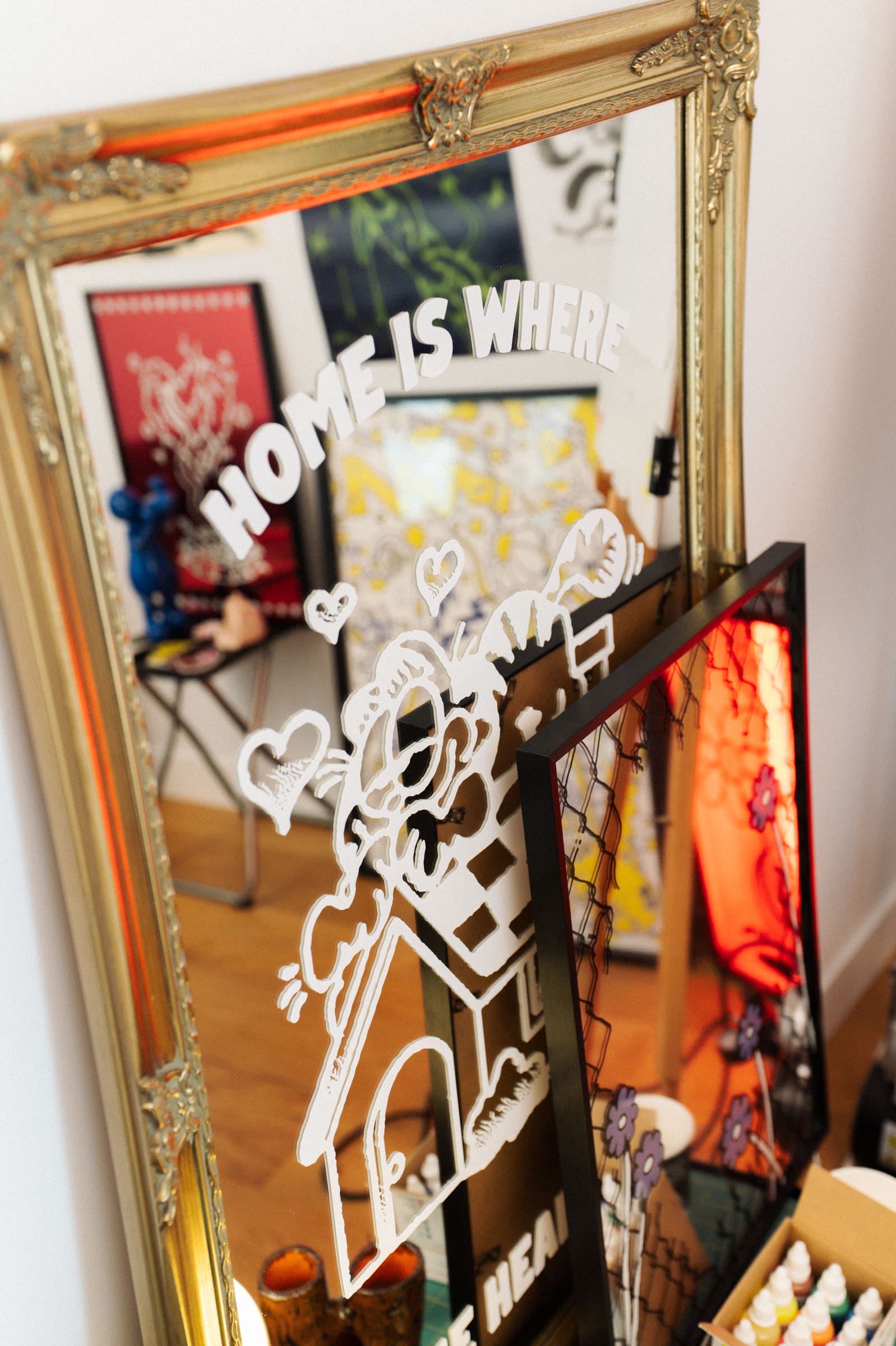
Design changed how Christian thinks about where art ends up. A mirror isn’t just something on a wall. “If it’s going to be a mirror, it can also influence the space around it,” Christian said. The same goes for the new ceramics: “Maybe there’s a corner in someone’s home, and I’m like, how can I make a sculpture that can sit in that corner?”
A good day to have a good day
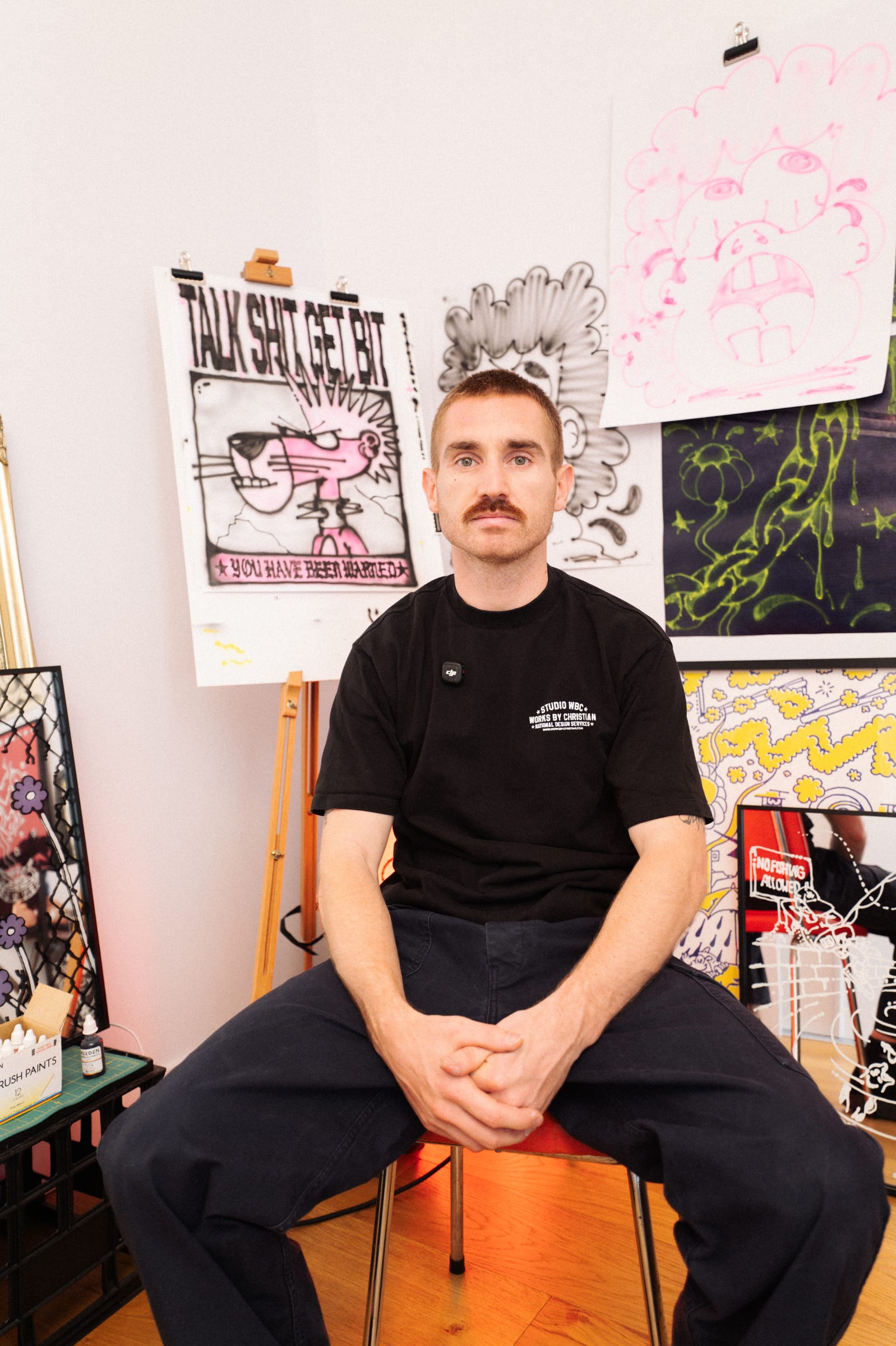
A lot of the pieces carry a phrase. It’s a good day to have a good day. You can’t win if you don’t play. All creatures are welcome. Talk shit, get bit: you’ve been warned. “I’m sort of always almost doing these internal affirmations,” Christian said, “something that just lives subconsciously in your house.”
That started at a call centre. Christian was into graffiti young and wanted to get into illustration, so “every single shift I’m just sitting there drawing, trying to get better.” The idea was to find a phrase or an idiom, an old piece of slang or a song lyric, and draw it: “something that people are going to sort of instantly recognise and understand.”
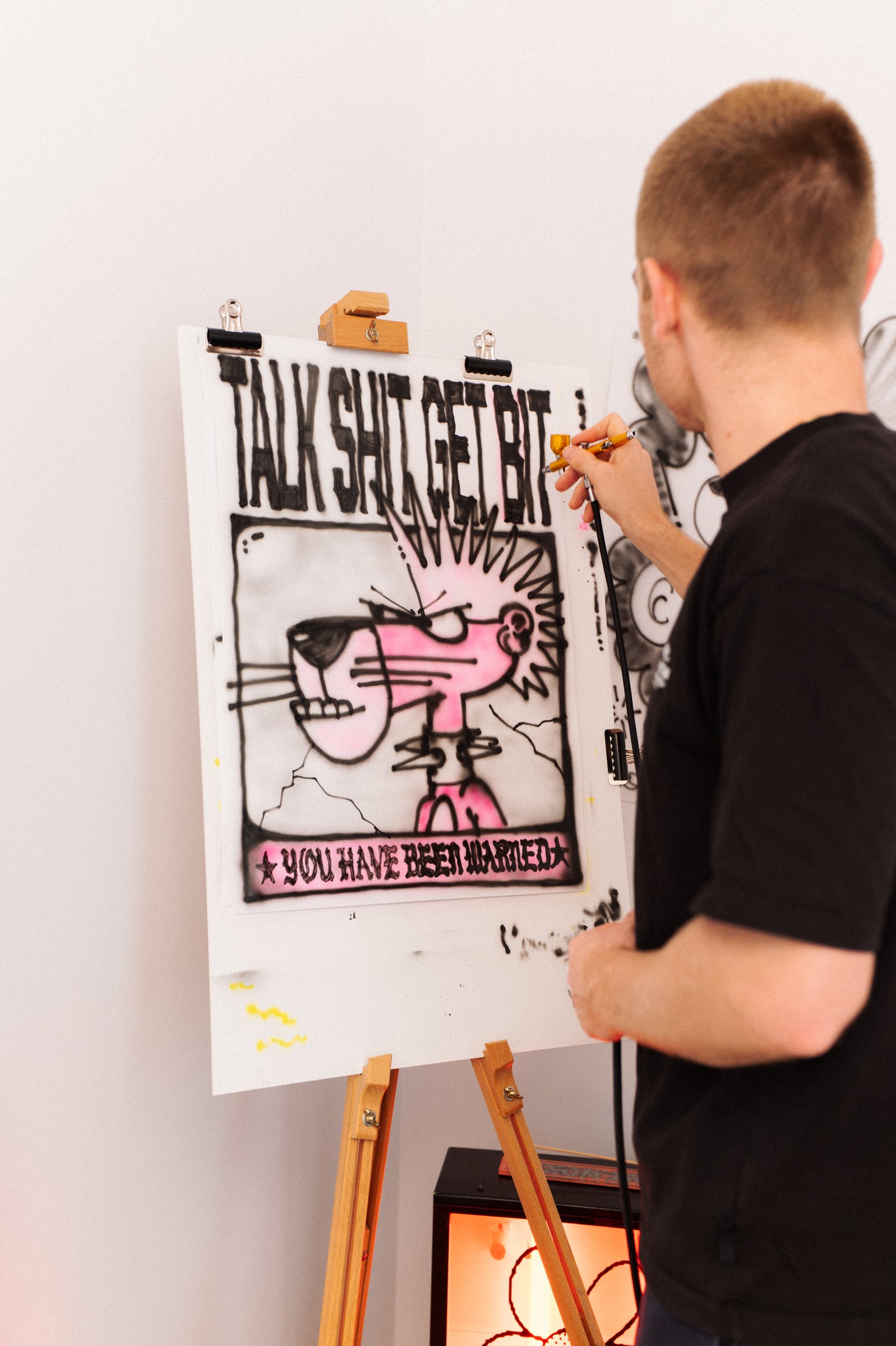
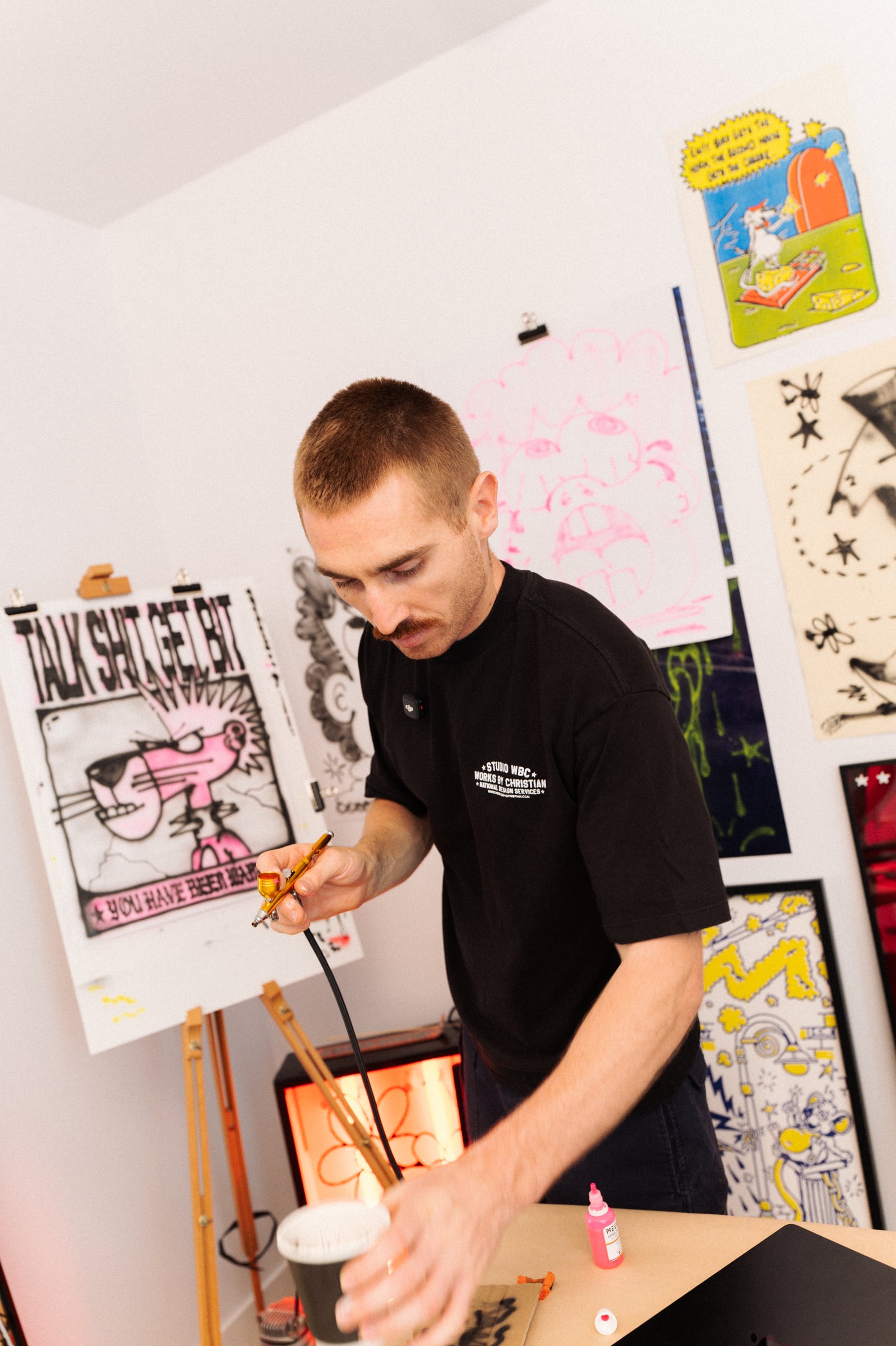
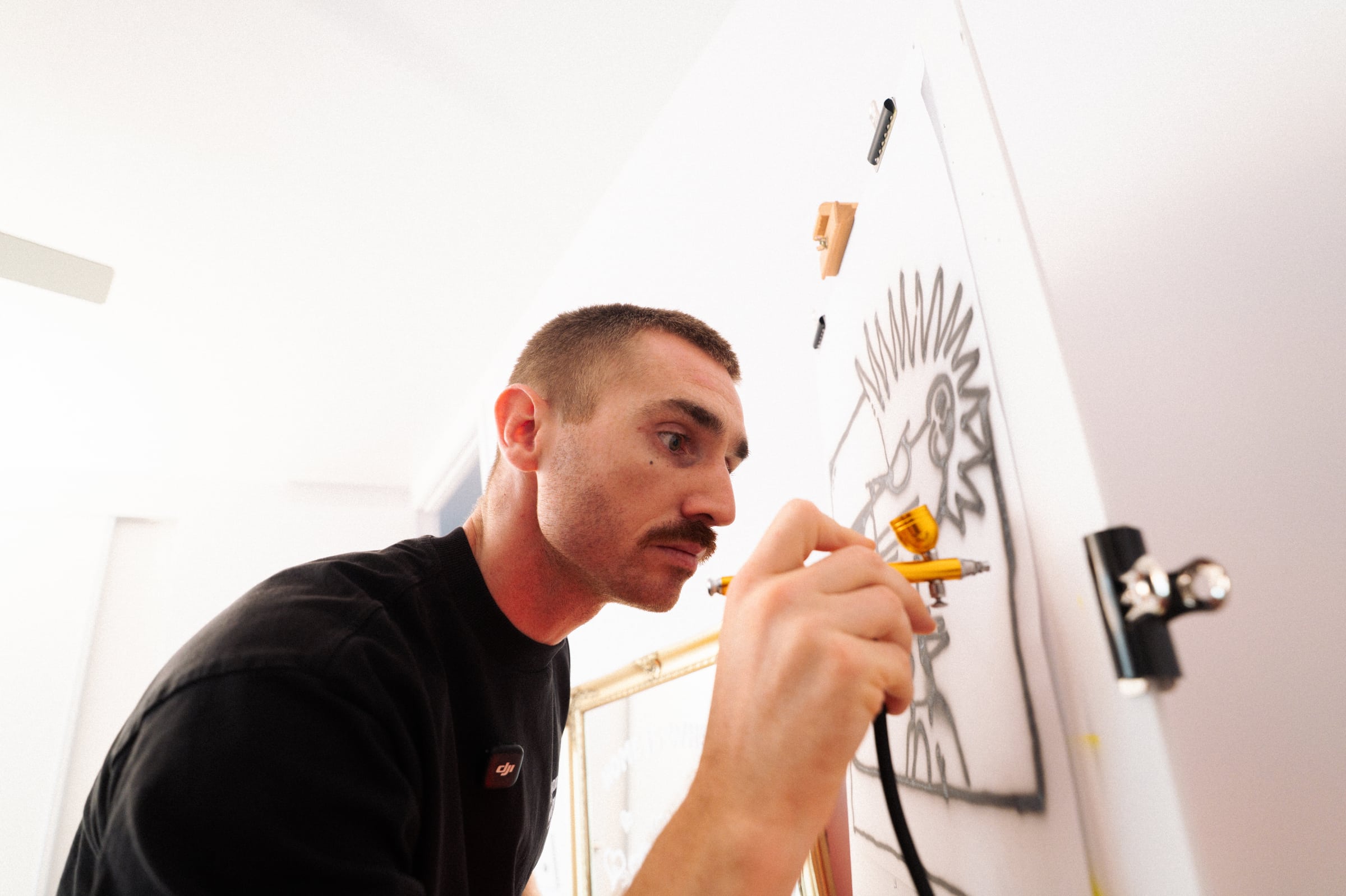
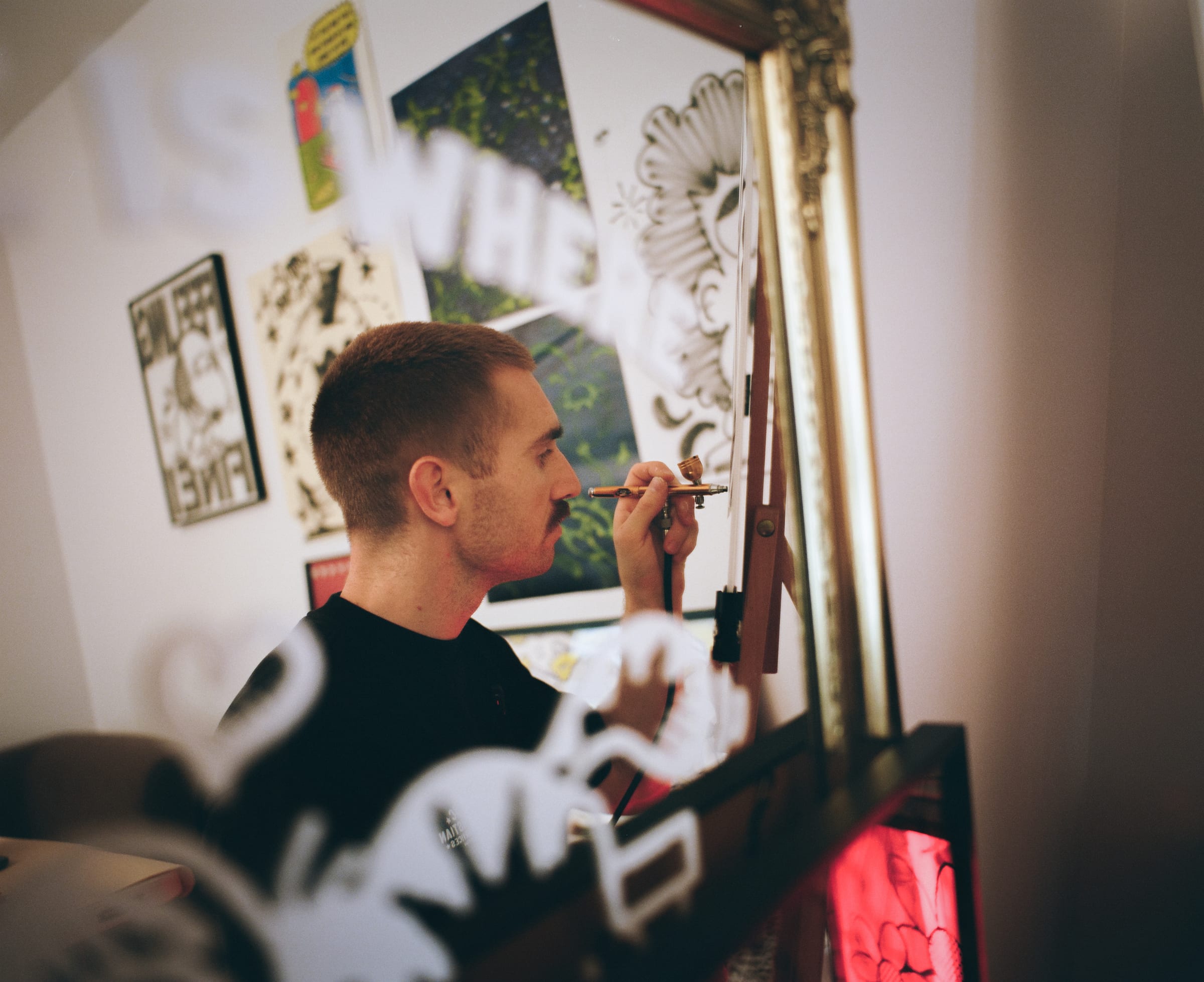
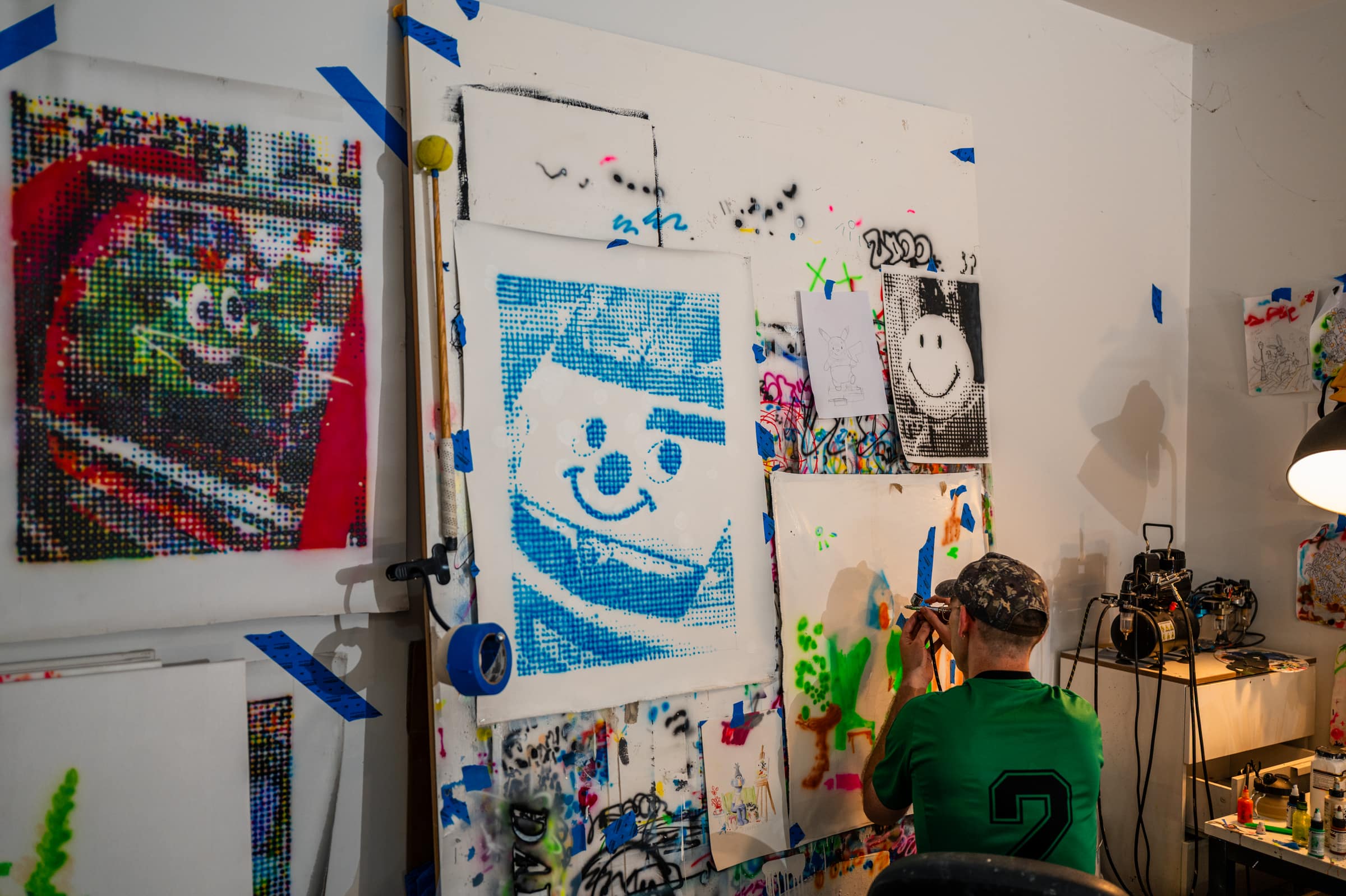
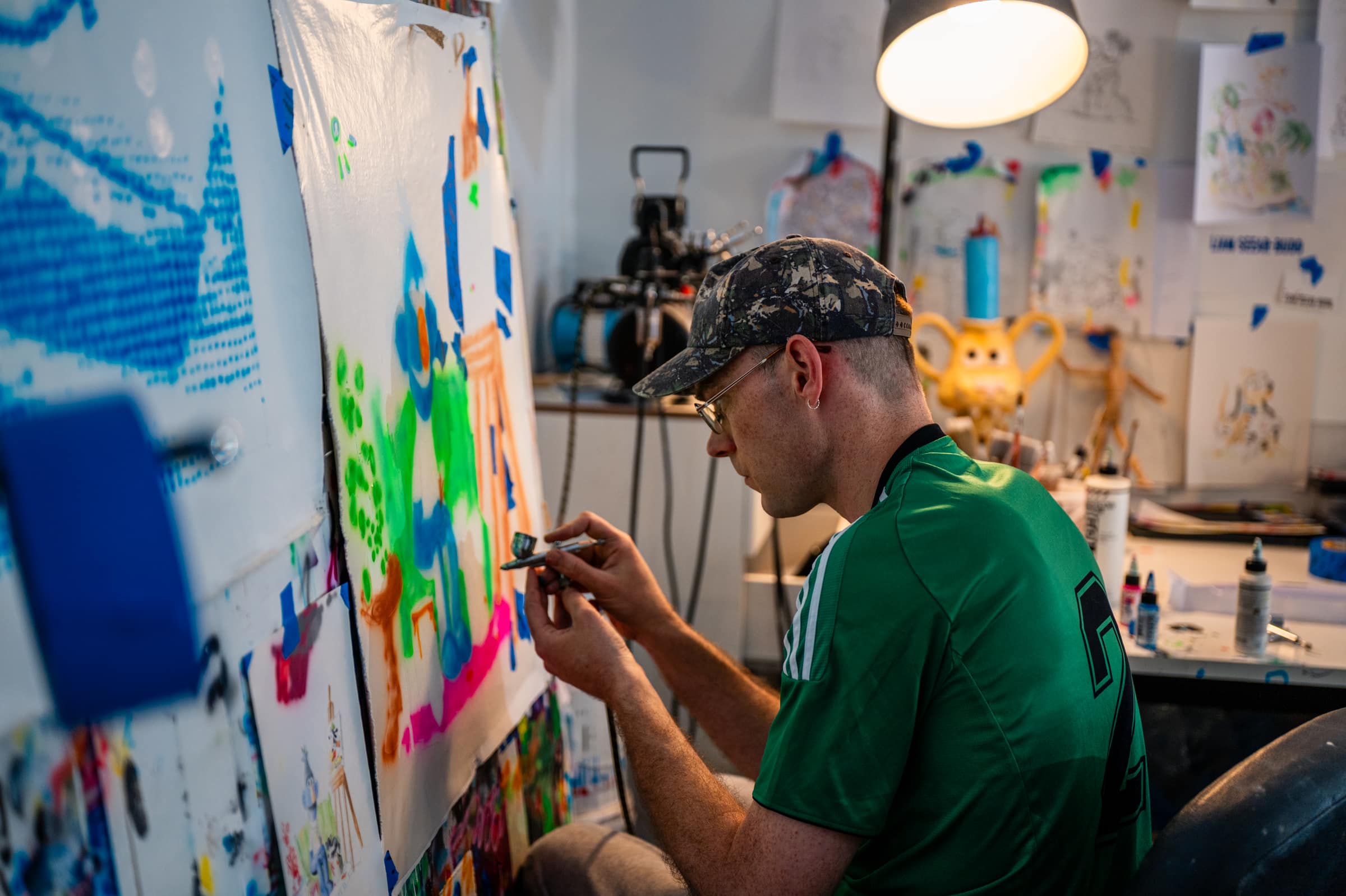
The airbrush goes back to the graffiti too. “It links back to being able to use a spray can,” Christian said, “but obviously you can use it indoors without it stinking out the whole house.” Airbrushing onto the mirrors themselves is the next step. “For now, this is where we’re at.”
Saturday mornings
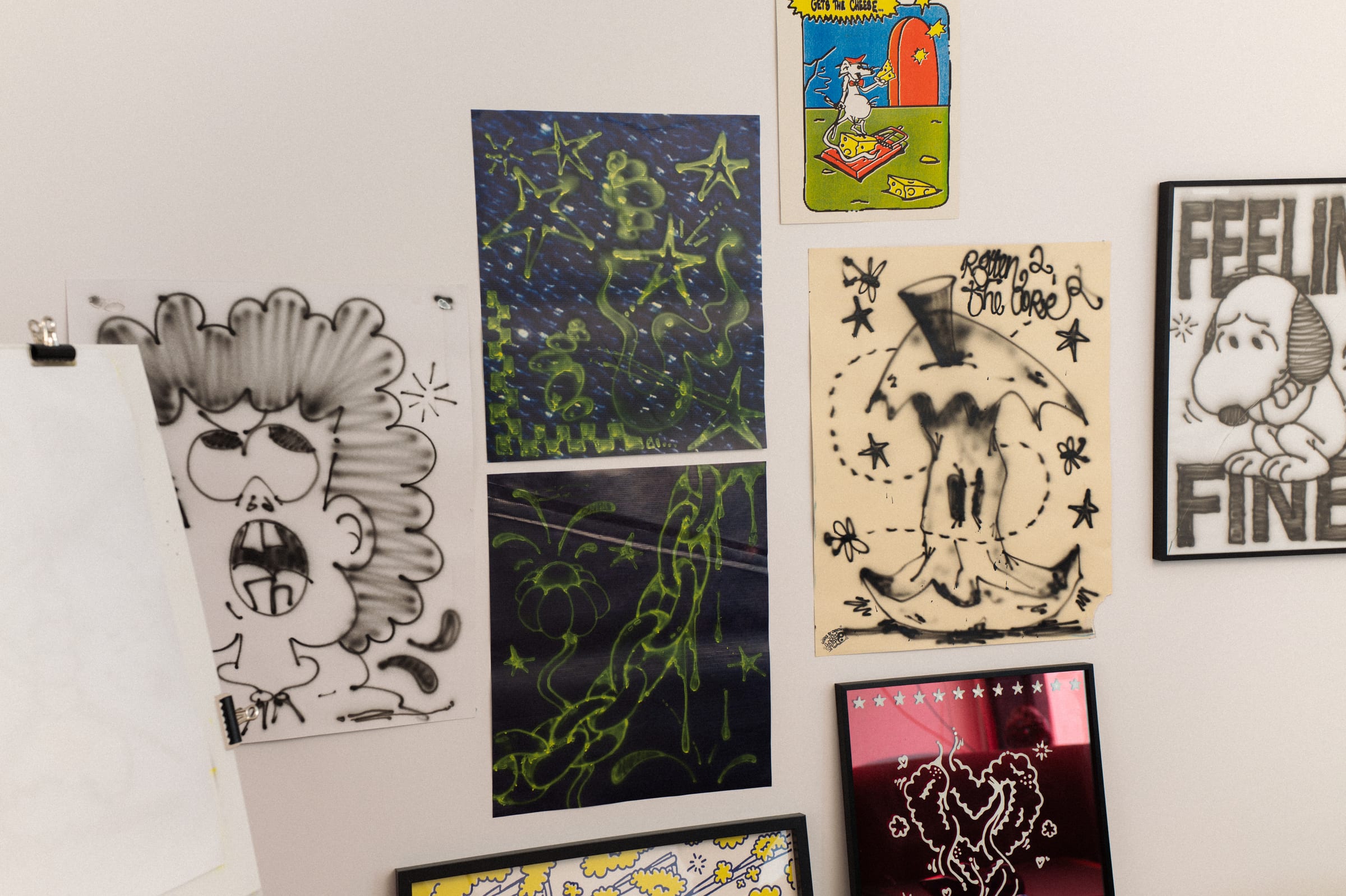
The cartoons are the ones that were on TV on Saturday mornings. Snoopy is on the wall. A Garfield is hiding behind it. “It’s this inner child within me that still has all these connections,” Christian said. The work lands quickly with people, “even if they don’t necessarily know me.”
Christian also loves bootlegging things: “finding something, turning it into my own,” then taking it off the screen and onto a mirror, where it gets “a whole new life.” Having done some frame by frame animation, Christian has a lot of respect for how the old cartoons were made. The work is partly a way of “paying respect back to those things, and them not being lost in time.”
Every Tuesday
Christian studied design, went to study in Copenhagen, and came home to an offer from ICHPIG, a clothing brand from the snowboarding days. Three years as their main designer followed. At the same time there were murals, and the murals led somewhere Christian never planned.
A friend sent through an expression of interest from the City of Yarra for a mural in Edinburgh Gardens. “I don’t reckon I’m good enough,” Christian remembers thinking. The application went in anyway, and got the gig. The man running it, Chris, became a mentor, and asked whether Christian wanted to run workshops in the graffiti diversion program at the youth centre every Tuesday.
That went on for about ten years. At its peak there were 40 kids there every Tuesday, painting the back wall. “I’m not trying to offer them hectic guidance,” Christian said, “but I’m just sort of maybe planting some seeds every now and then.” The message was simple: “You can also be a ratbag. You can do whatever you want to do. But there’s another side to it. You can still have compassion.”
It took years to see what it meant. One kid who was clearly struggling at the start was running the workshops with them eight years later. “It’s like wow,” Christian said, “this has actually had a huge impact on these people’s lives.”
“You can go head to head with people, or you’re going to go further together.”
Four weeks
Christian likes being somewhere that means sink or swim. There have been two artist residencies, the first in Bali and the second in Mexico City, and the Mexico trip started with no plan, on purpose. “I got over there,” Christian said, “and I’m like, I’ve got four weeks to make something. I don’t really know what I want to make.”
At home a lot of the work is glass, and glass doesn’t travel. So in Mexico it was acetate, pressed up against the pieces to get the same effect. What came out of it was a lesson in “trying to push something, but then also knowing when to stop something.” And at the end: “I’m actually pretty proud of what I’ve come out with.”
Perfectly imperfect
Back in Melbourne after a trip to Indonesia, Christian had a solo show called Perfectly Imperfect. On the day the pieces for it were made, the first one came out of the box, went on the table, and broke. It’s still in the studio, glued back together, as a reminder.
“All the things that I make, there’s obviously a little bit of the hand touch to it,” Christian said. “There’s something that’s going wrong. But I sort of love that.”
Creation over consumption
The hard part is time. Design is the job now, so the art has to fit around it. Christian recently did a 30 day Instagram challenge as a push out of the comfort zone, and came out the other side burnt out, and asking, “Is this even me?” The answer was simple: “I just need to create the things that I want to create.”
Does it ever feel like selling out to pay rent? “I struggle with that every day,” Christian said. “But at the same time, we’ve got to be living.” The day job is what makes the rest possible. “Having the stability allows me to have the experiments on the side.”
When something needs making, the trick is a hard deadline. “That’s when the pressure sort of creates diamonds for me.”
“To be honest, nothing is really perfect. And nothing has to be perfect. I think that’s sort of the beauty of it.”
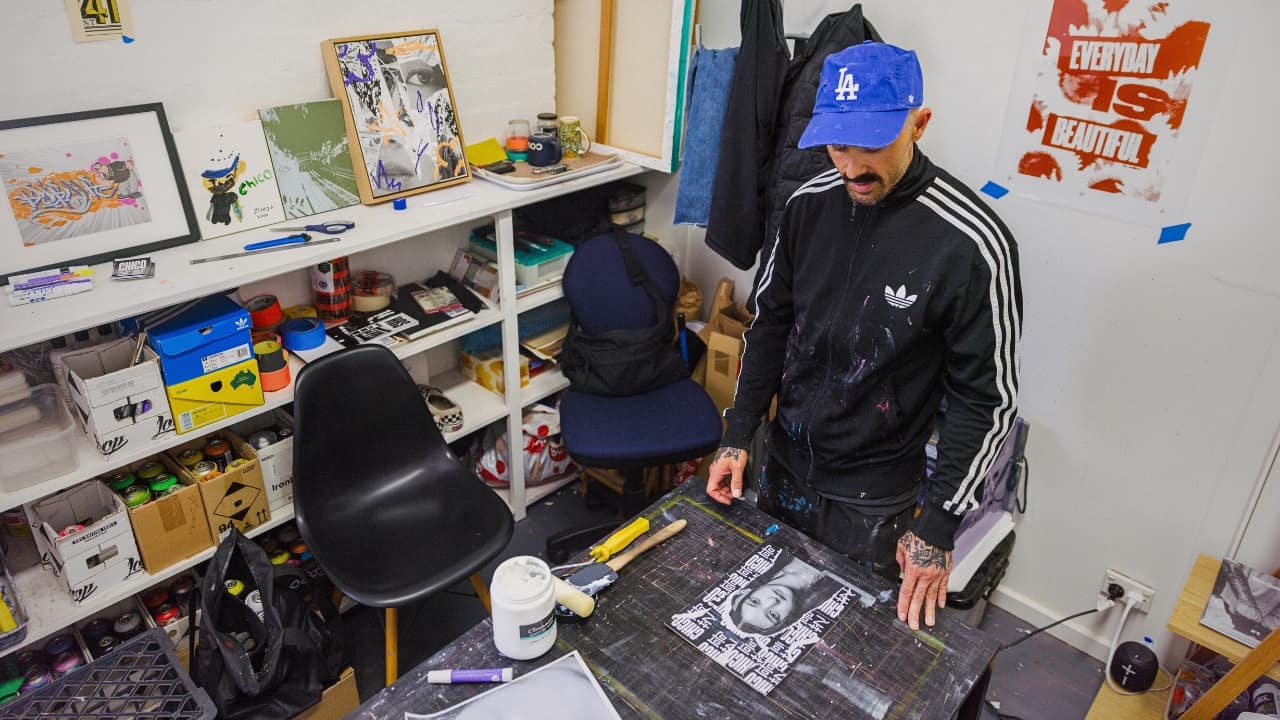
From the shoot
Related
Why a Melbourne painter can't stop painting cartoons
Bright, loud, airbrushed cartoons, and the seven-year-old world underneath them.
Inside the Colourful World of Painter Liam Seear-Budd
Saturday morning cartoons, a day job, and the seven-year-old he’s holding on to.
He drew Victoria's most stolen car 1,000 times
Three and a half years teaching art in youth justice, then a thousand Holden Commodores in six textas.
The Collage Artist Who Nearly Died at 36
Ripped paper, cut letters and a second chance.