He drew Victoria's most stolen car 1,000 times
Painter Christopher Myles Henderson spent three and a half years teaching art inside Victoria's youth justice centres. His show, Allegedly, is what he carried back out.
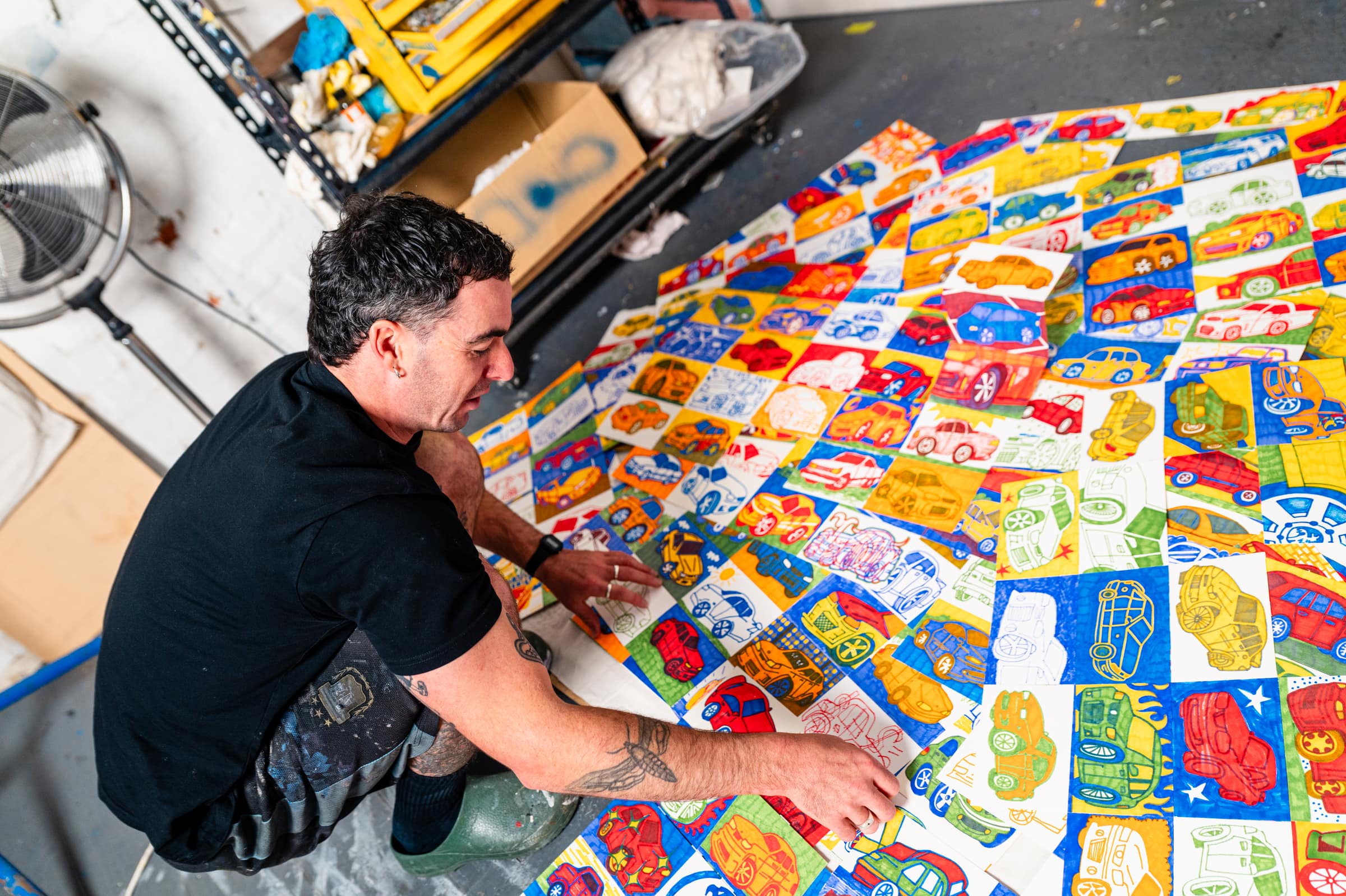
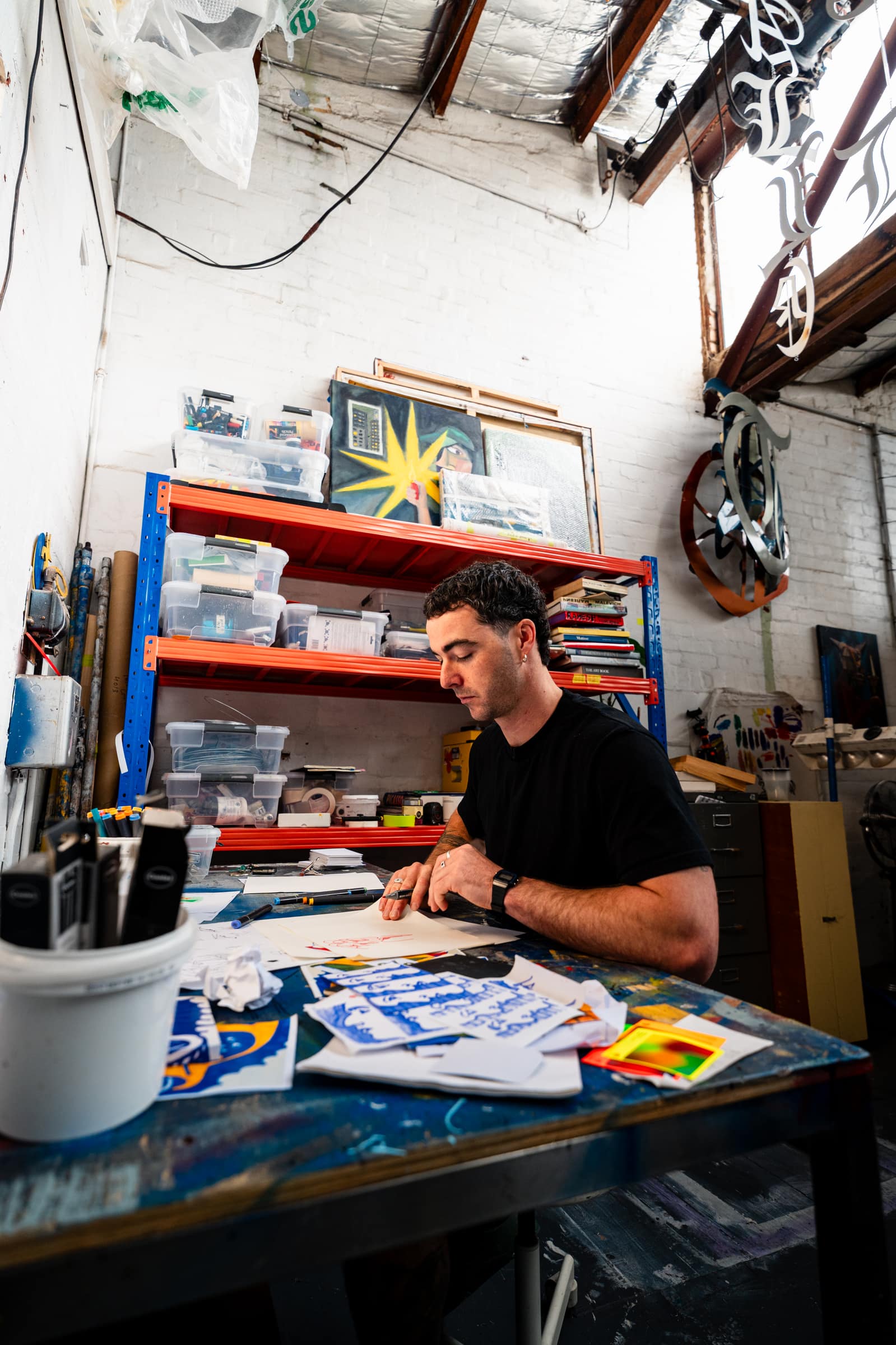
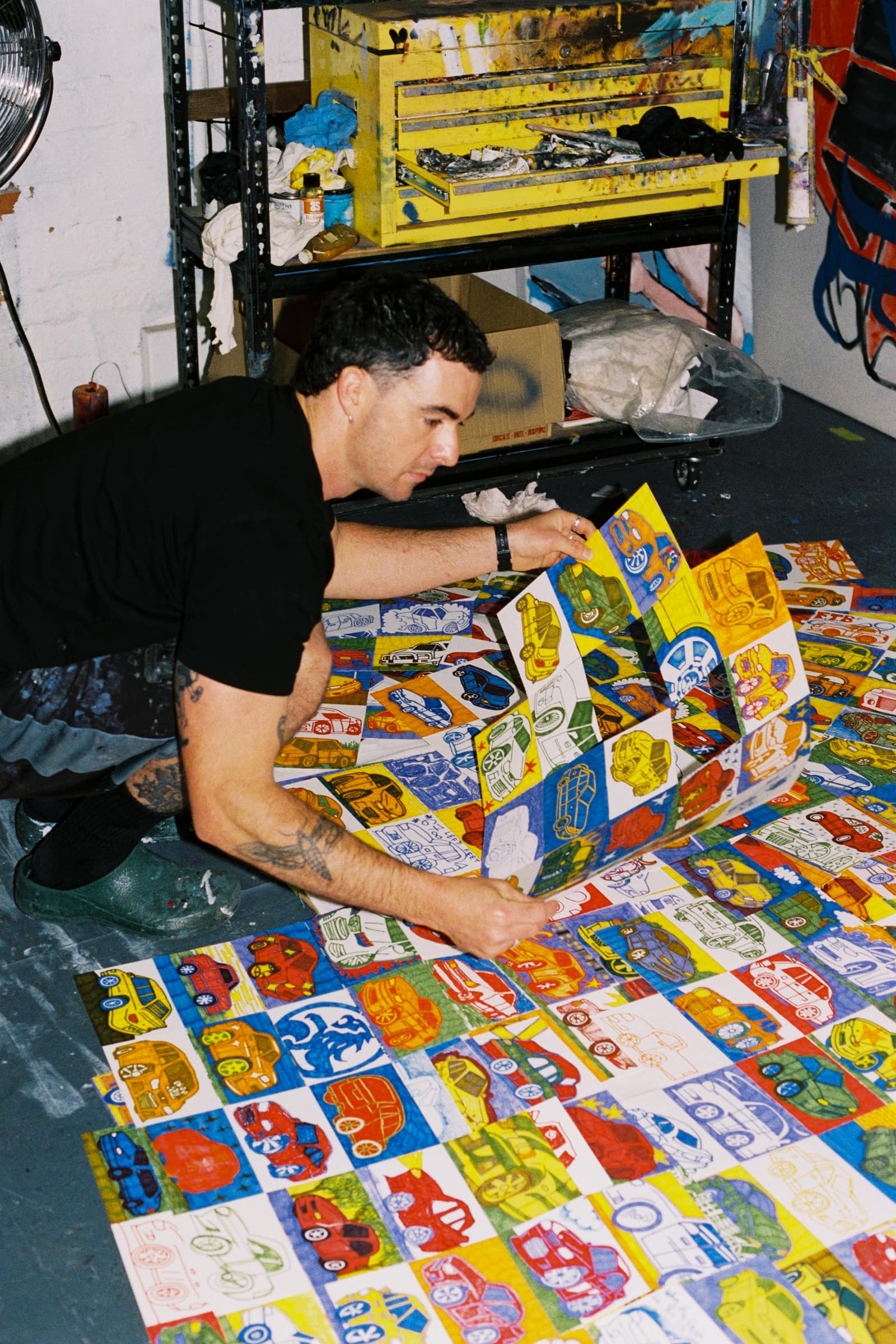
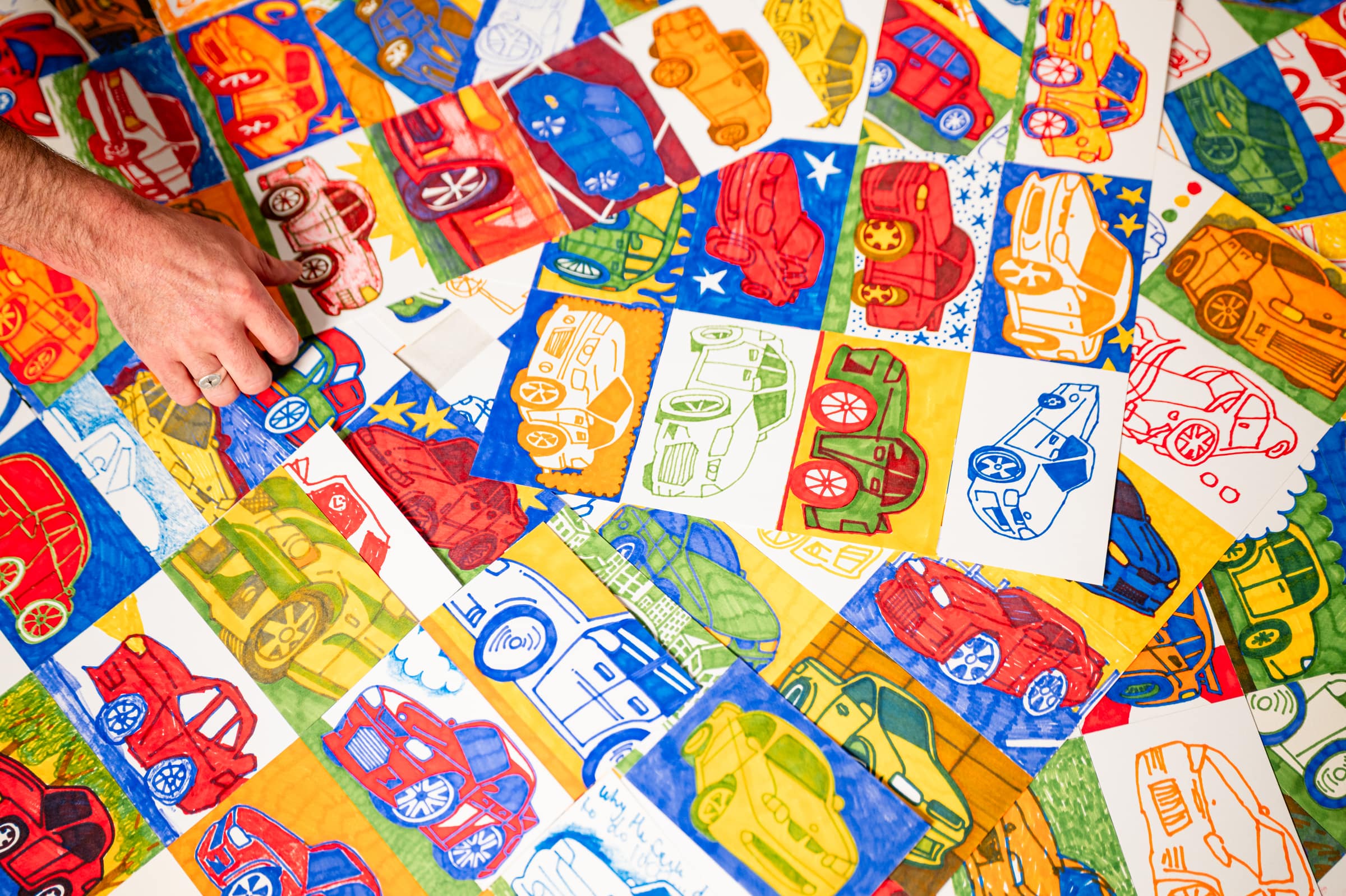
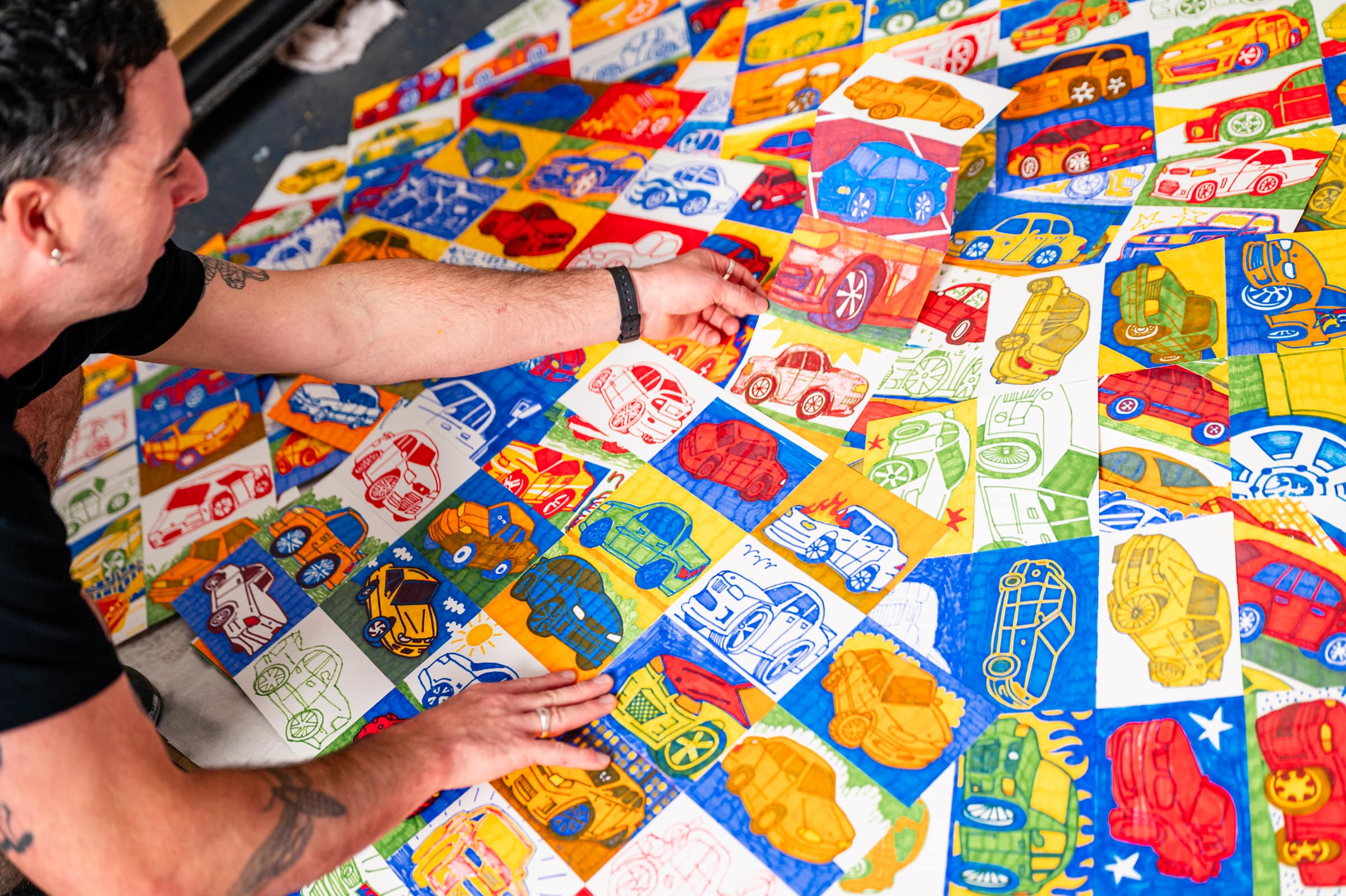
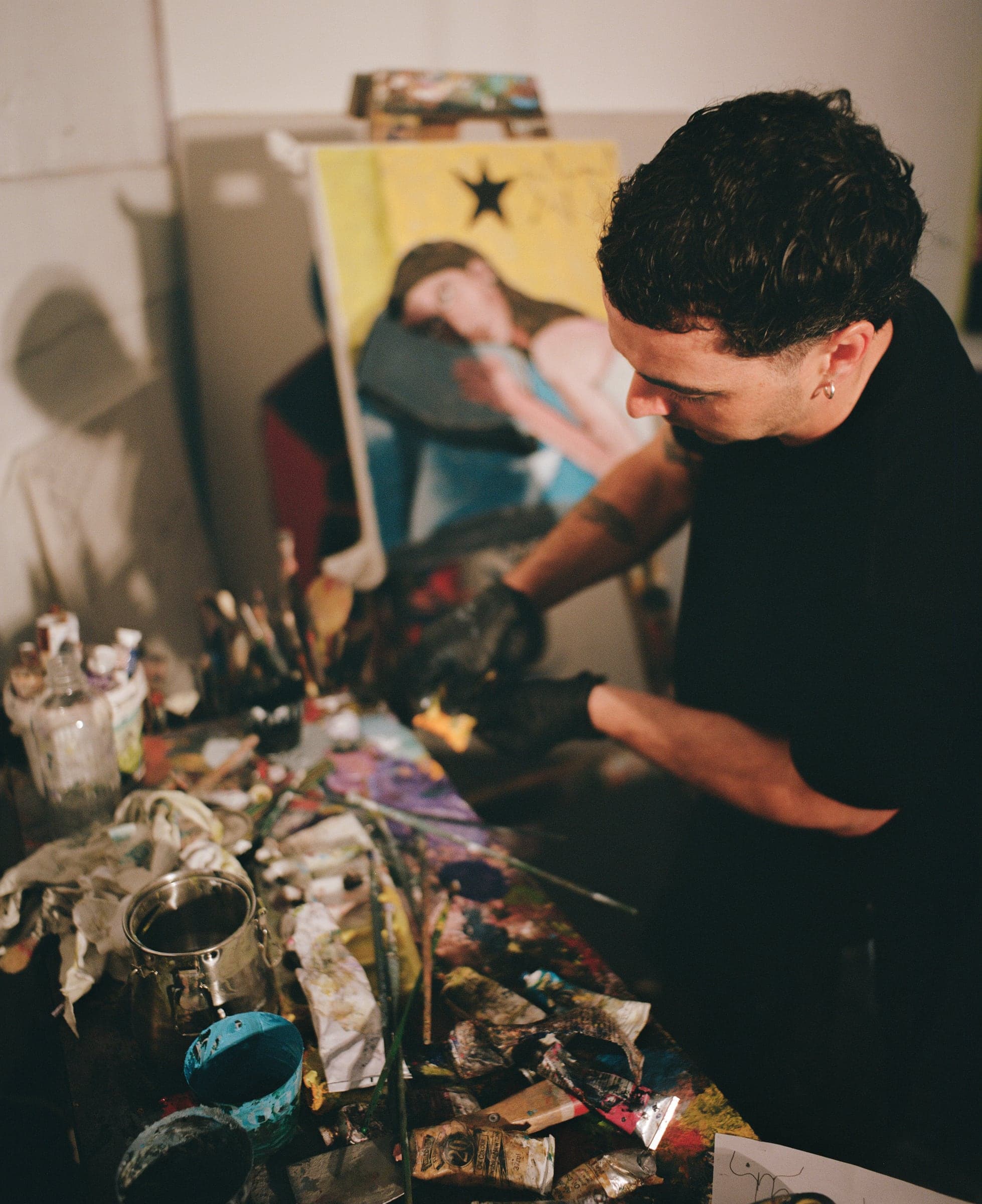
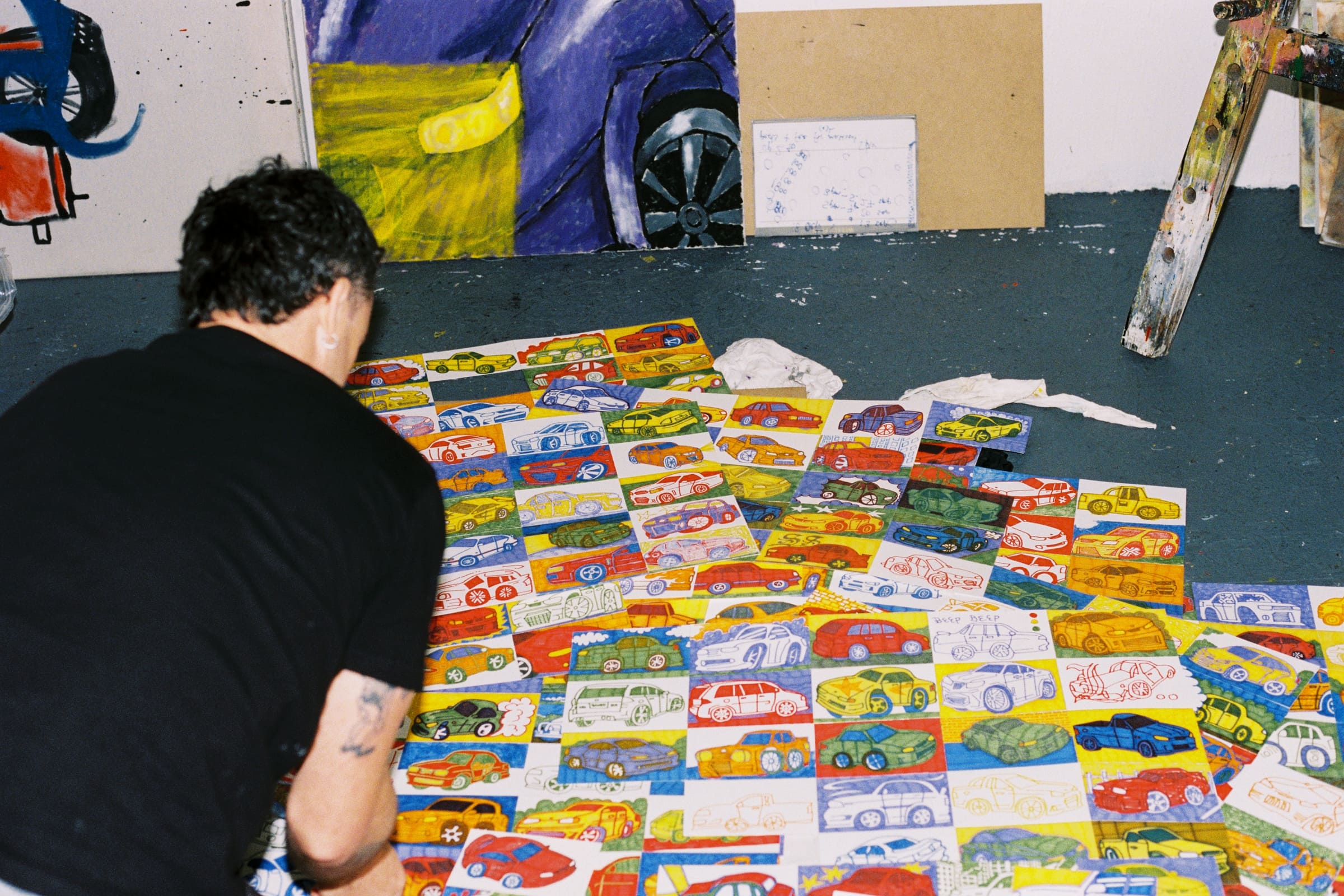
The drawings cover most of the studio floor. Holden Commodores, one after another, in red, blue and yellow texta, each on its own sheet of paper, each one signed. There are a thousand of them. Christopher Myles Henderson kneels in the middle of it all, shuffling sheets, and laughs at the idea that anyone would do this on purpose.
He did. It took him most of a year, a sore hand, and a set of rules borrowed from a room most people will never see. The reasons go back a long way, to a country kid who couldn't stop drawing and couldn't stop looking at the parts of the world nobody talks about.
Outlaws and parallel worlds
Chris grew up in country Victoria, near Wangaratta. His earliest memory of making art is sitting with his Nana, a landscape painter, copying a bearded dragon out of a National Geographic book. His mum was unwell for long stretches of his childhood, so he spent a lot of time with his grandparents, and drawing became the thing he always did.
Some of the images that stuck came from strange places. His aunt and uncle ran the McDonald's at Glenrowan, the town where Ned Kelly made his last stand, and on the walls hung a set of odd paintings he'd stare at every visit. It wasn't until he was 21, learning about Sidney Nolan and visiting Heide, that he realised they'd been prints of Nolan's Kelly series. "It was these weird, quirky eyes," he remembers. For years he painted Ned Kelly characters and outlaws himself, half Robin Hood, half the kind of man he didn't see around him.
Because the country, he says, didn't leave much room. "There is such a cookie-cutter way of being a man in the rural area," he says, and he never fit it. "There's a lane and you're not in it, and it feels very isolating and weird."
He also remembers the hour-long school bus ride into Wangaratta, past houses every kid knew were selling drugs. He'd stare at the windows, trying to see in. What fascinated him then still does: the sense of "this parallel world that exists at the exact same time" as everything else, running on its own rules, mostly ignored.
The BMX years
School was hard. He was dyslexic but didn't know it yet, so he covered by mucking up and drawing in his books instead of writing essays. "I guess I was kind of forced into doing art," he says. Looking back, he thinks being praised for a good drawing was one of the first times he felt worth something.
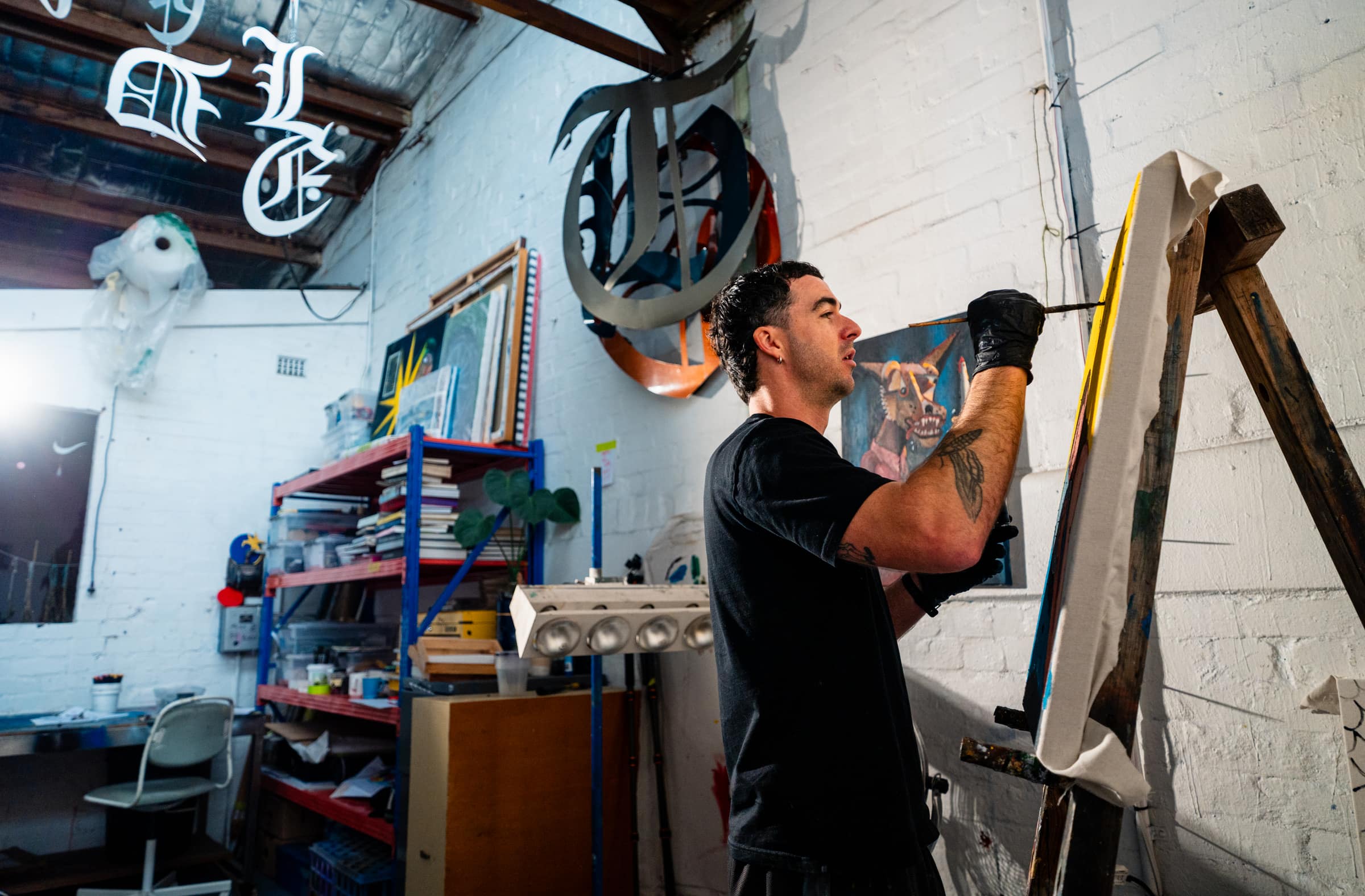
What he really wanted was to ride BMX. "I honestly thought I was going to be a professional BMX rider," he says. He rode through school, dropped out in year 12, and kept riding until a torn ACL at 21 stopped him cold. Stuck at home with nothing to do, he taught himself to paint with ink, chasing the idea of becoming a tattooist, and in those months remembered how much he loved to draw. A move to Melbourne, and housemates who went to art openings all the time, did the rest.
Riding and painting, he says, aren't that different. Both lock you in. When painting goes well, time stops: "six hours pass and you haven't eaten food." Even now, a full-time artist with a show behind him, he isn't sure he's arrived. "Honestly feels like I'm faking it all the time," he says. But he can't stop.
Inside
For three and a half years, Chris taught art inside Victoria's youth justice centres, across Malmsbury, Cherry Creek and Parkville. Getting the boys to pick up a pen was the hard part. So he'd draw one of them as a cartoon, behind the wheel of a car, and slide it across the table. They'd laugh, pick up a pen, and before long they were drawing on each other's shirts.
“When you're doing art, it's like a little hack into opening up and talking.”
The boys were guarded, he says, careful about what they let anyone know. But at the drawing table the stories came out, some of them deeply traumatic. "For the bits that they've even told me, it definitely weighs on my mind sometimes." As a kid he'd stayed up with his mum watching crime shows every Thursday night. Hearing it firsthand was different. "It's not at all like on TV."
He talks about sweet, funny kids who grew up in circumstances most of us never face, and "a group of kids that are completely misunderstood." When the job ended, he missed them. He knew he wanted to make a body of work about them, without glorifying any of it.
Six textas
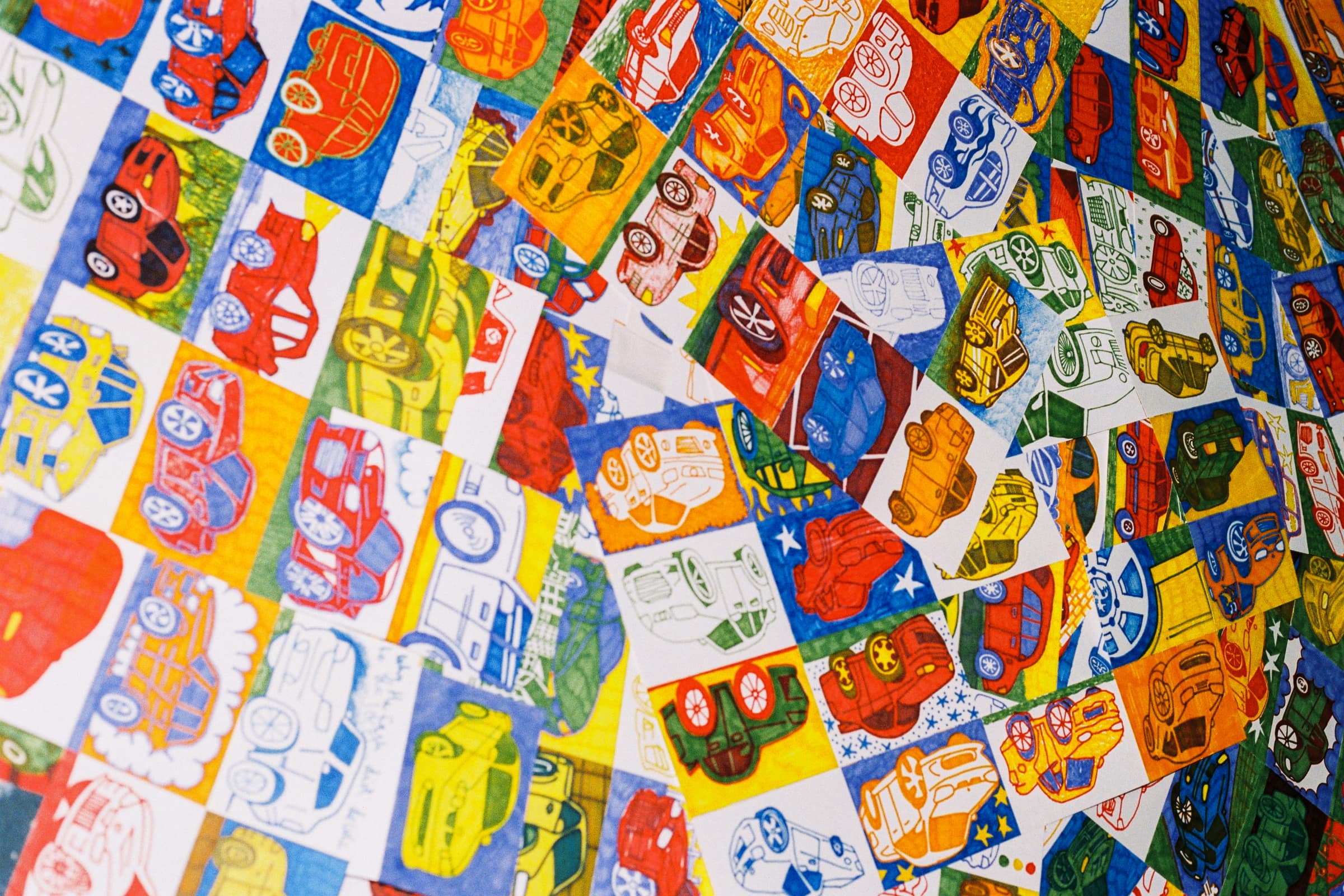
Many of the boys he taught were there for stealing cars, and the car stolen most in Victoria is the Holden Commodore. So that became the subject. But Chris also wanted the work to be made the way the boys make art inside.
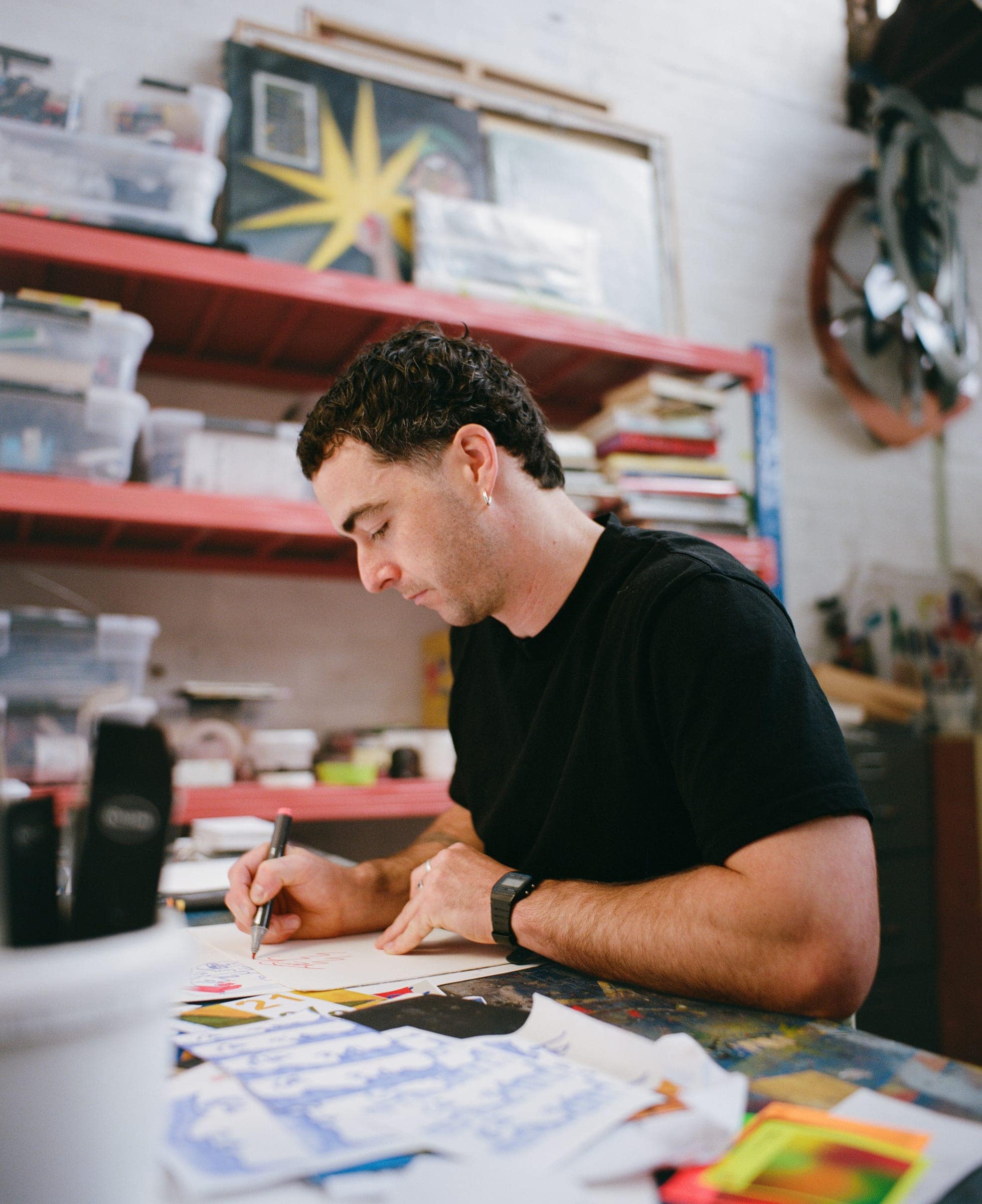
Before youth justice, he'd always thought of textas as crude. Then they were the only thing he could take in, and he fell for them. He loves the way they bleed. "Every time you rest the pen, the ink kind of dumps on the paper and you can see where you're resting and when you're confident," he says. "It's all there."
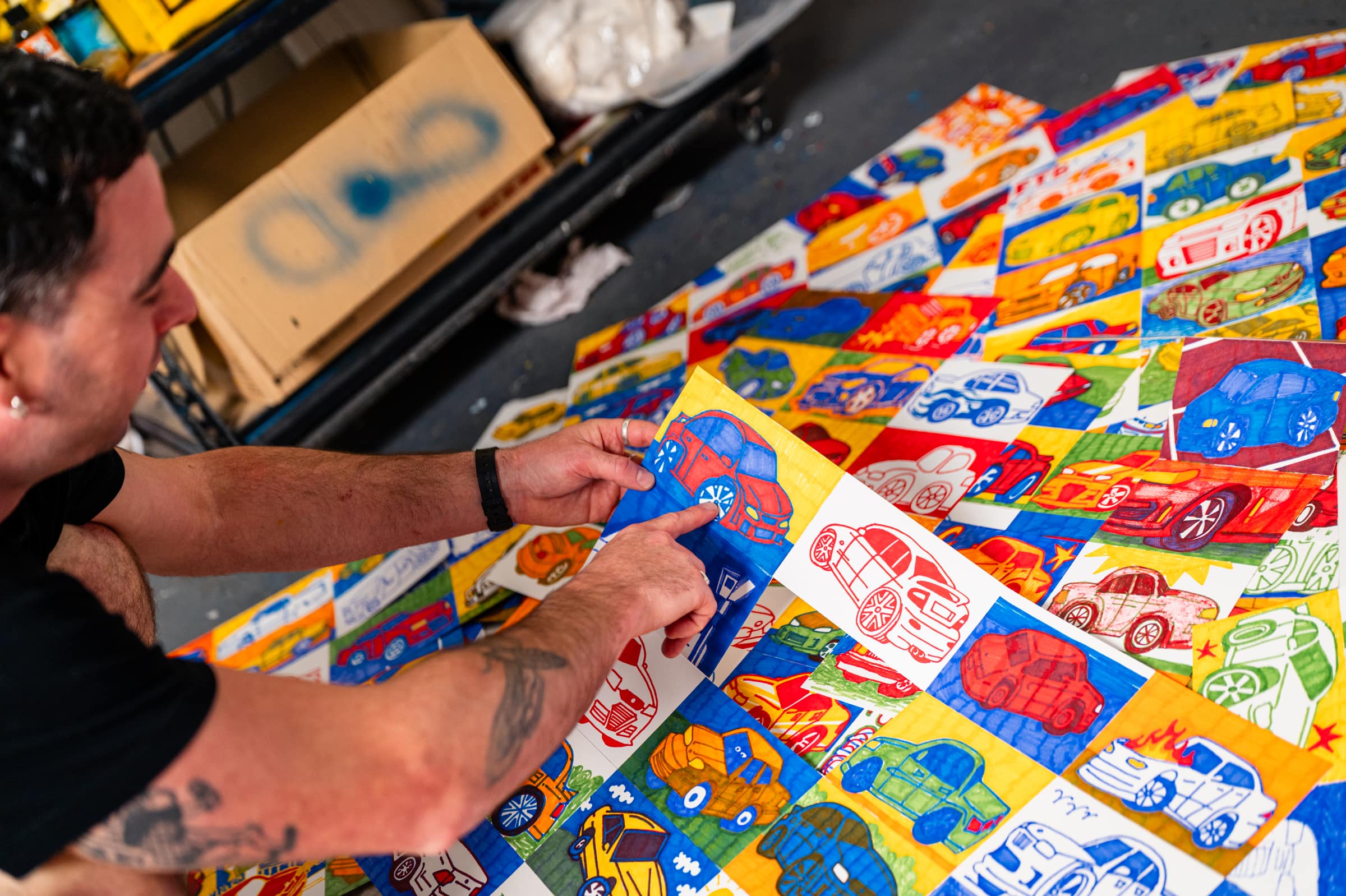
So the first rule was the materials. In youth justice, everything is counted in and counted out, so the boys usually worked with a handful of colours. Chris gave himself the same six. "If my project is going to be about youth justice, it needs to be kind of limited, like it is to make art in youth justice," he says. Drawing the same car over and over, he got sick of the same colours fast, so he started layering them, red over yellow, blue over green, until the limits became the look of the whole series. "I find limitations now are like a really important part of practice."
No finish line
The second rule was time. A lot of the boys were on remand, locked up without knowing how long they'd be inside. Chris wanted the project to carry some of that. He first considered drawing every Commodore stolen in Victoria in a year, but the number was far too big, so he settled on 1,000, with no idea how long it would take. "I kind of was a bit of a practical joke on myself," he says.
“I knew that it would take a long time and I knew that I would get frustrated. I knew that it would suck.”
That was the point. He wanted the art itself to be a struggle. It took around 11 months. And when the last car was finished and he thought he was done, he realised he still had to sign every single sheet. "Literally torturing myself," he laughs.
Full circle
There's a twist he finds funny. Chris's dad is a mechanic, and as a teenager Chris wanted nothing to do with cars. The two of them used to bang heads all the time. "It wasn't until my 20s that I got to become friends with my parents," he says, and now he loves hearing about their lives.
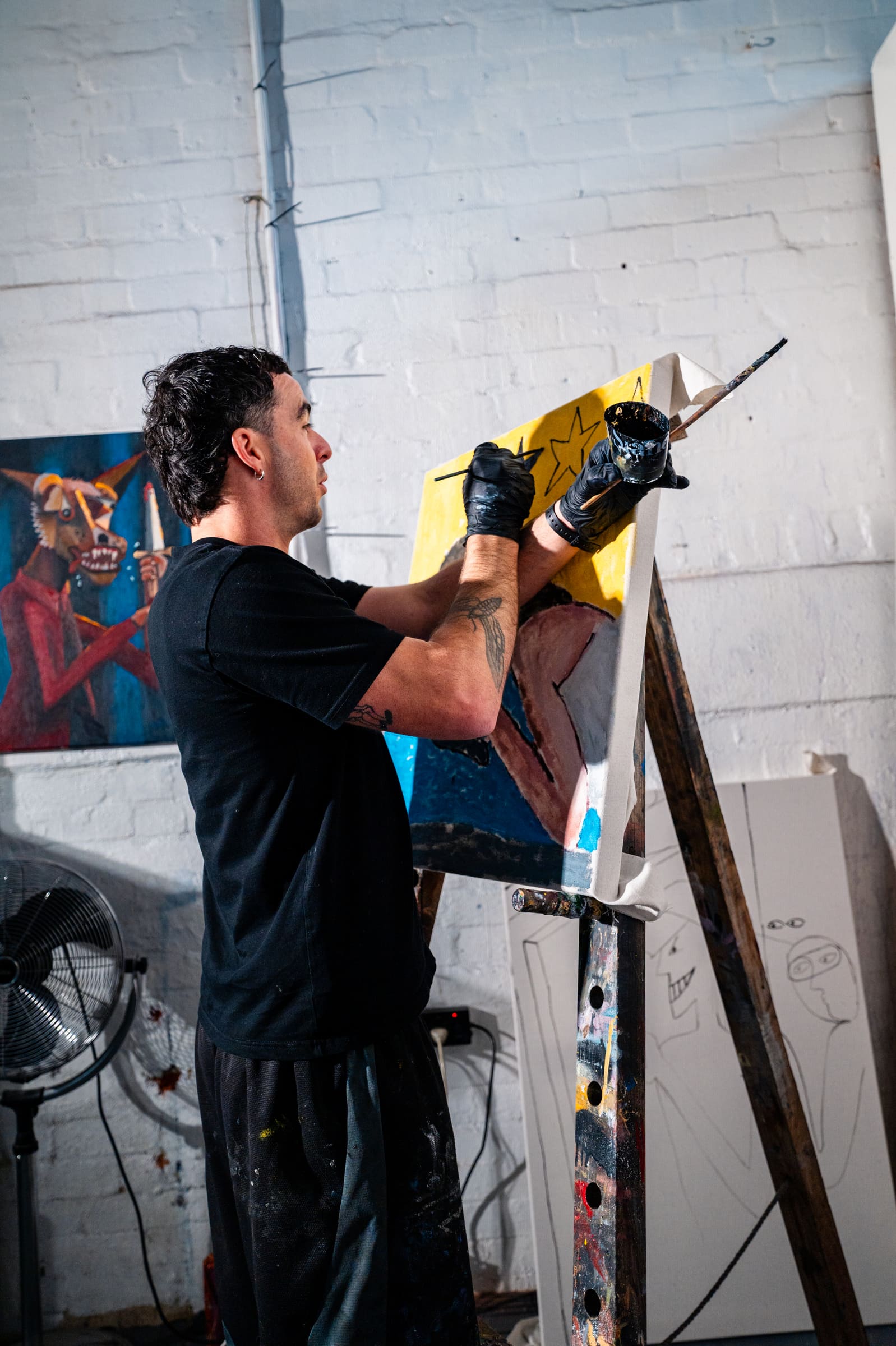
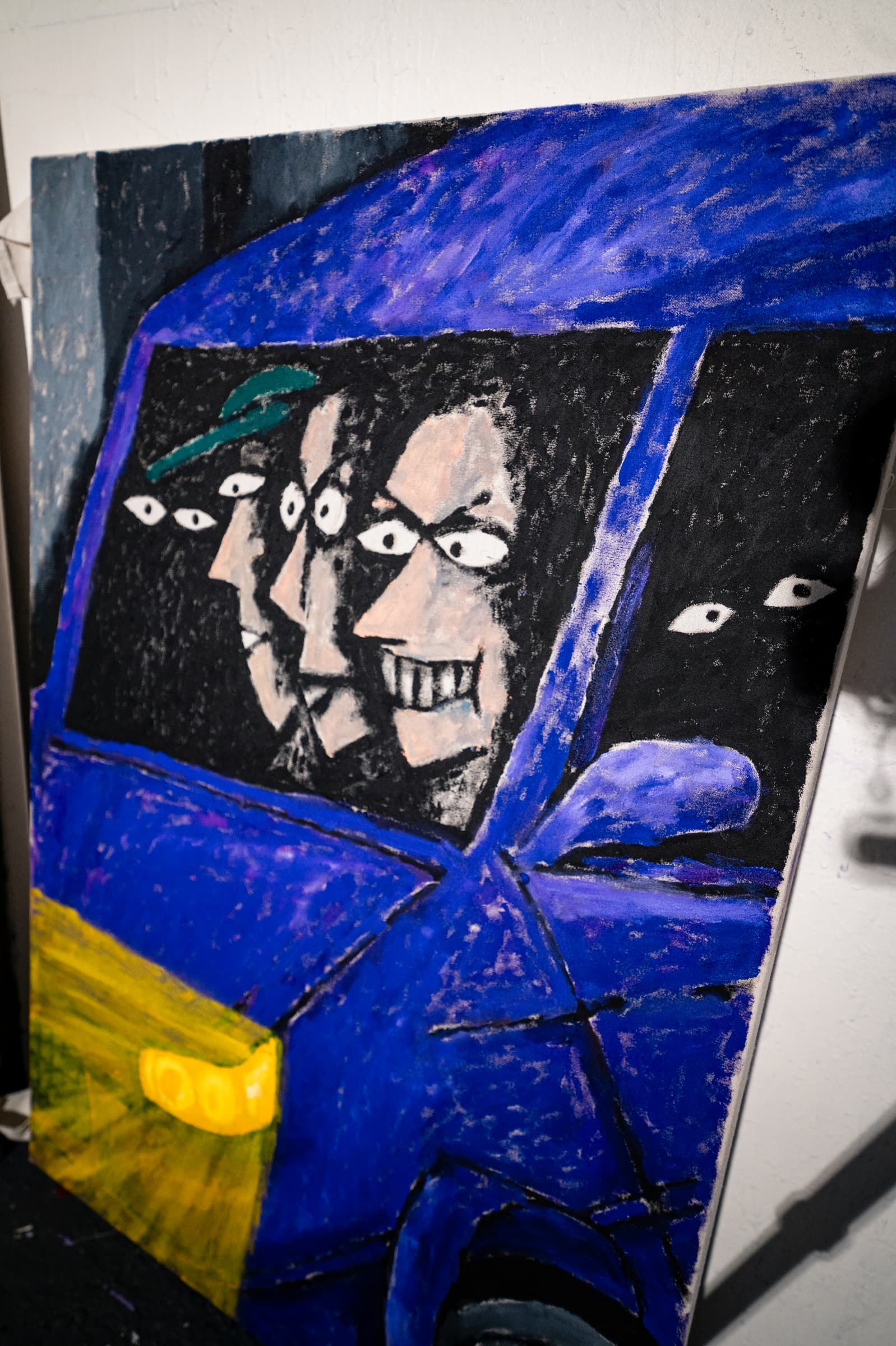
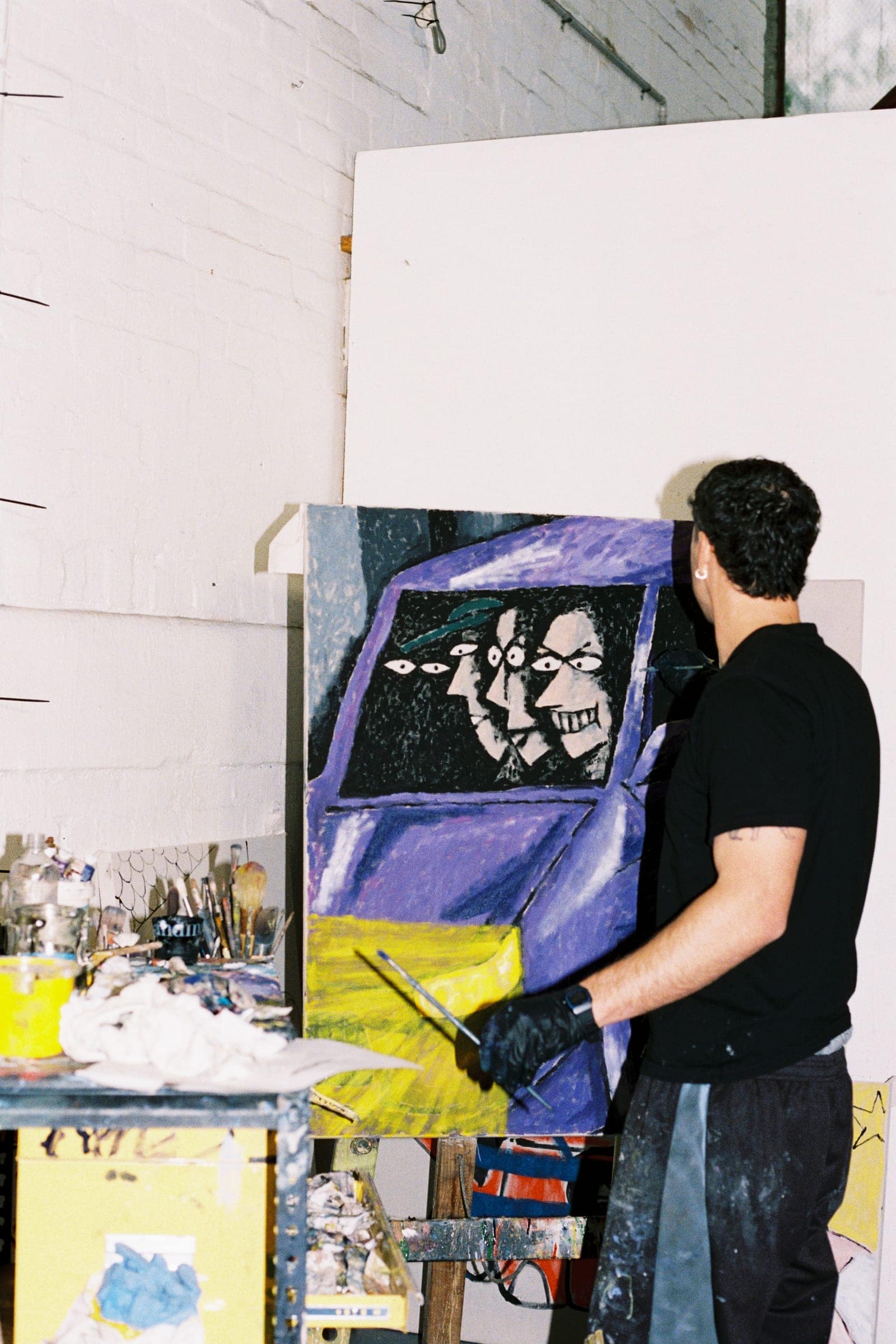
Now he paints cars, too. The large car paintings in Allegedly were made in enamel, painted on one side of the canvas and left to bleed through to the other, then restretched in reverse. Unlike oil, he can't control how it reacts. He makes a mark and lives with whatever comes through. For a show about a system that's hard to steer, it suits.
Staying a kid
For all the weight in the work, Chris talks about painting like play. When he's stuck, he gives himself silly rules, like a two-minute timer on a drawing, and the rushed decisions often turn out to be the best part. He doesn't like being boxed into one style. And he's wary of trying too hard: try to make a good painting, he says, and you'll ruin it.
He quotes a documentary he loves, JoyBubbles: "the essence of genius is to those who can stay a child as long as possible." Painting, he says, is "so silly, like we're just pushing a medium around on a piece of canvas." That's part of what he likes about it. "I love the idea of just bringing something into reality."
The conversation
Chris knows one show won't change the system. What it can do is start conversations. People often come to him with a fixed view of youth crime, sometimes because their own car was stolen, and he wants to hear them out. Then he gets to share what he saw inside.
"It's not just like joyriding and things like that," he says of some of the kids he met. "It's like survival." Some had no safe place to sleep, and support that ran out too soon after they got out.
He doesn't expect a painting to explain all of that. But when people ask why he drew a thousand cars, he gets to tell them about the boys, and his hope is simple: that "that conversation will trickle onto somebody else."
Being an artist full time is tiring, and he admits there are days he asks himself whether it's worth it, the stress, the ups and downs, never knowing what's next. "But I think it is worth it," he says. "And that's why I'm still doing it."
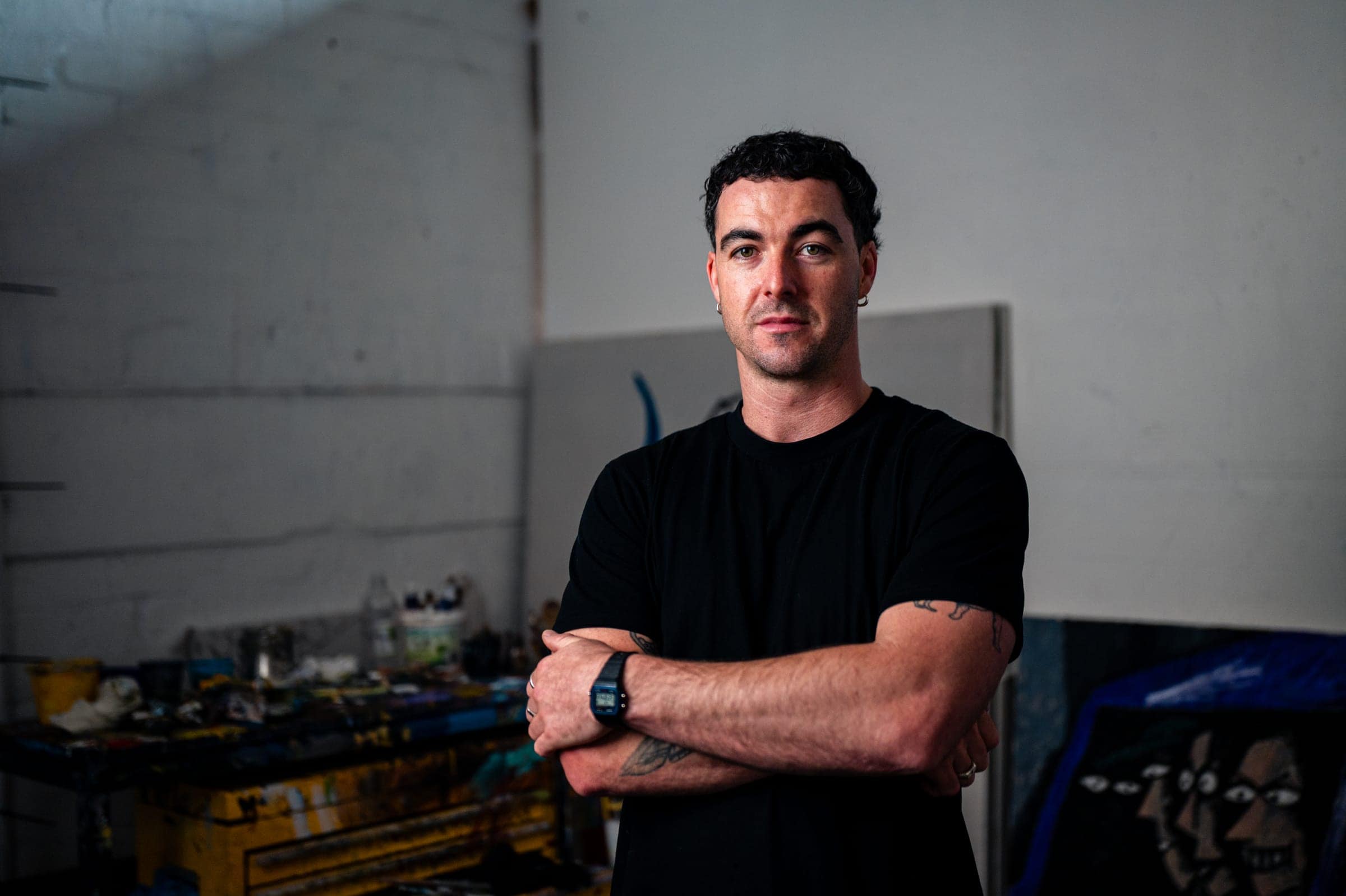
Allegedly by Christopher Myles Henderson showed at No Vacancy Gallery, Melbourne, in 2026.
See more of Chris's work at christophermyles.com and on Instagram at @christopher_myles.
Related
He Never Trained As An Artist. Now He's In The National Gallery.
Drawing as magic, play as a practice.
10 artists known for one animal
A rooster, a cat, a koala, a frog. Ten artists who found one creature and kept going back.
The Painter Who Started Painting to Heal
Painting as therapy, and as something to leave behind.
Artist Studio Visit - Angharad Neal-Williams
Flat colour, quirky lines and imagined worlds.