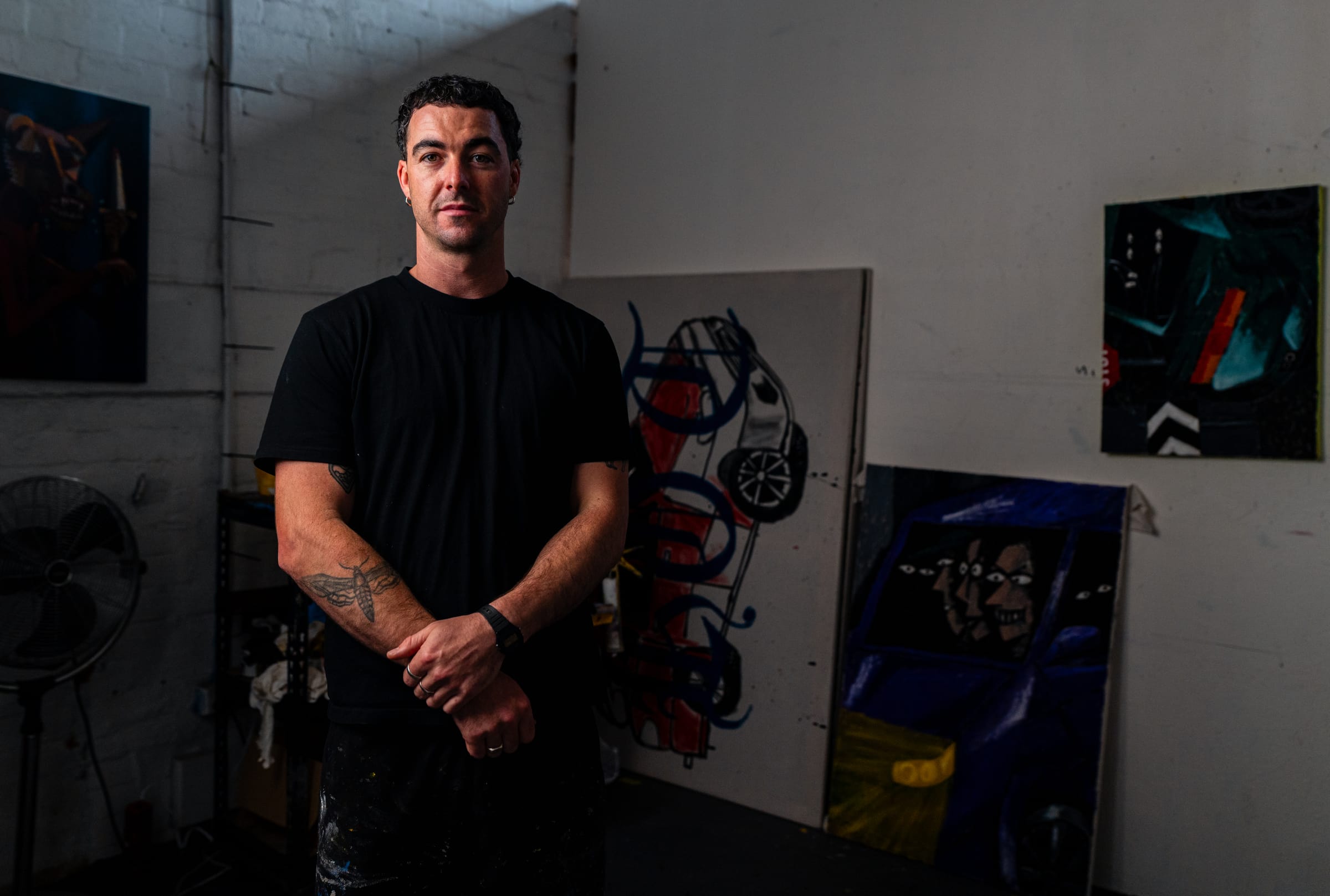
Inside the Studio of Painter Christopher Myles Henderson
For three and a half years, Christopher Myles Henderson taught art inside Victoria's youth justice centres. Then he drew the car the boys stole most, a thousand times.
“Drawing a thousand is a dumb idea. I knew that it would take a long time and I knew that I would get frustrated. I knew that it would suck.”
A thousand Commodores
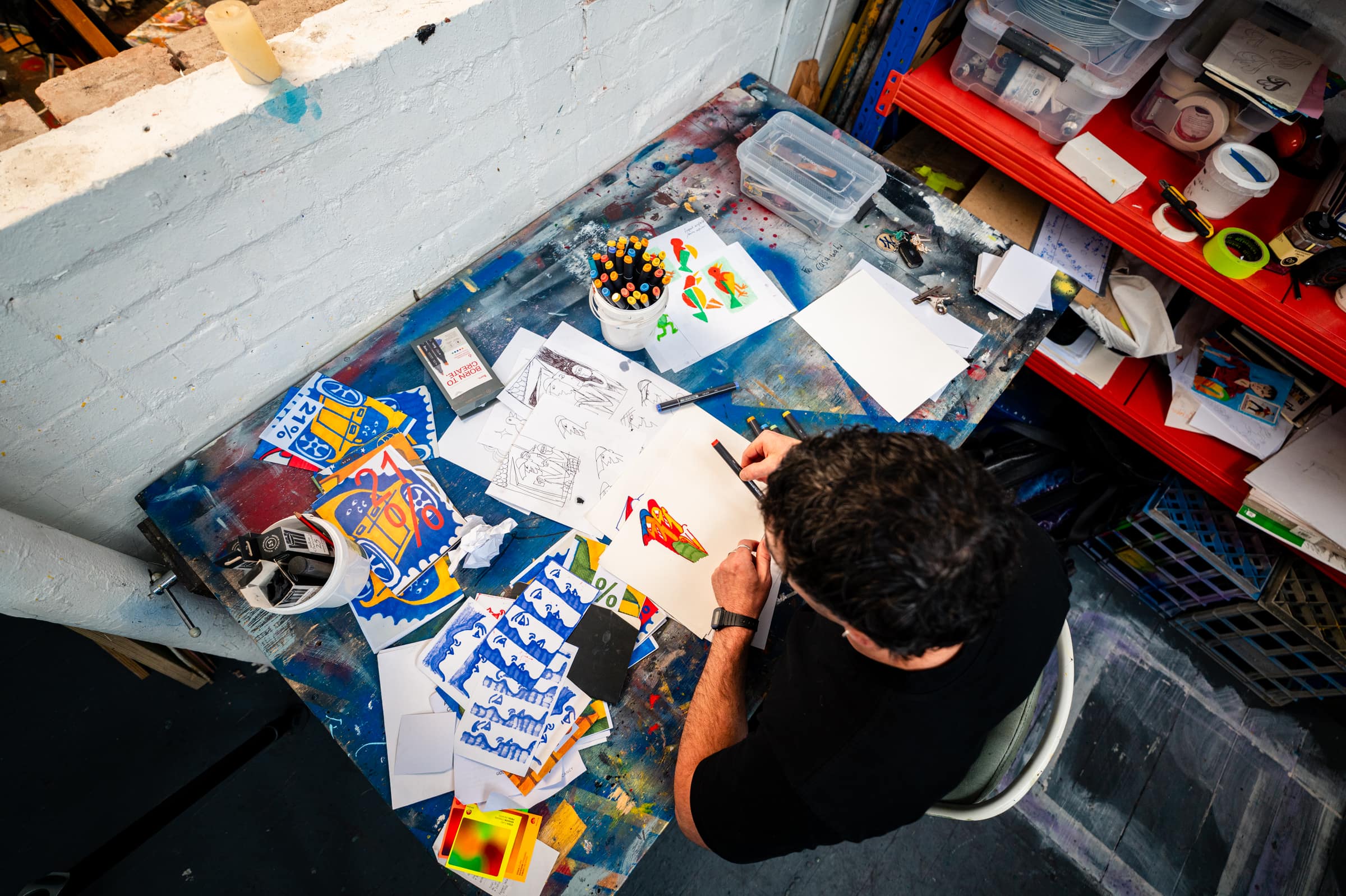
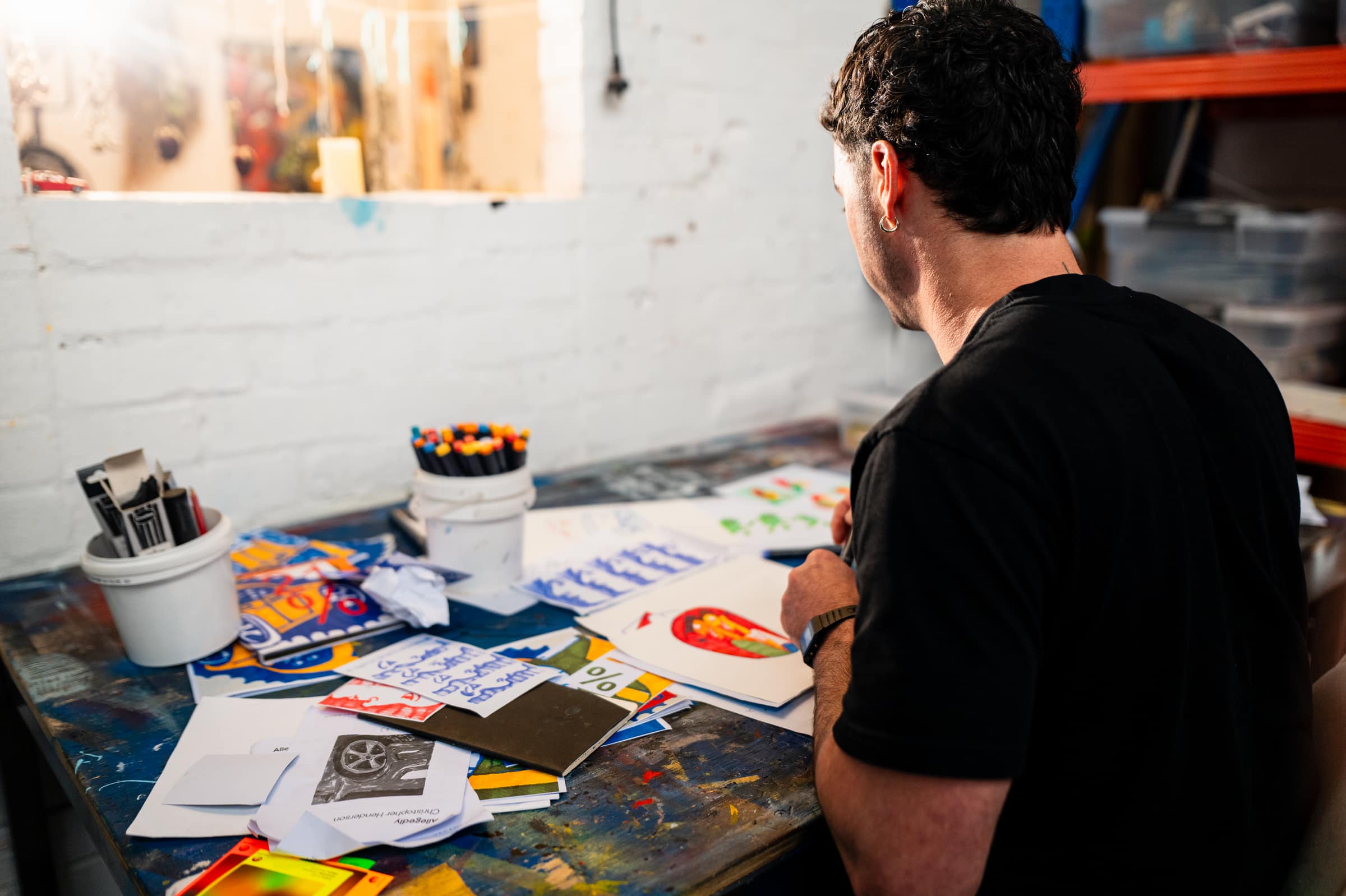
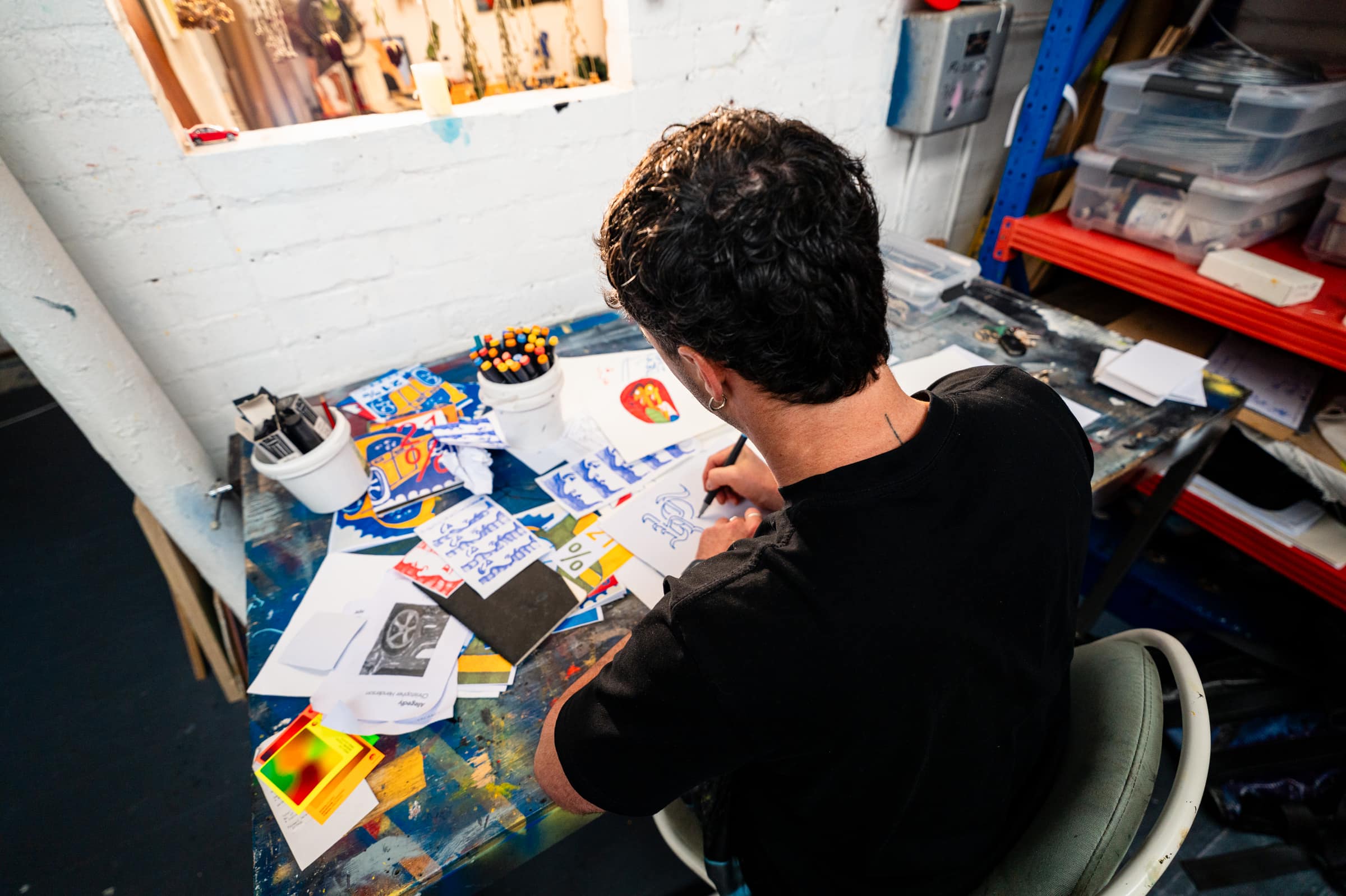
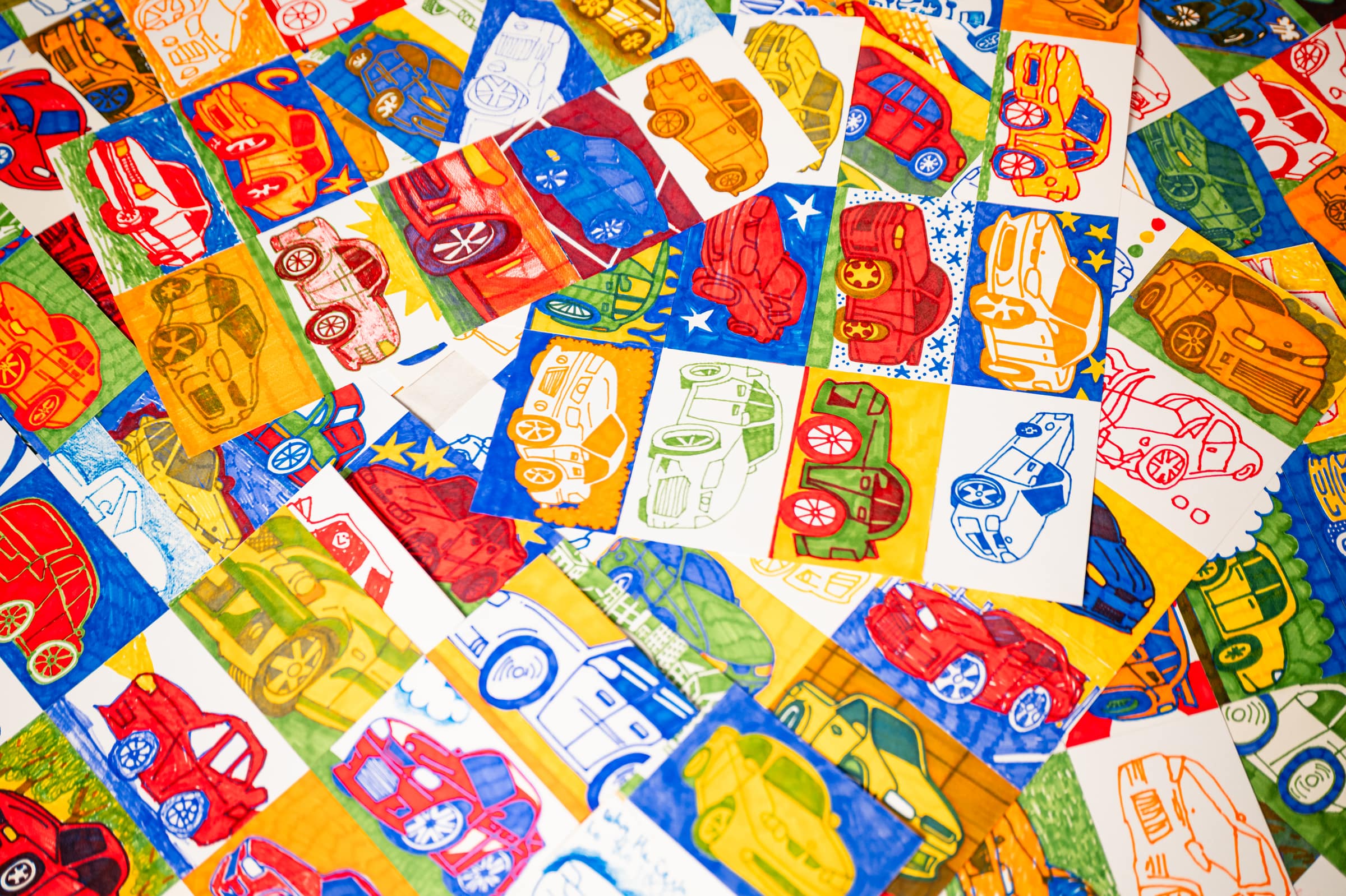
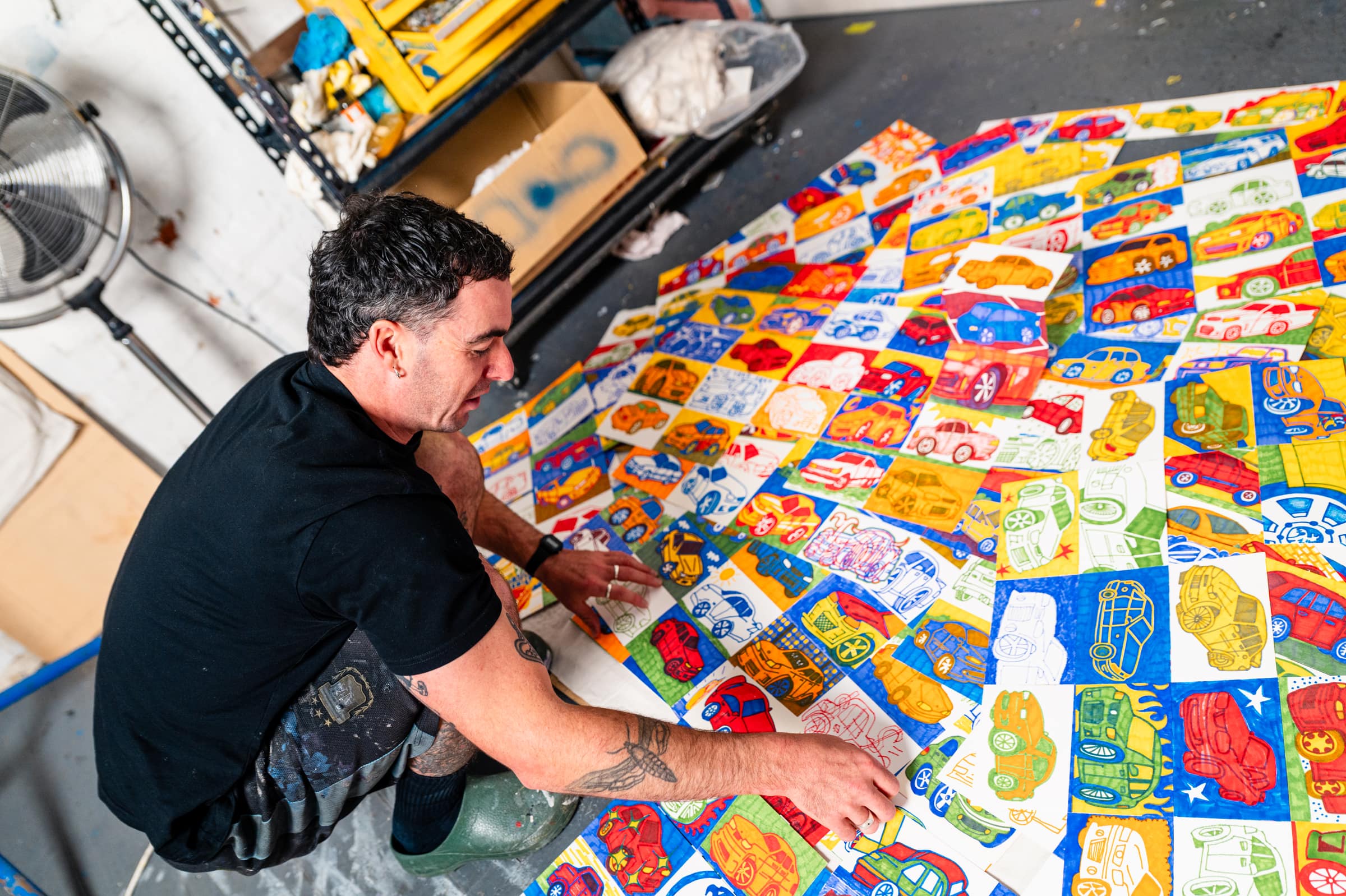
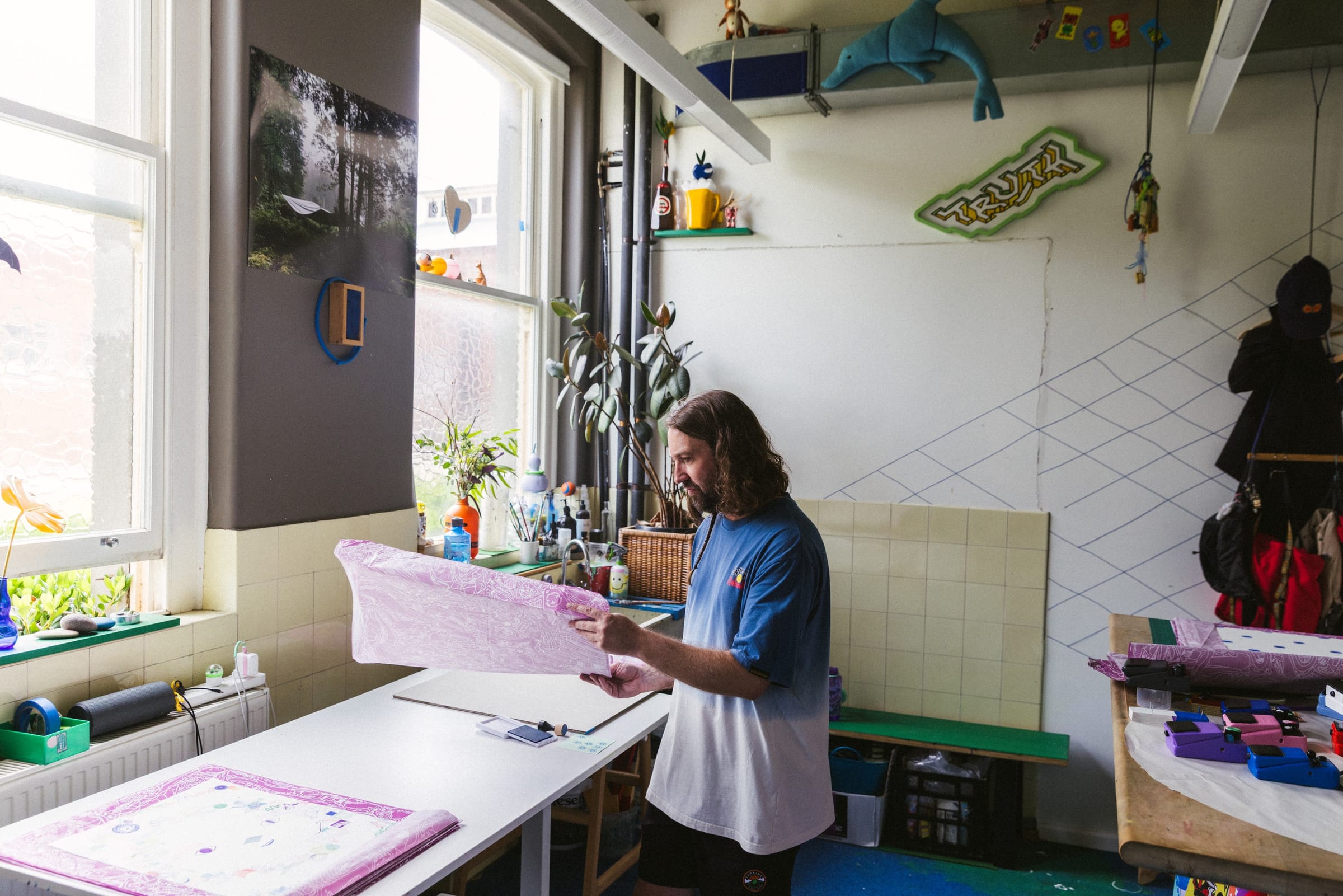
Christopher Myles Henderson is a painter, and for most of a year his studio floor belonged to one car. He set himself the job of drawing the Holden Commodore a thousand times, in texta, one sheet at a time.
He knew going in that it would be a grind. That was part of the idea. To understand why anyone would do that to themselves on purpose, you have to understand the conversation he is trying to start, and where it began.
The boys
For three and a half years Chris taught art inside Victoria’s youth justice centres, across Malmsbury, Cherry Creek and Parkville. They are, as he points out, the only three in the state. When the job finished, he already knew what came next. He was going to make a body of work about his time with the boys.
They didn’t give much away. “A lot of the young boys are obviously really guarded,” he told me, careful about what they let anyone know about their own experience. But the drawing table did something conversation couldn’t. “Often when we’re drawing and painting, it just naturally would happen and everyone would sort of open up.”
What he heard there has stayed with him. “It’s heartbreaking to get to know these kids, and they’re all sweet, lovely kids,” he said. When things at home don’t work out, for whatever reason, some of them end up on the street. And when it’s cold and you need somewhere to sleep, some kids will steal a car.
“It’s not just like joyriding and things like that. It’s like survival.”
Why the Commodore
Chris wanted to make work about the boys without glorifying any of it. The subject he landed on was the Holden Commodore. “They’re traditionally easy to steal,” he said. “That’s why they’re the most stolen.”
There was a personal twist in it too. His dad is a car mechanic, and as a teenager Chris wanted nothing to do with cars. “My dad and I used to bang heads all the time,” he said. “It’s so funny now. I’m painting cars all the time.” He calls it a full circle moment.
Six textas
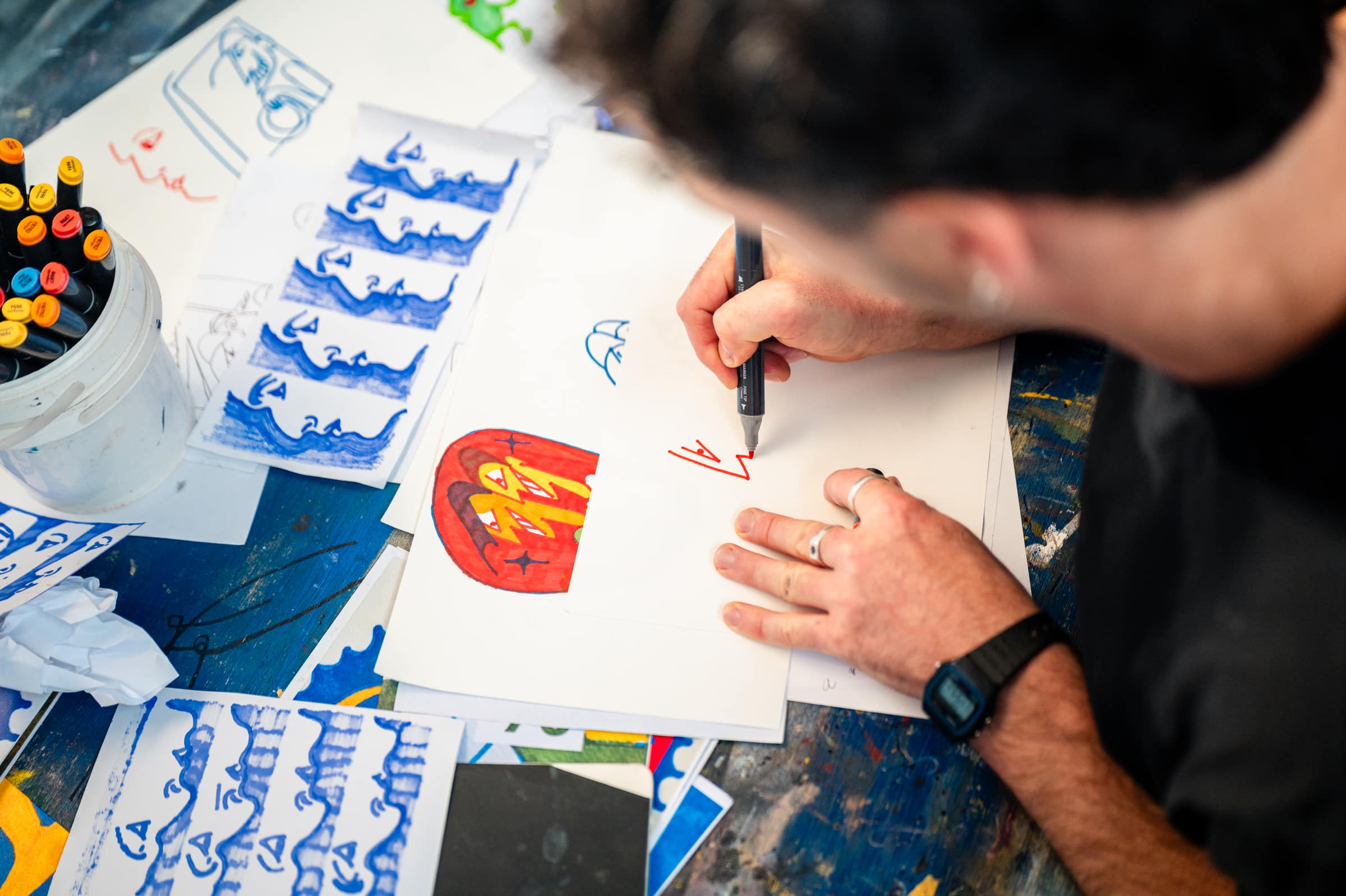
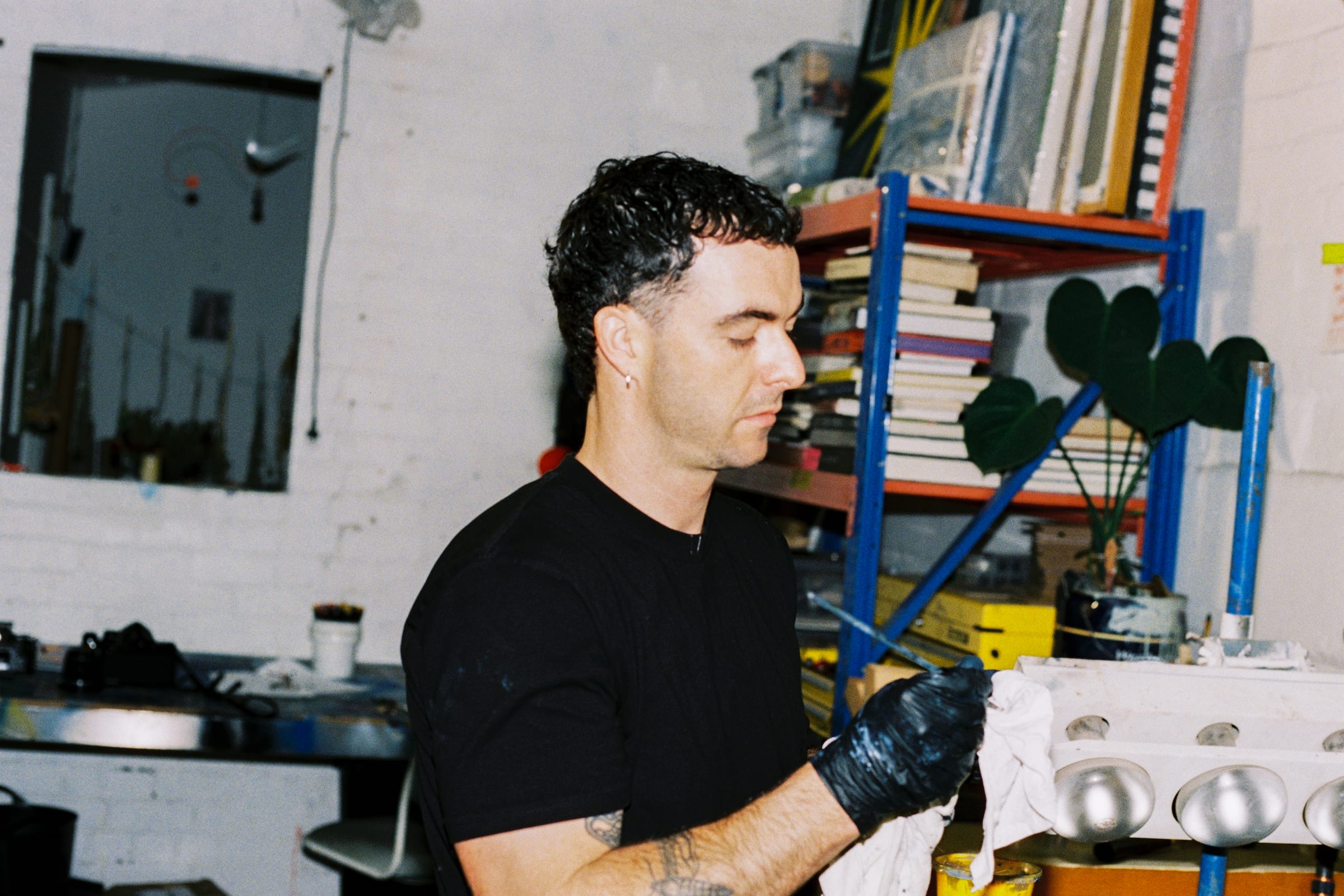
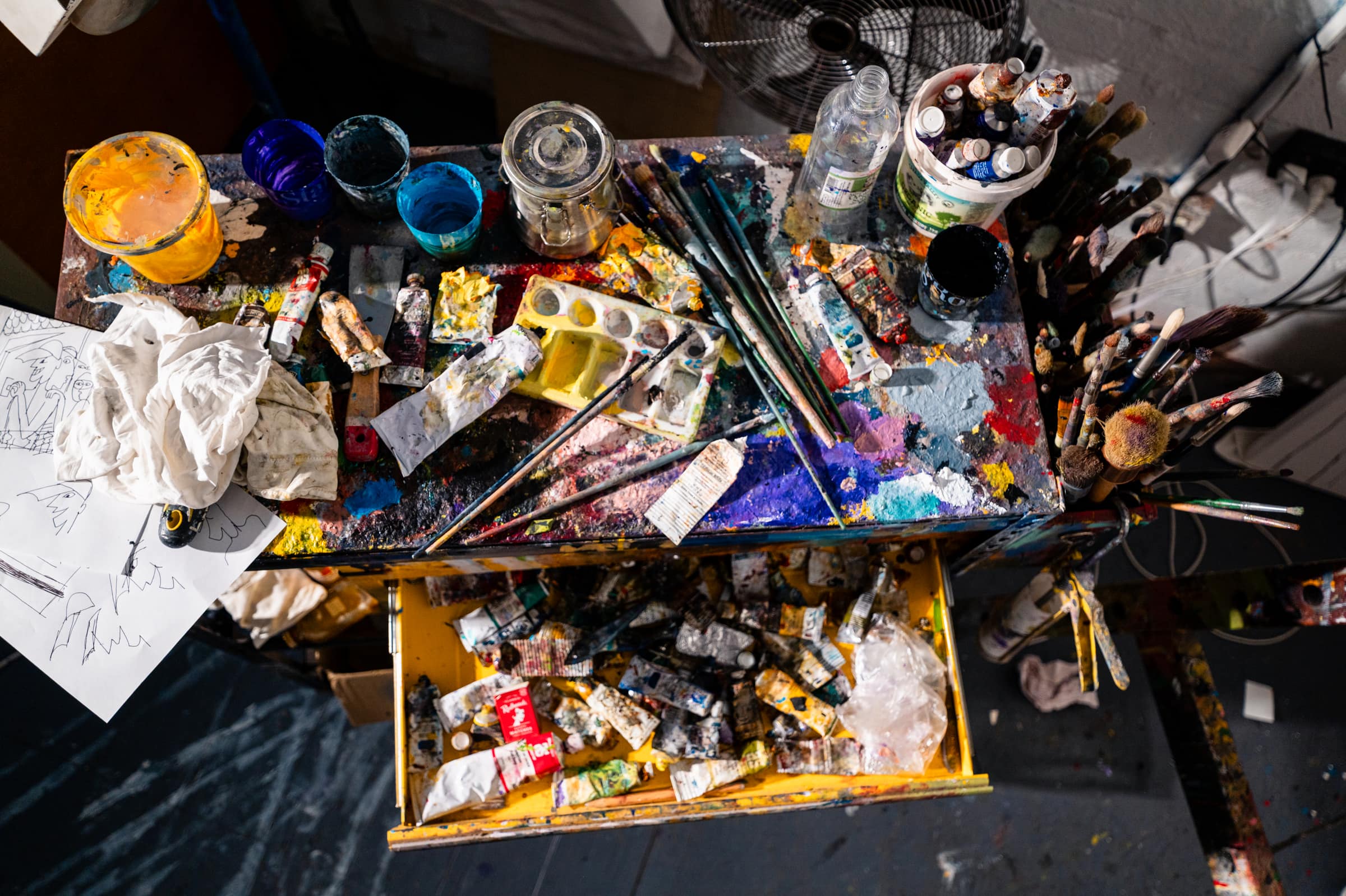
Then there were the materials. Chris had always thought of textas as crude, a poor thing to draw with, until inside they were the only option he had. He fell for them anyway, and for one thing in particular: the bleed.
“Every time you rest the pen, ink kind of dumps on the paper,” he said. “You can see when you’re resting and when you’re confident. You can’t hide anything with textas. It’s all there.”
So he gave himself a rule. Six textas, six colours, exactly the limit the boys had to make art with. A second rule came from time. Many of the boys are held on remand, which means they don’t know how long they will be inside. Chris wanted the project to carry some of that, a duration with no clear end.
His first thought was to draw every Commodore stolen in Victoria in a year. That number, by his reckoning, is 2,000 and something. “I’m not going to do 2,000 when 1,000 is going to be a struggle enough,” he said. So, a thousand.
He found out what that meant the slow way. By the time you have drawn a thousand cars, he said, you get sick of the same textas. “Just didn’t know how long it was going to take and what it was going to do to me.”
Where it started
Chris’s earliest memories of drawing are with his Nana, a landscape painter. His mum was quite sick when he was young, so he spent a lot of time with his grandparents, and he and Nana would set up and draw together. He still has a vivid picture of the first one: a bearded dragon, or something like it, copied out of a National Geographic book.
School was harder. He thinks his earliest feelings of self-worth probably came from being praised for a nice drawing, “because school was so hard that I didn’t think I could go on and do much more.”
What he really cared about was BMX. In year 12 he was going to so many events that the school asked him to do the year over two years, which meant sitting in a year 11 class. He was so embarrassed that he dropped out the next day, and rode nonstop until he was about 21.
Losing BMX, finding art
Then he tore his ACL. “That was pretty dark,” he said. “I guess I was depressed.” He went from riding every day to doing nothing at all.
In that time he decided it might be cool to be a tattooist, and while he was chasing that, he remembered how much he liked to illustrate and draw. It’s a different way of being a man than the one he grew up around. “Being a man in the country, there’s a lane and you’re not in it,” he said, “then it feels very isolating and weird.” He’s an artist now, and he loves that.
There wasn’t one moment where he knew he could do this. “I still don’t even know if I’ve got to that point now,” he said. “It honestly feels like I’m faking it all the time.” He admits that is exhausting. But he has an obsession with it he can’t shake, and it comes down to flow. When it happens, time stops. Six hours pass and you haven’t eaten.
Is it worth it
The film opens on a question Chris asks himself: is it worth it, all the stress and the ups and downs? A thousand drawings later, his answer is the same as it was going in.
“I think it is worth it. That’s why I’m still doing it.”
He still loves it. He also has a sore hand now when he draws.
See more of Chris’s work at christophermyles.com and on Instagram at @christopher_myles.
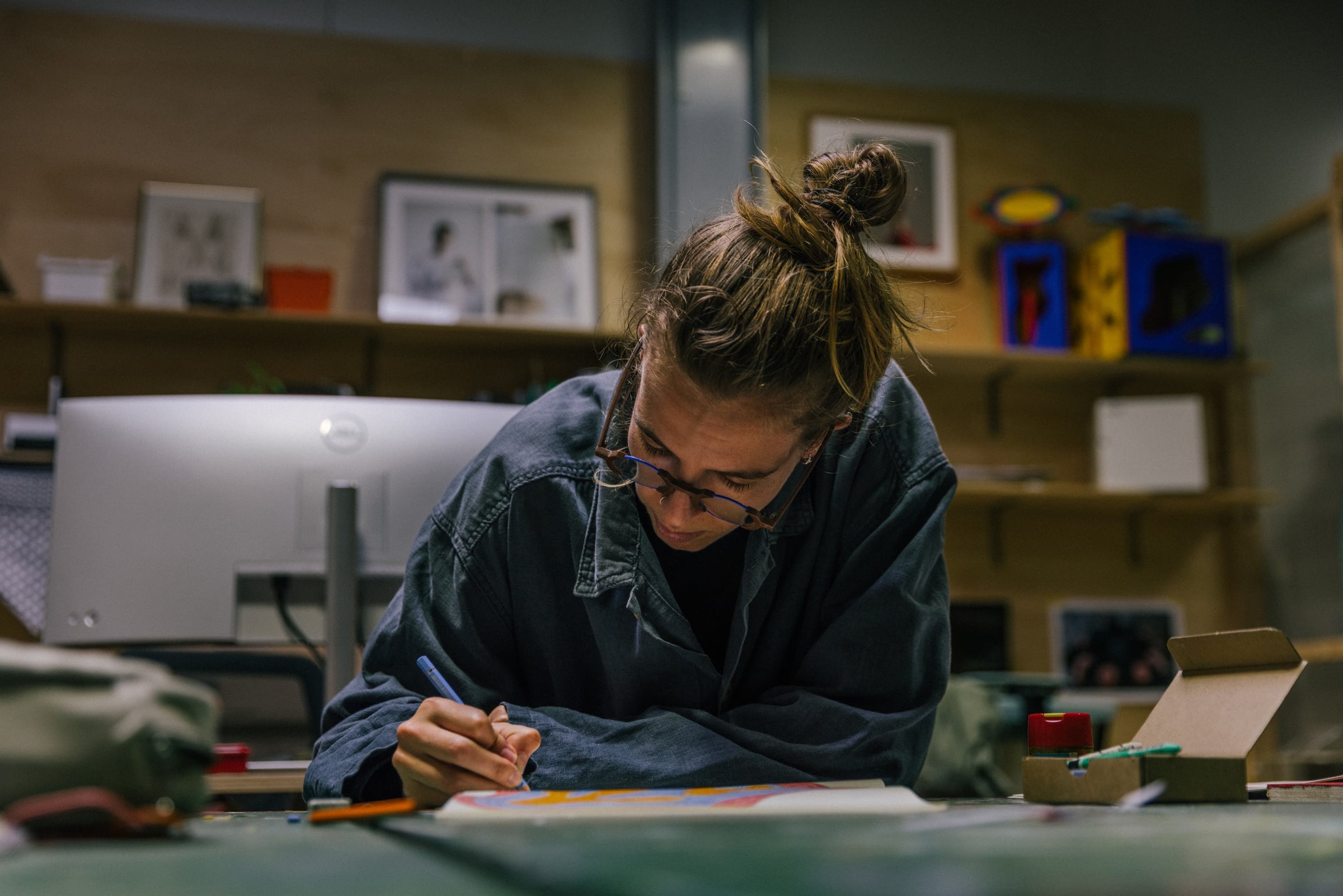
From the shoot
Related
He drew Victoria's most stolen car 1,000 times
Three and a half years teaching art in youth justice, then a thousand Holden Commodores in six textas.
The Painter Who Started Painting to Heal
Painting as therapy, and as something to leave behind.
He Never Trained As An Artist. Now He's In The National Gallery.
Drawing as magic, play as a practice.
Inside the Studio of Public Artist Abbey Rich
Art, furniture and playground, made for everyone.