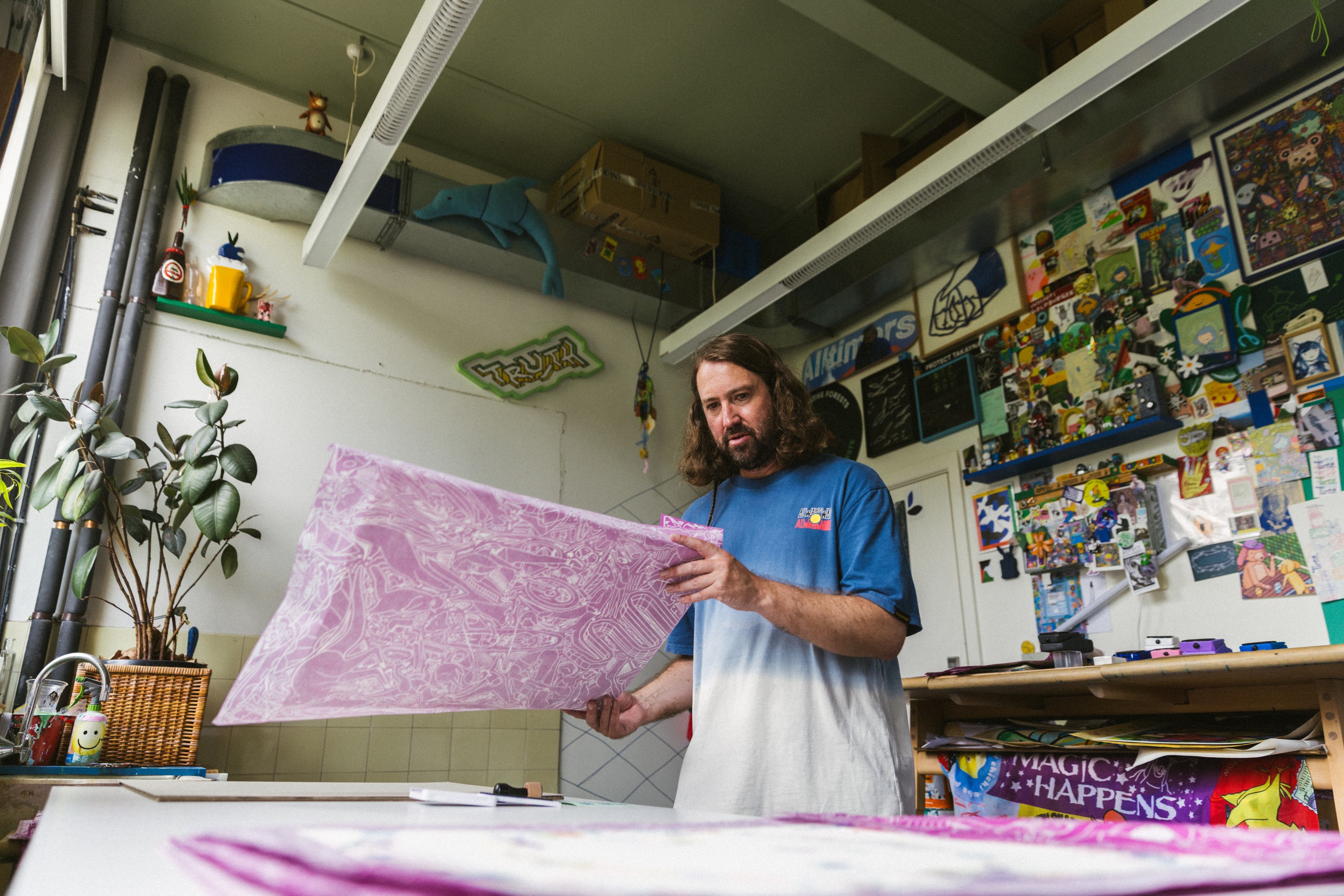
He Never Trained As An Artist. Now He's In The National Gallery.
David Booth grew up in Tasmania not knowing artist was a job. Now, as Ghostpatrol, his work hangs in the National Gallery, and he still calls himself a professional child.
“Sometimes when I work in schools, I introduce myself as a professional child. I’m just doing the same thing I did as a young person, as all young people do.”
Who let me do that?
David Booth doesn’t list his achievements easily. He tried, when I asked. “My name’s David and I’m an artist,” he started, “and for a long time I’ve used the name Ghostpatrol.” That name comes from doing street art in the early 2000s.
Then the rest came out, almost reluctantly. His work is in the National Gallery. He has a big painting in Parliament House. His work has been projected onto Parliament House. “Sometimes I look at that stuff and I think, oh, who let me do that? That’s wrong. That’s not right.”
He means it. “It’s even hard for me to list some of these things that I’m proud of,” he said. “I’m so lucky to have done any of it, because I didn’t train, and that wasn’t my ambition, to be an artist.”
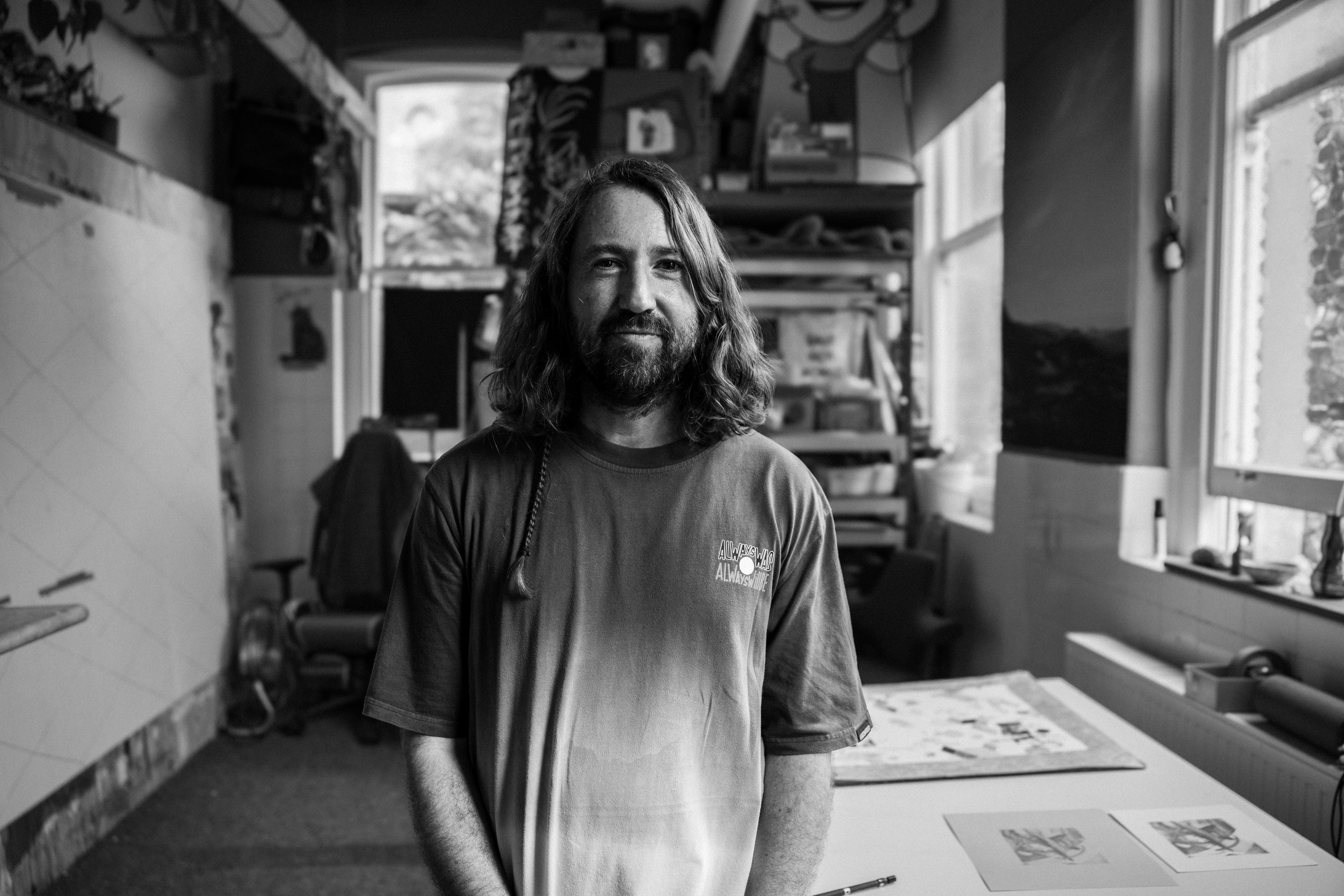
Nobody told him it was a job
David was born in ’81, in Tasmania, which he describes as a pretty isolated place. As a kid he had heard the word cartoonist, but that was about it. “I’d never heard of artists or galleries,” he told me. “So I wasn’t aspiring to become that, or seek the validation.”
That turned out to matter. Because drawing was never a career he was chasing, he never had to ask it to carry his whole sense of self. “I didn’t really have to think, who am I through my drawing? I’m not asking my drawing to be my full identity.” In a way it has become his identity, he admits, but that came later, as an adult.
“Everything in this room, someone had to draw it to make it.”
Drawing is magic
Lately he has been thinking about why he loves drawing so much, and he has landed somewhere simple. “I do believe that it’s magic,” he said. “Everything in this room, someone had to draw it to make it. That’s how you make things.”
What bothers him is how few people feel allowed to do it. “You can play tennis and not become a professional tennis player. But why don’t we do that with art?” People stop, he thinks, because somewhere along the way they were made to feel silly, and that cuts away something very human.
Maybe no one did that to him. “No one told me, that can hurt you, don’t do that, or you look stupid,” he said. “I’m okay looking stupid. I accept I’m a dork.” When you’re a kid, you see something and you want to play with it. “That’s still what I do now.”
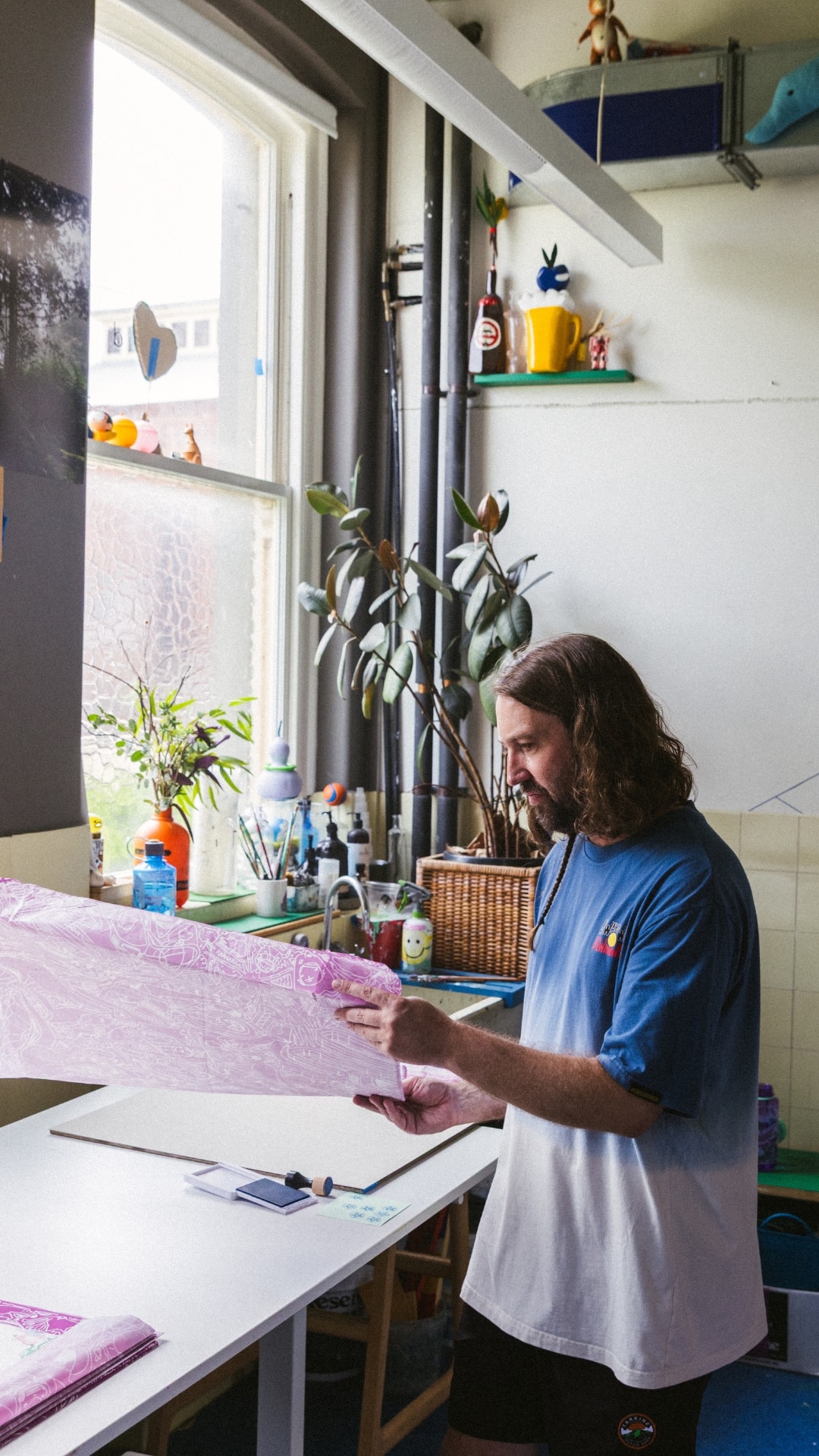
The virus
David describes the urge to draw as a virus. Not everyone has it, he says, but his is like one of those fungi that gets into an insect, takes over its brain and makes it climb a tree. “The virus in my brain makes me draw this stuff,” he said, “and it’s like, okay, I’ll do it, I guess.”
The trick, as he puts it, is to let go and let the work be what it wants to be.
Stamps and mistakes
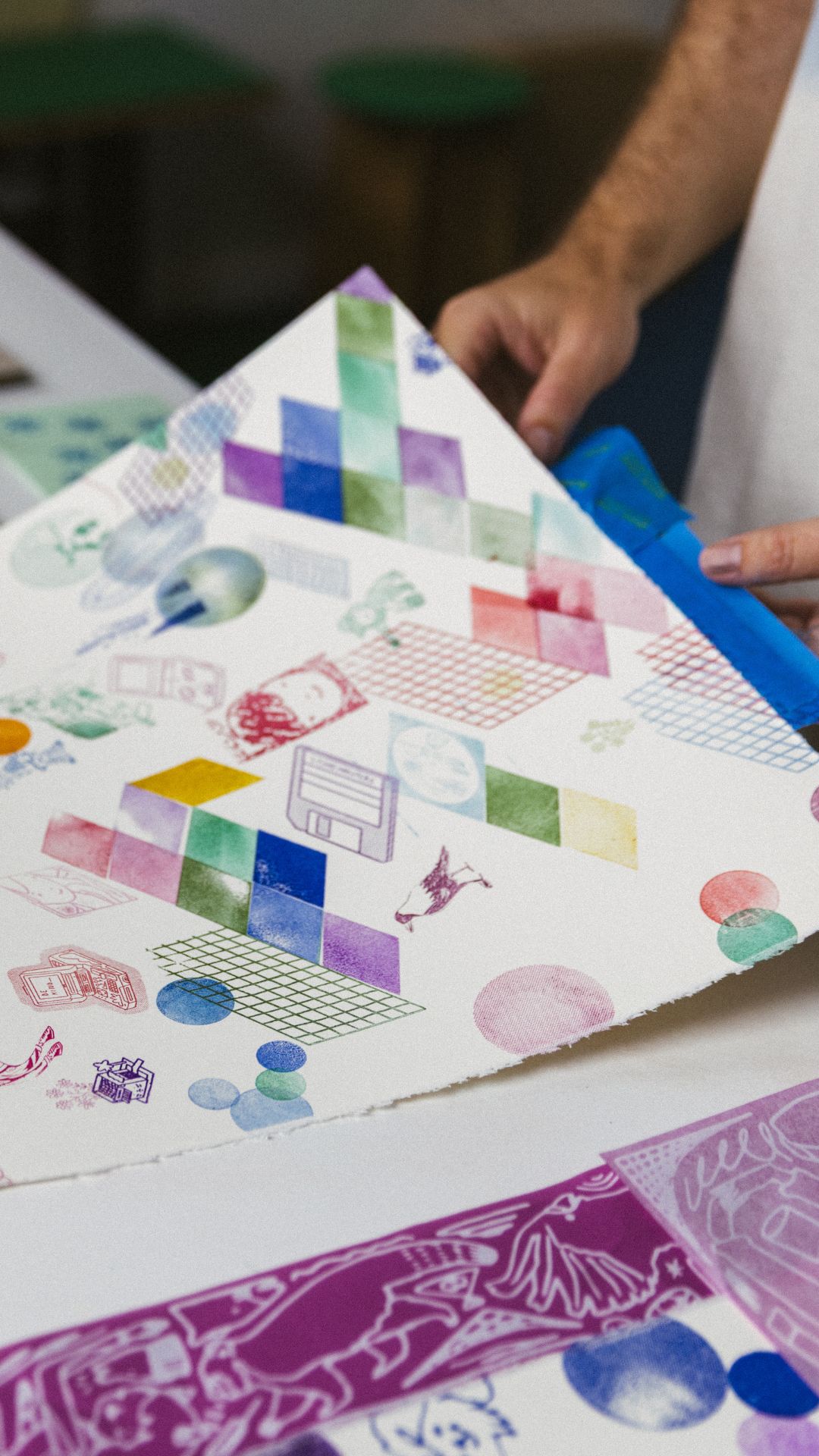
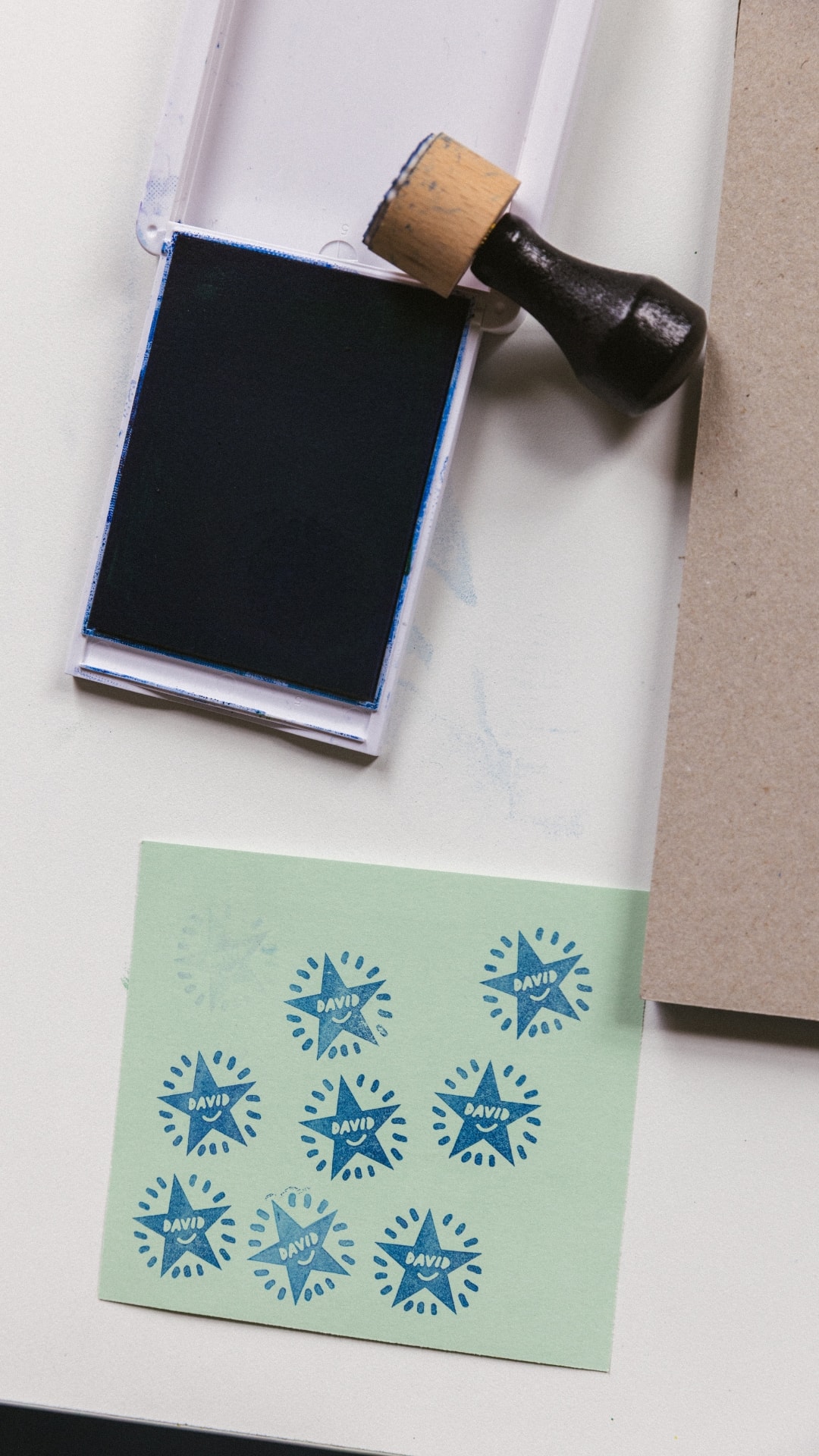
Over the last few years he has been experimenting in the studio, and one of those experiments has grown into a whole body of work built around stamps. The description of the film mentions where that started: a stamp from his auntie when he was a child.
He loves what goes wrong with them. “I like the misalignment. I like it when the prints don’t work.” Big detailed drawings, watercolours and paintings take a lot of labour. Stamping changed that balance for him. He can make far more playful work, quickly, then go back and colour the ones that worked.
“There’s a lot of mistakes in this play,” he said, “but the play is fast and rapid and silly.”
“I’m okay looking stupid. I accept I’m a dork.”
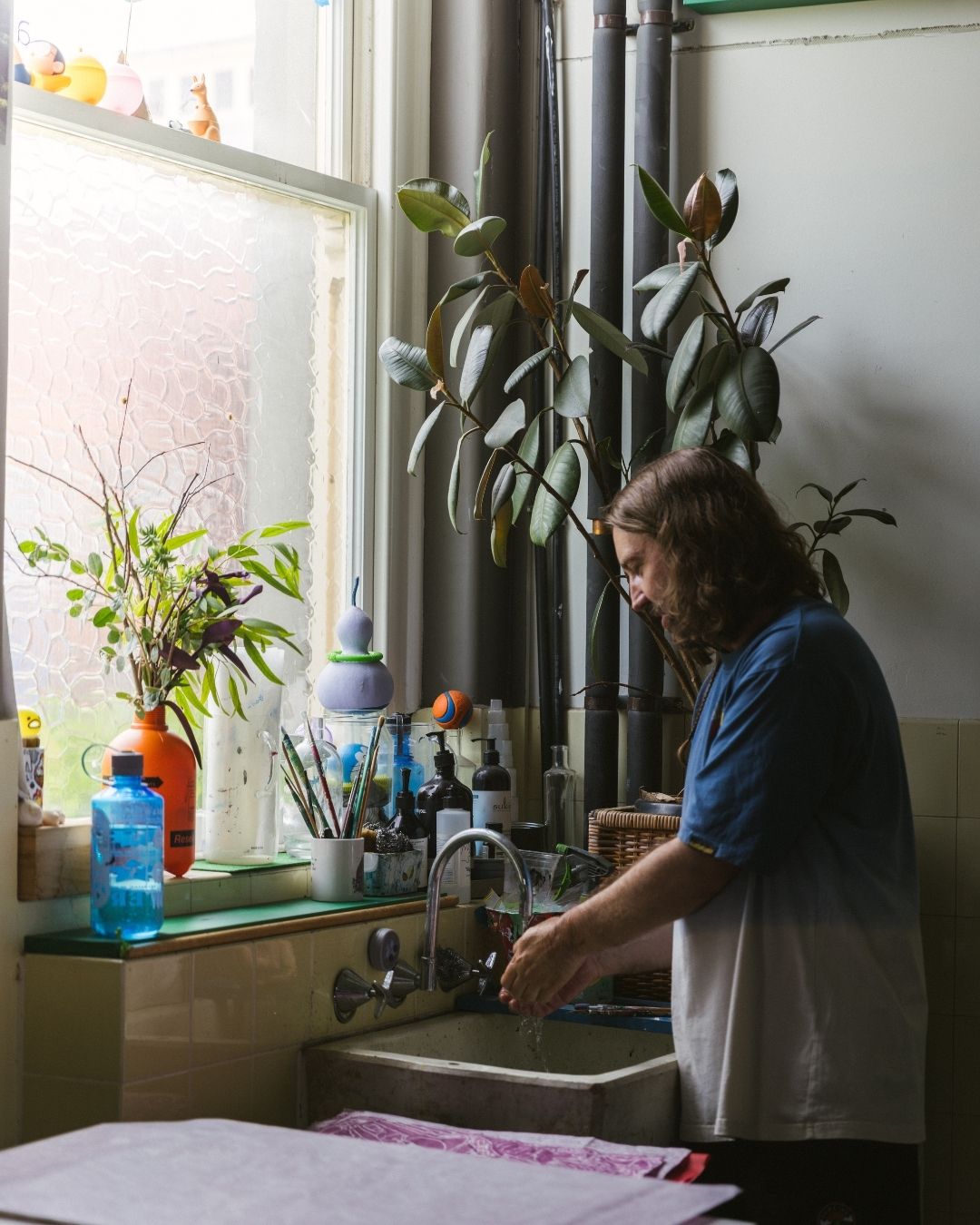
Memory
All of this, he thinks, runs back to childhood. His sense of play is tied to his childhood sensibilities, and those are built on memory. The cartoons he watched as a kid had a big impact on him, and world building is a big part of what he does now. “I’ve been working on that in my mind since I was that age.”
When I brought up memory, he stopped to think about it. “I don’t think I think about memory a lot,” he said. “But now when you say memory, I was like, it’s pretty much all I do, I guess.”
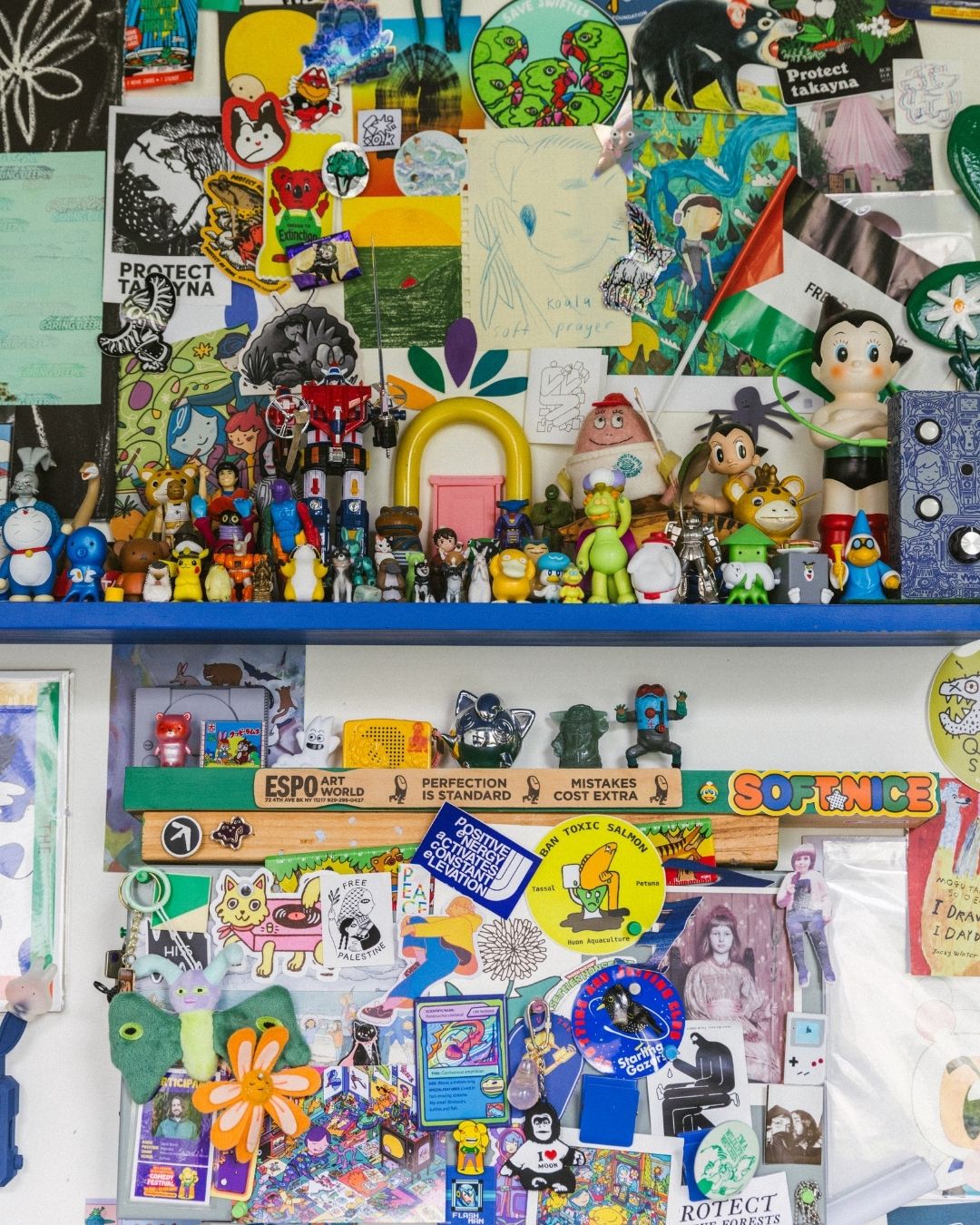
From the shoot
Related
The Painter Who Started Painting to Heal
Painting as therapy, and as something to leave behind.
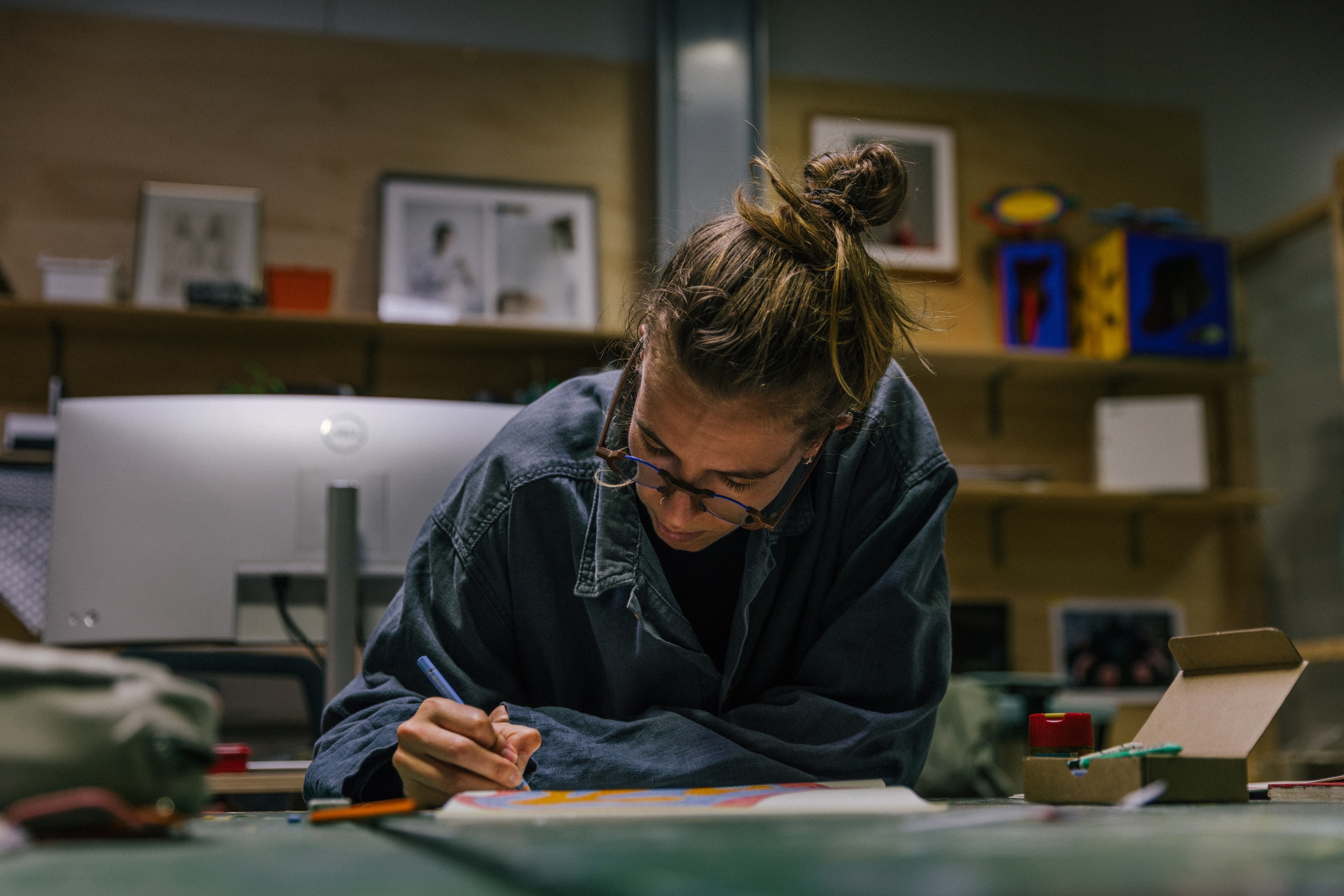
Inside the Studio of Public Artist Abbey Rich
Art, furniture and playground, made for everyone.
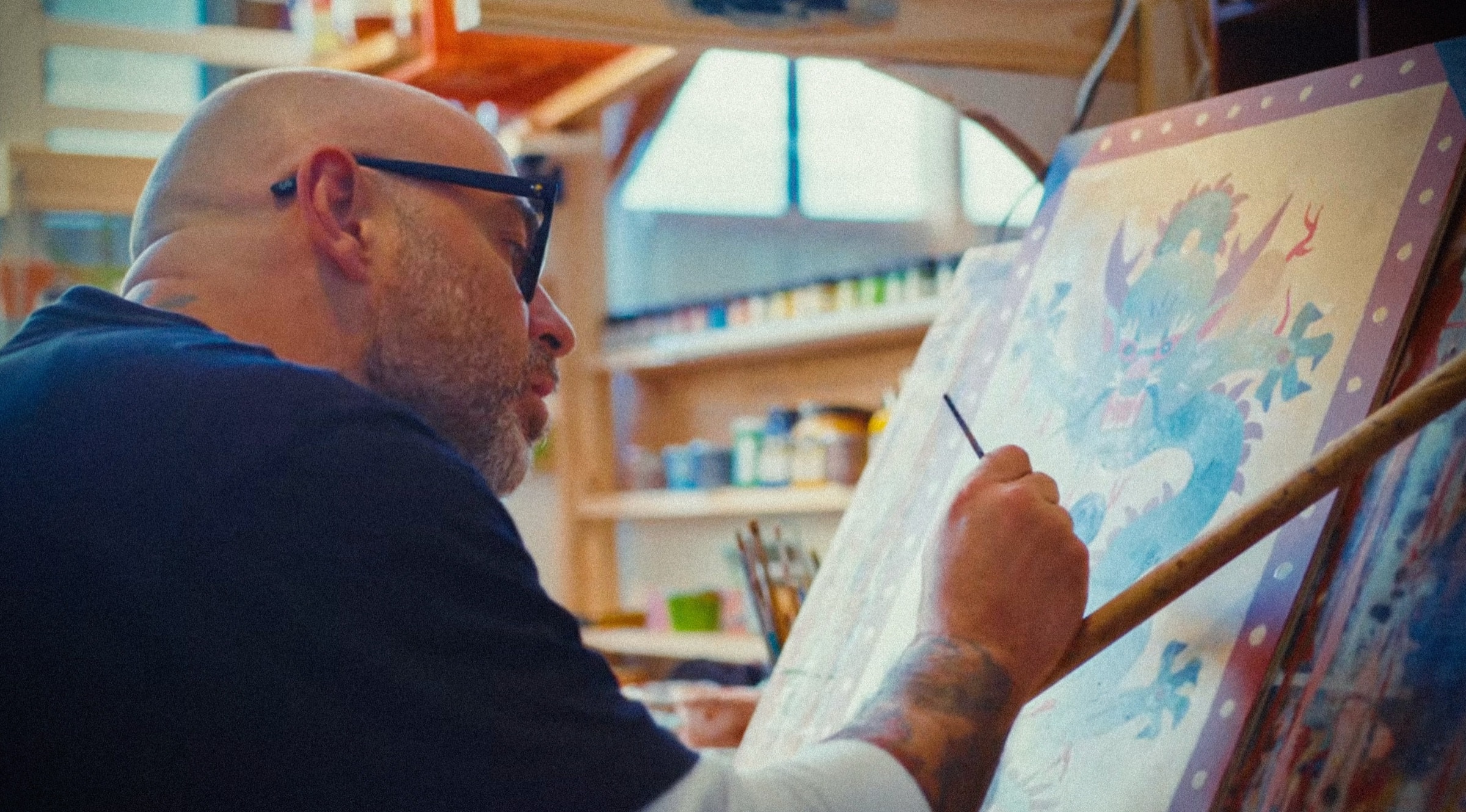
Why I Left Tattooing to Pursue My Passion for Painting
From the tattoo chair to the painting bench, chasing the fun.
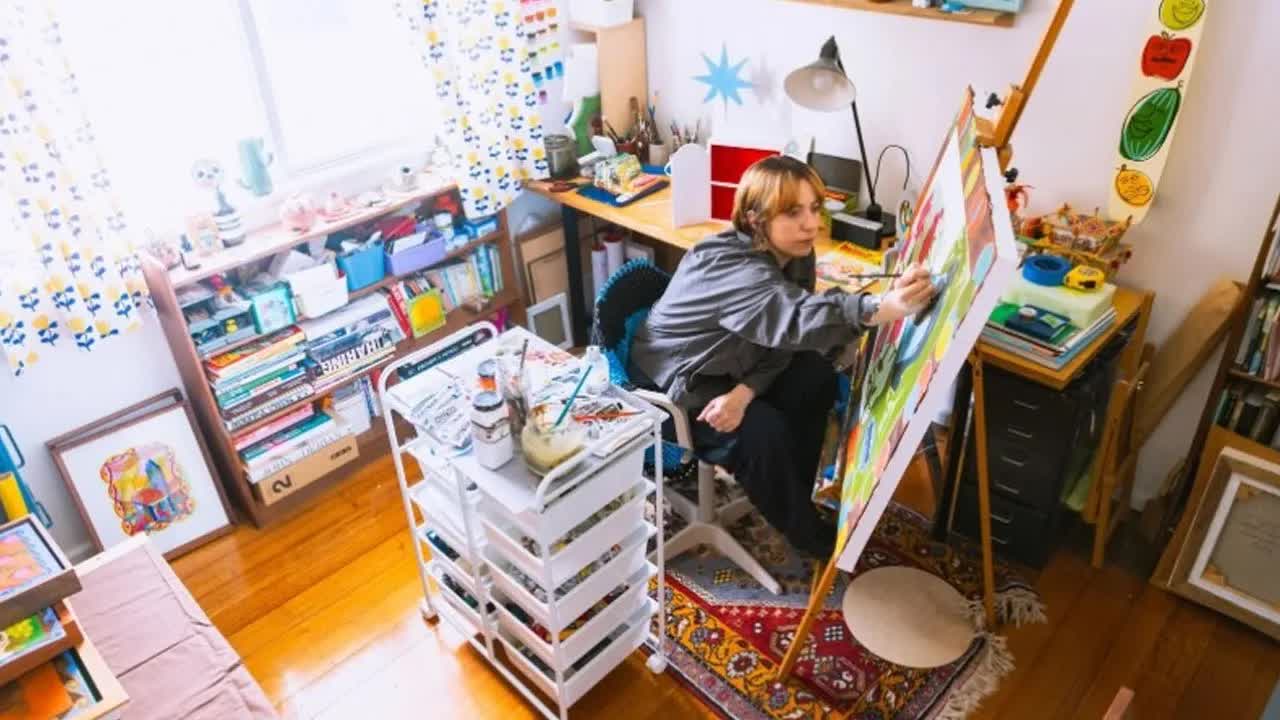
Artist Studio Visit: Melissa Grisancich
People, places, nostalgia, and the ugly stage in between.