Omer Deutsch went six years without a guitar of his own
Omer Deutsch is the luthier and founder of OD Guitars. He spent seven years designing plastic products before he built his first guitar. We asked him about design, sanding, building for Roman of Jinjer, and the guitar he finally made for himself.
When Jamie Gale asked Omer Deutsch how many guitars he owned, the answer was zero. He builds them for players all over the world. He had never found the time to build one for himself.
Omer is the luthier and founder of OD Guitars, which makes guitars for modern metal, djent and prog players. He studied industrial design and worked in it for seven years before building his first guitar. He answered our questions by email. Here he is in his own words.
Cold plastic
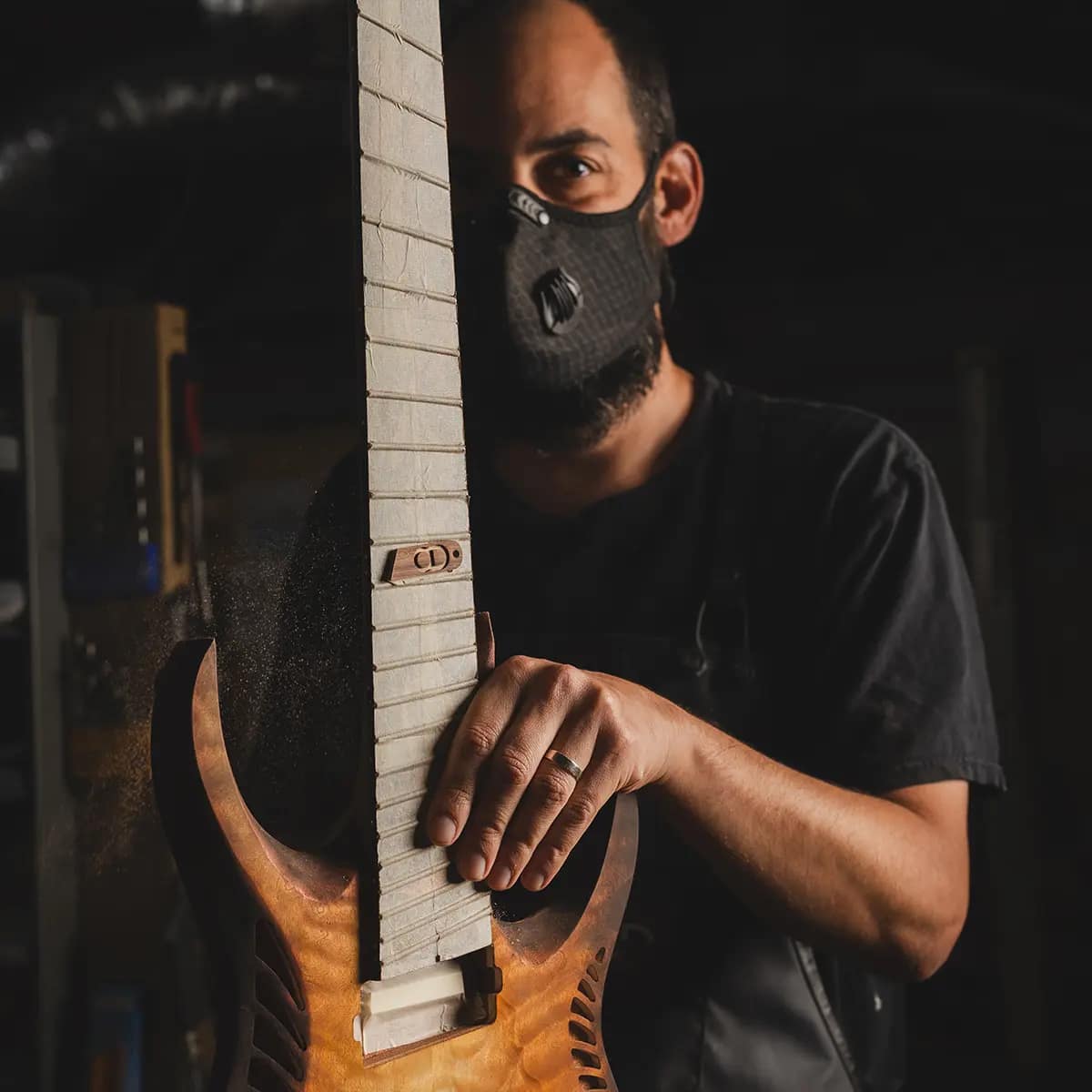
"I got tired of designing cold plastic products which basically meant sitting in front of a computer doing CAD all day long," Omer says. "After seven years, I wasn't satisfied."
The way out went back to being a kid. "As a kid I played with Lego, built and still doing so RC airplanes and gliders and played electric guitars. All of that eventually led me to try building a guitar myself, with the added value of being a designer."
Why a line looks the way it is
The design degree never left. "In design you learn how to understand shapes, not just drawing a curve or doing something 'in the shape of' but truly understanding why a line looks the way it is, how to create a desirable object, and how to catch the user's attention in less than three seconds."
"Then comes function, which is more of an engineering mindset: doing things with intention."
“In another simple words: how not to annoy the person using your product.”
Sand, and sand, and sand
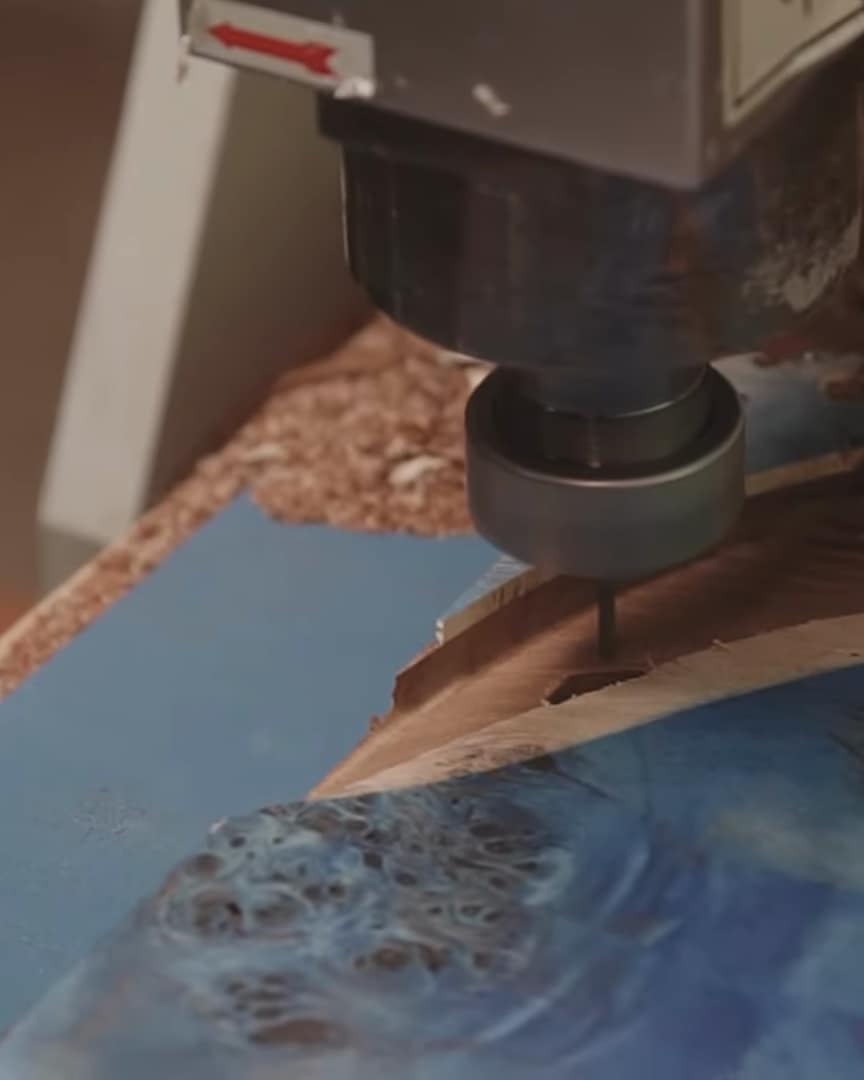
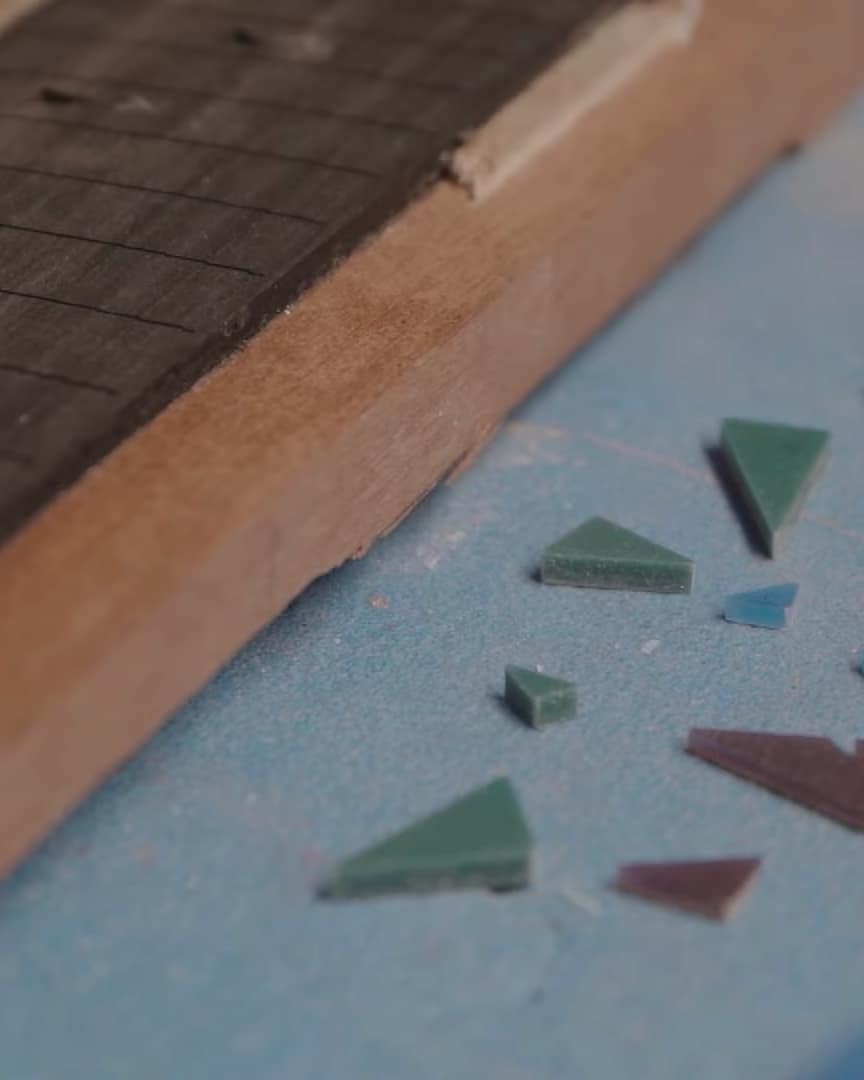
People assume the machine does the work. "You can machine everything on the CNC if you have the right skills and understanding of how it works, but you'll always have to sand...and sand...and sand."
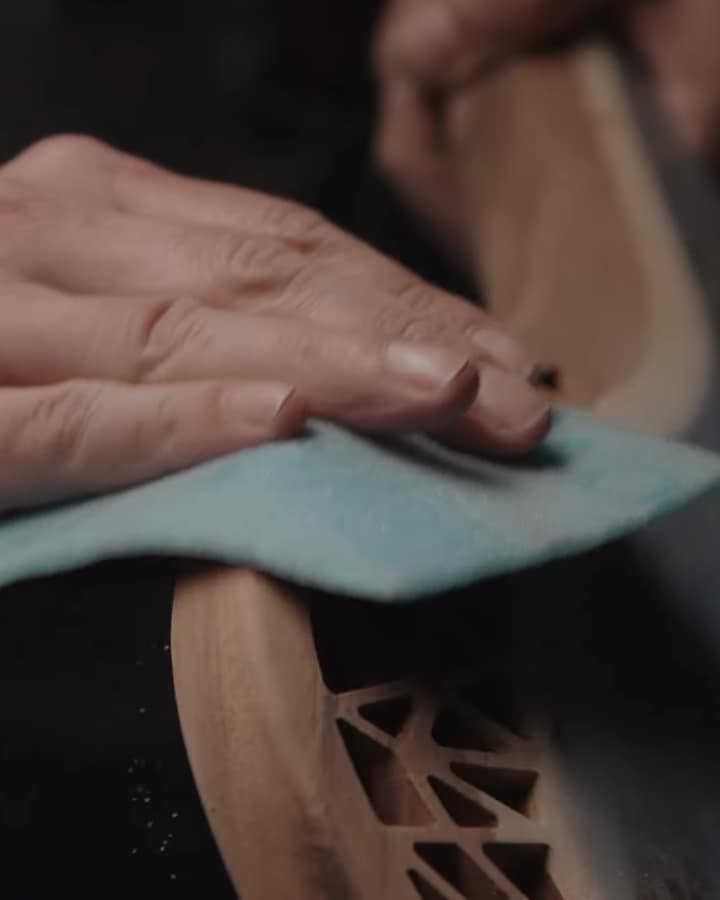
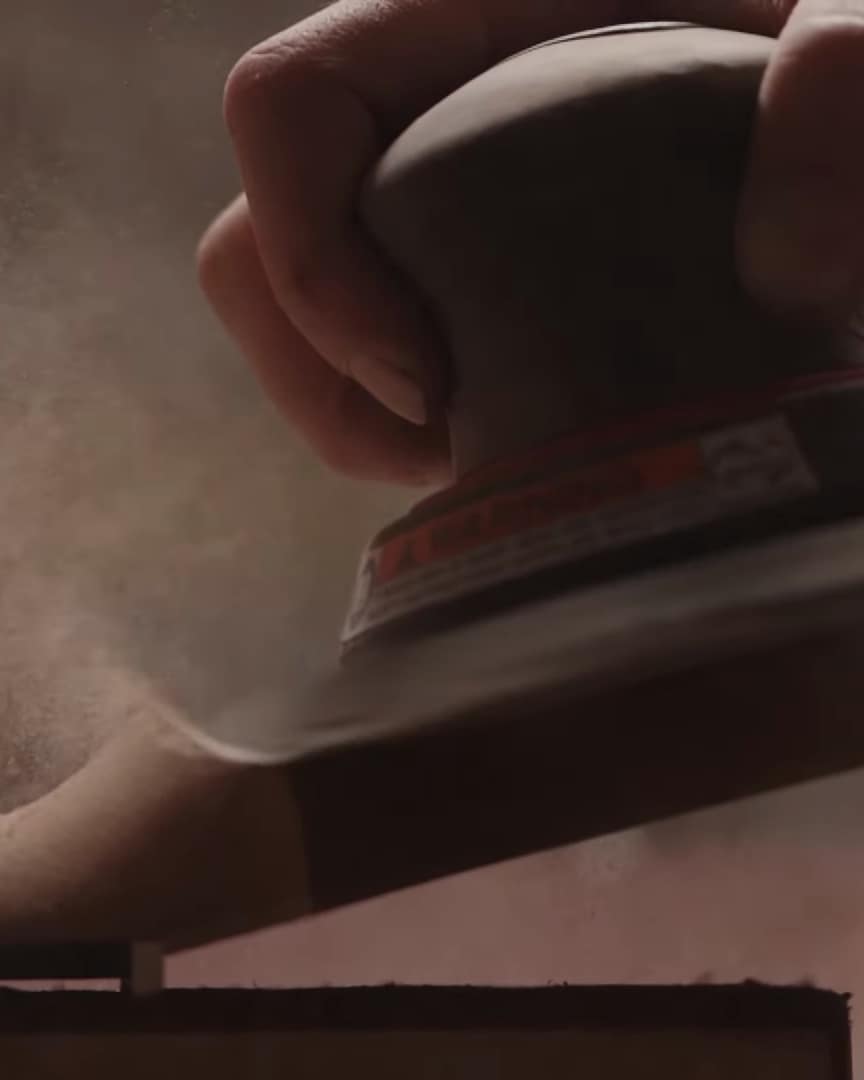
"What people don't see is the thinking process, it's not pressing a button and poof, it works. You need to know what you are doing, otherwise, it's just a guitar, not a musical instrument."
The part that matters most comes at the end. "The most important part of building a guitar is installing the frets and setting it up. You can do it wrong in many ways and right in many ways, but in the end, this is what separates a good guitar from a bad guitar you can't play on."
“Most of us are just one person behind all of it.”
"Then there's everything else that people neglect so easily: running a business, inventory, customer service, running a shop, marketing."
Meeting the player
Every OD is photographed for its owner before it ships. We asked why that matters to him. "Because when I was designing products for the big companies, I never saw the end user or had a personal connection with them."
"With a guitar player it's different; a player wants to feel that their guitar is an extension of their body. For me, being able to create something like that for a person is very unique, and every guitar tells a different story, it's never the same."
Not mainstream at all
His players come from prog and djent. "Prog and Djent are very accurate and intense styles, they (me included) want it accurate, fast, and most of all unique."
“There's something in this music that is very powerful and not mainstream at all, so you want to feel it as much as you can.”
"You feel like you belong in a cult or a group of individuals that don't settle for standard."
Brutal sound, and that's it
One of those players is Roman Ibramkhalilov, lead guitarist of the Ukrainian metal band Jinjer. Omer was already a fan. "Since I'm a fan of the band, I was able to understand the sound and what he needs as a player."
"Roman is a pretty simple and straight forward person, so no over-the-top stuff, basically, brutal sound, a baritone guitar and that's it."
Two hundred images
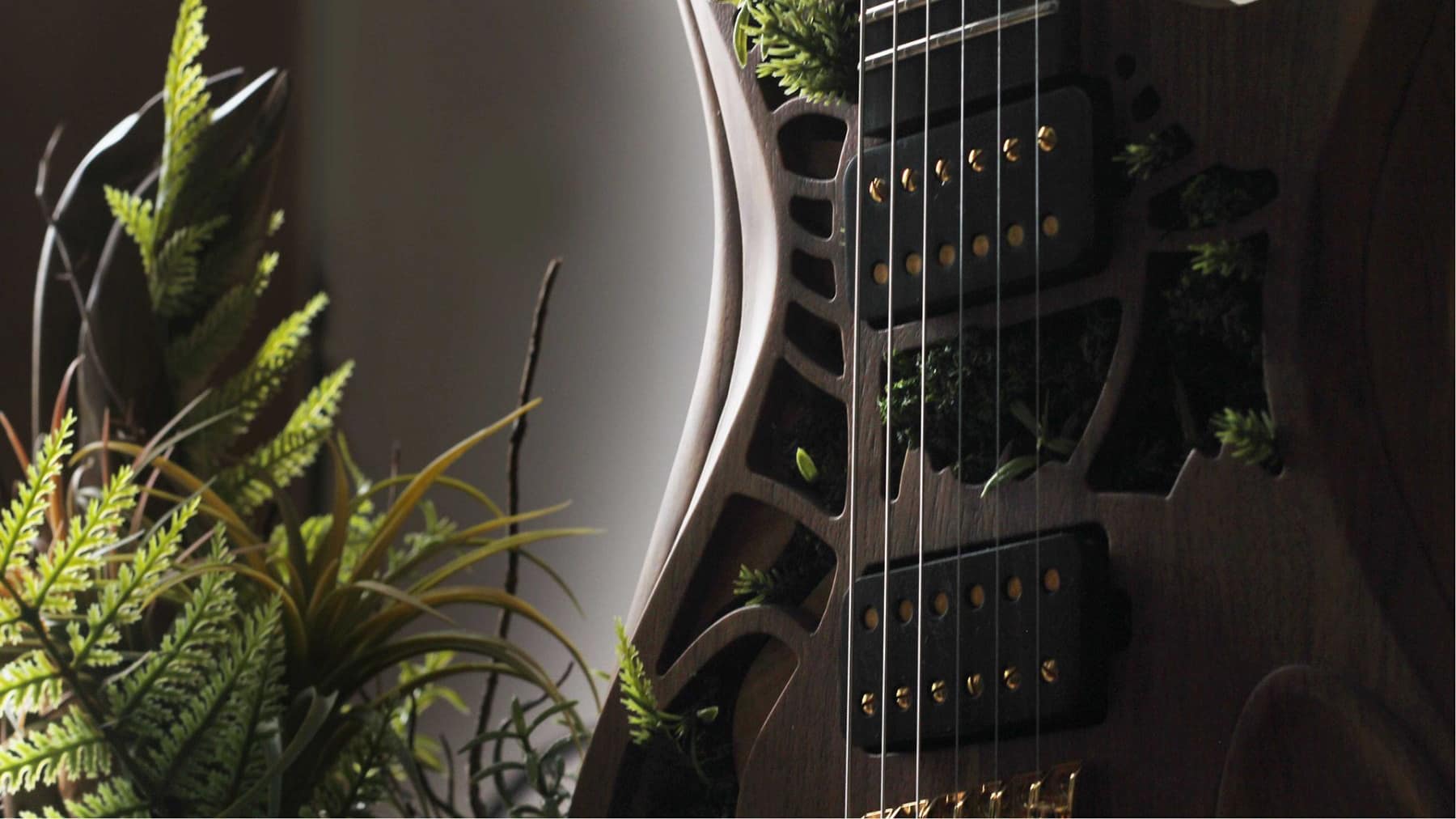
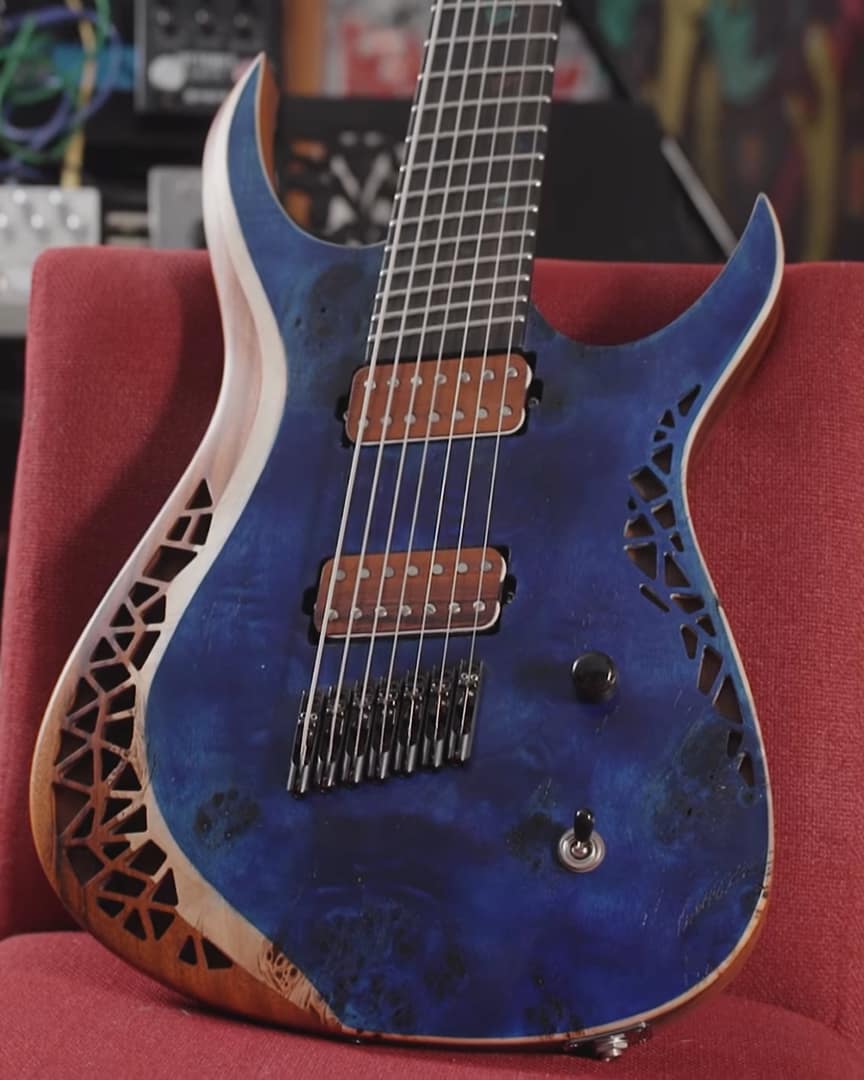
OD guitars are hollowed out inside with what Omer calls Natural Geometric chambering, shapes he first developed earlier in his career. For NAMM 2024, the big American music trade show, he let something else lead. "I want to amplify the shapes you see under a microscope when looking at nature leaves and wood, so I worked with Midjourney and wanted to see what it can create."
"After about 200 images, it finally started to get somewhere, then I said, that's all nice photos, now the real challenge is: can I create it in real life?"
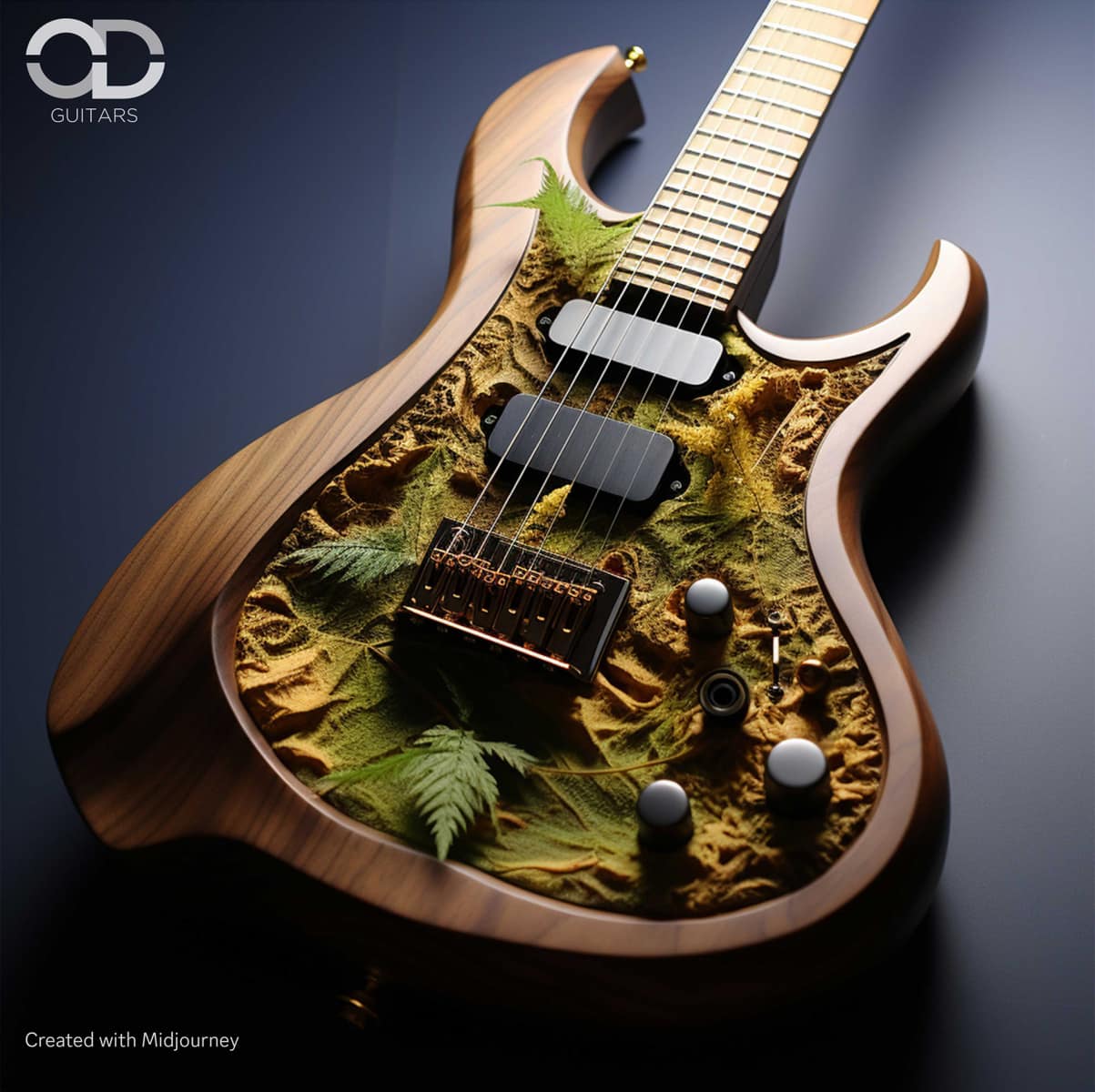
He built it, in walnut, with moss and twigs inside. On AI itself, he sits in the middle. "I don't love it, but I don't hate it either. You need to look at it with a critical eye, it's not black or white."
“It is here to stay and you and I won't stop it, so we need to learn how to use it, otherwise, we will be left behind at some point.”
Zero
We asked which of his guitars means the most to him. He told us about the conversation with Jamie Gale. "He asked me how many guitars I own, I said: Zero. Then he asked: Why? and I answered: I never find the time to build one for myself, so he replied: you'll never have time..."
“Then I realized I need to start treating myself better, and I built my first Venus after 6 years without an OD.”
The Venus was the first guitar OD ever designed.
Telling him how wrong he's doing it
Omer shares the work with more than 55,000 people online. We asked what he's learned about making things people want to watch. "That people enjoy human connections, seeing real work done by hand, a family business that runs well, and of course...saying how wrong I'm doing it or how they can do it better, lol."
They crave it
We asked what he'd tell someone who thinks they're not a creative person. "Everyone can be creative, they just haven't opened up to it yet."
"Some people are born into it, not DNA, but creative environment, and some people get there by themselves."
“The common thing for all is that they crave it.”
See Omer's builds on his website, on Instagram at @od_guitars and on YouTube at OD Guitars.
Related
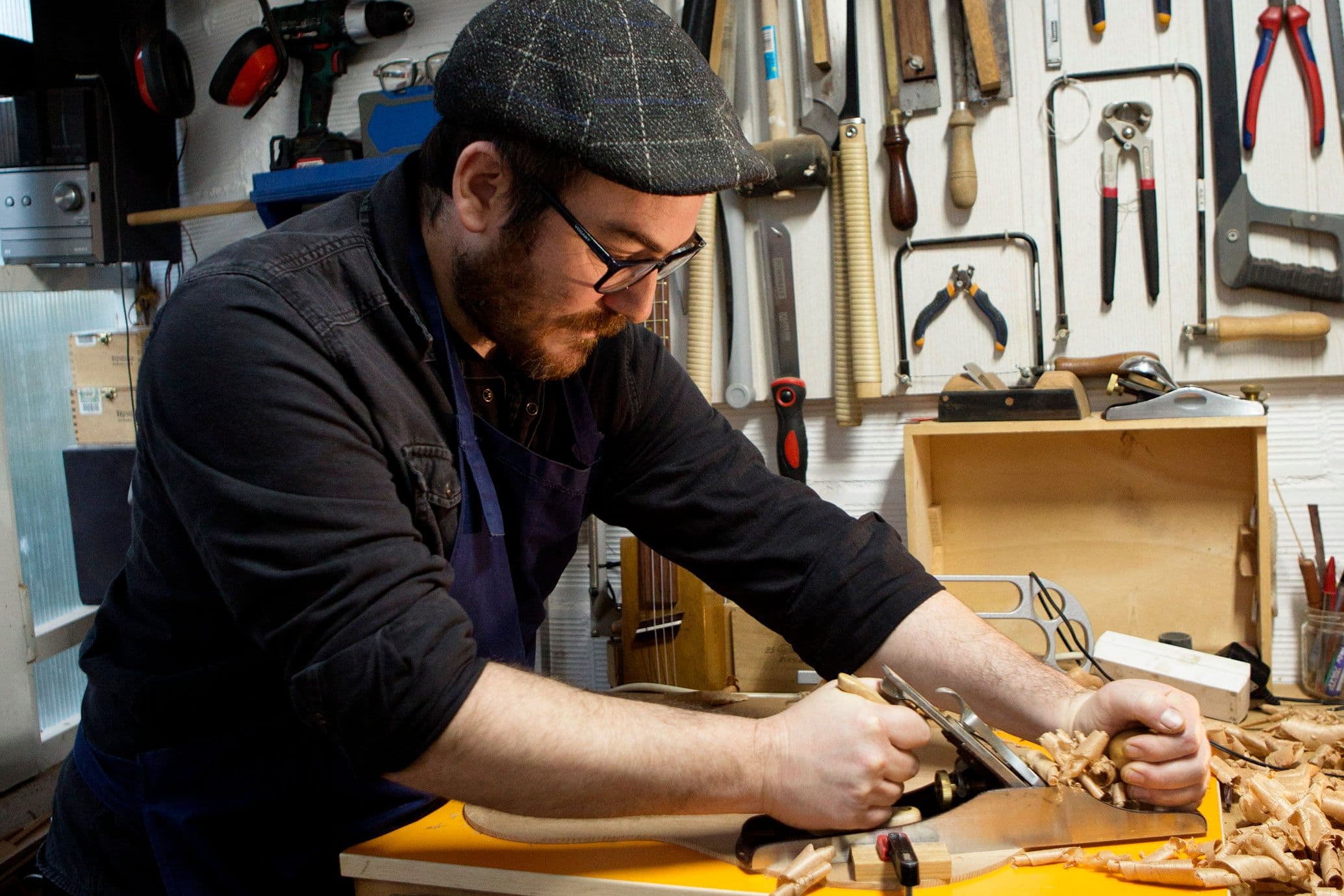
Matías Costa's first ukulele was awful. He kept it.
Luthier Matías Costa built his first ukulele from a cigar box. It was awful, and he still keeps it. Now he's built a guitalele for Jorge Drexler.
Lindsay Zuelich saw a $200 butterfly and made 40 of her own
Woodworker Lindsay Zuelich saw one framed butterfly for over $200 in a Costa Rica airport. She wanted a whole wall, so she learned to make them.
What 18 makers taught us about making things
Painters, a glassblower, a darkroom, a jeweller, a motorcycle builder. One lesson from each, in their own words.
Inside the Workshop: The Reality of Custom Motorcycle Building
From the home garage to a full-time workshop, one story at a time.