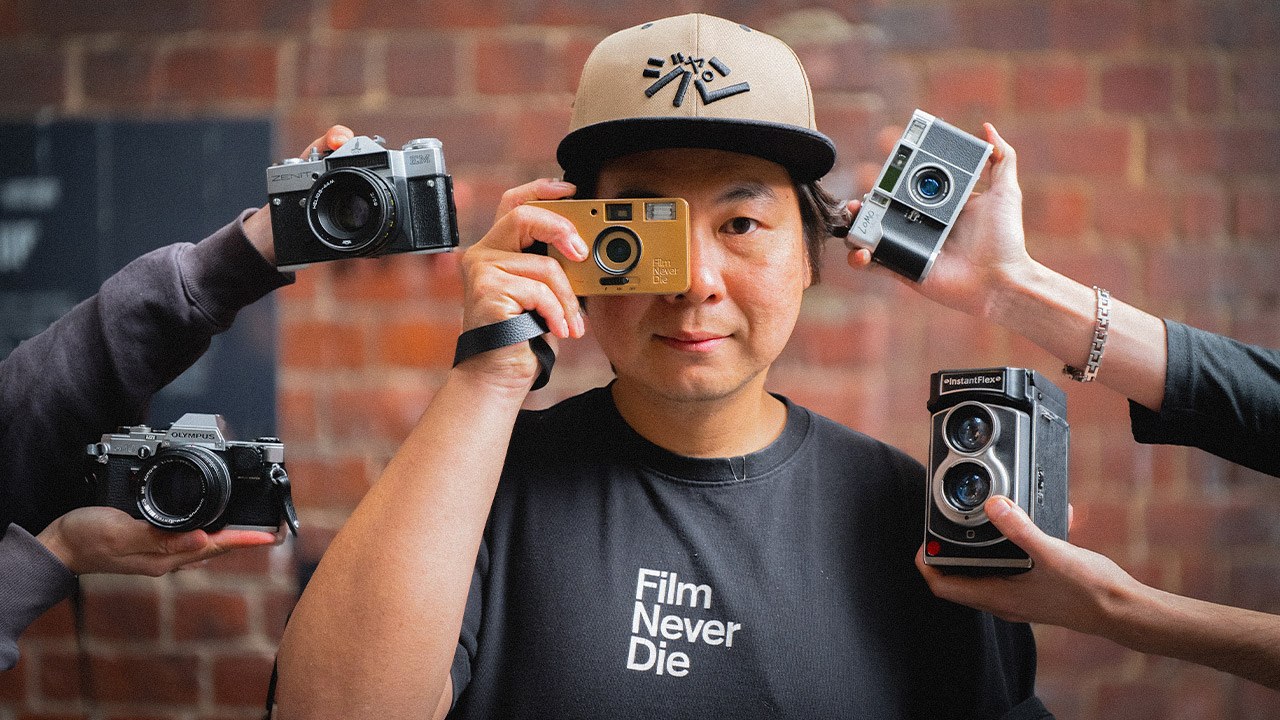
Why This Guy Thinks Film Photography Will Never Die
Gary Wong started Film Never Die in 2011 by reselling Polaroid film on eBay. Today it's a Melbourne shop, lab and community for anyone who still wants to shoot on film.
“A lot of people think I’m going into a sunset business, which is true. But something as analog and tangible still has its market, almost like records. As the world becomes more digital and more AI, people will long for more human, more analog experiences.”
Sixty packs of Polaroid
Film Never Die started with a gift. In 2010, Gary Wong’s girlfriend, now his wife, wanted a Polaroid camera. The timing was terrible: Polaroid was going bankrupt. A group called The Impossible Project had bought the old factory and started making film again, but the early stock was rough. “You needed to shield it from light, it was UV sensitive,” Gary told me.
The Impossible Project did get one thing right. Shipping was a flat $50, however many packs you bought. So Gary ordered 60, just under the GST threshold, gave 10 to his girlfriend and put the rest on eBay. They sold.
At the time he was working, as he put it, almost as an accountant. When that job let him go, he told people he had been promoted to CEO of Film Never Die.
The name still gets questioned. Shouldn’t it be Film Never Dies? “I did have someone check my spelling at the start,” Gary said. “He’s from the UK, so I got a stamp of approval from the British.”
From $5 to $25 a roll
Shooting film isn’t cheap any more. A roll that once cost $5 now costs around $25. Gary estimates Kodak was making about a billion rolls a year in its heyday around 2000, and closer to 75 million now. It has been raising both capacity and prices for a few years. He expects things to settle. “I think there’ll be an equilibrium where prices come down to something more realistic, to encourage people back to the medium.”
Where the magic happens
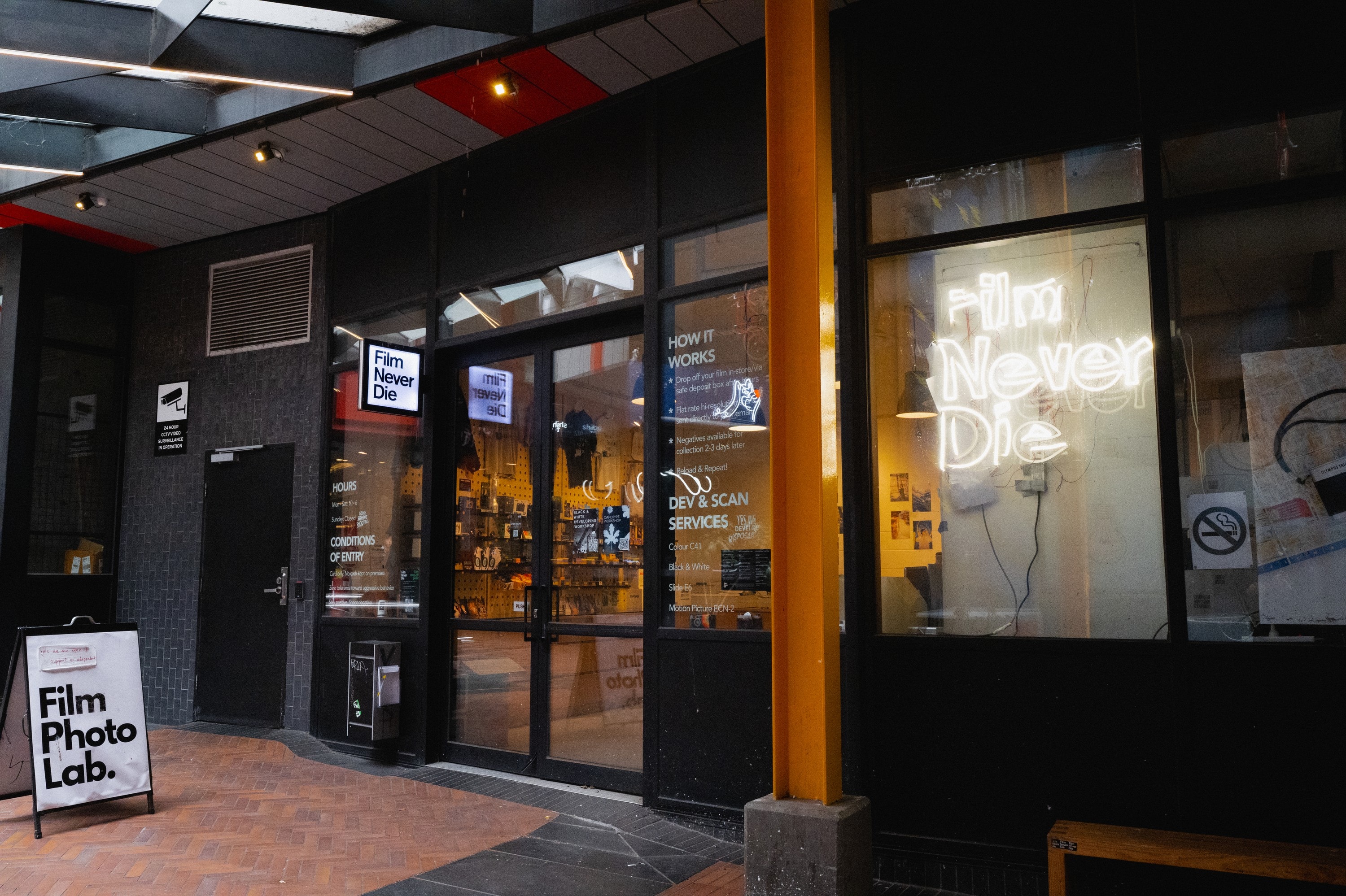
Gary describes the shop as a one-stop shop: somewhere to learn about cameras and film, get rolls developed, scanned and printed, see exhibitions, and grow as a photographer. “We’re very supportive of your art,” he said, “and we can grow together.”
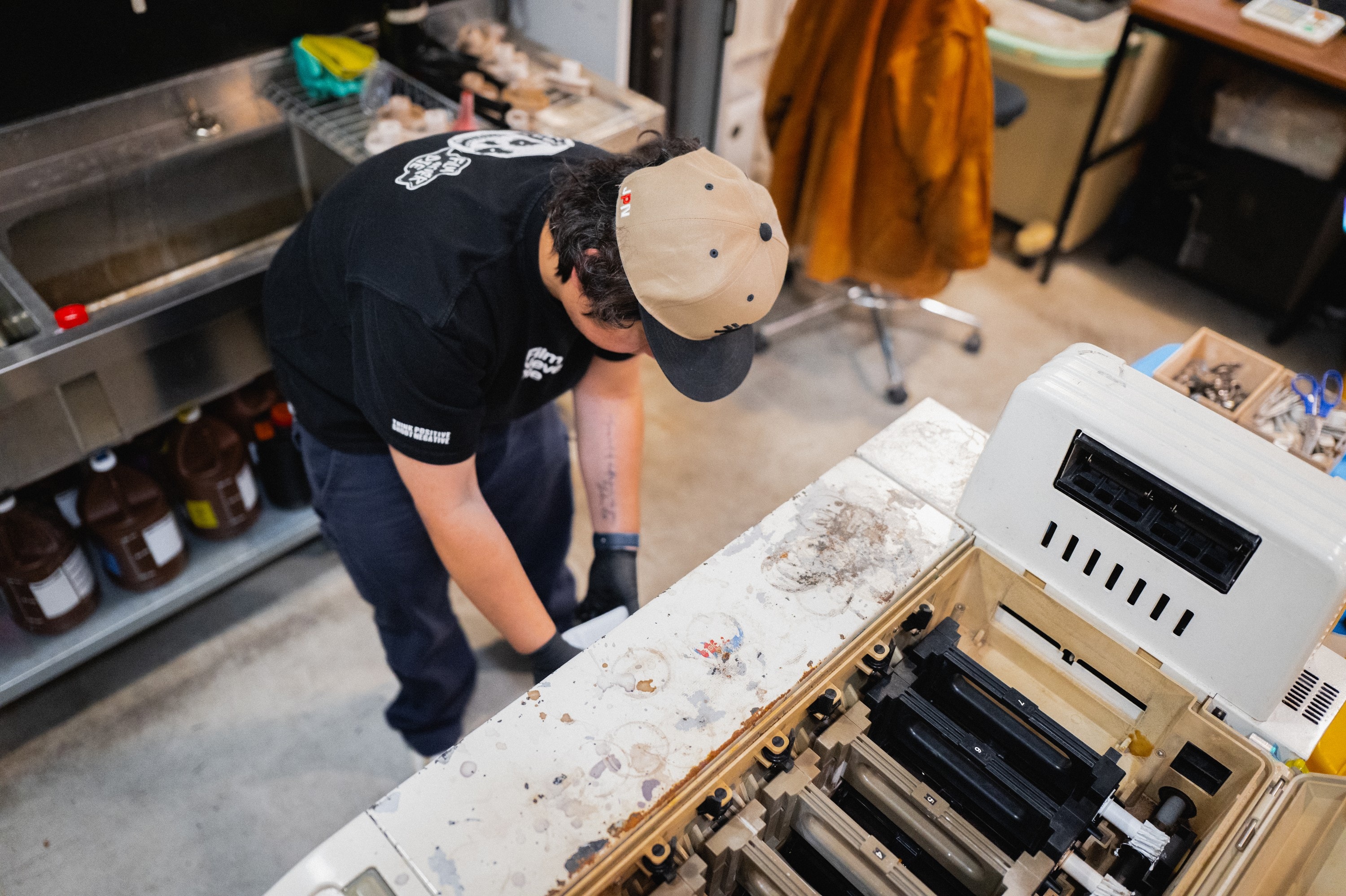
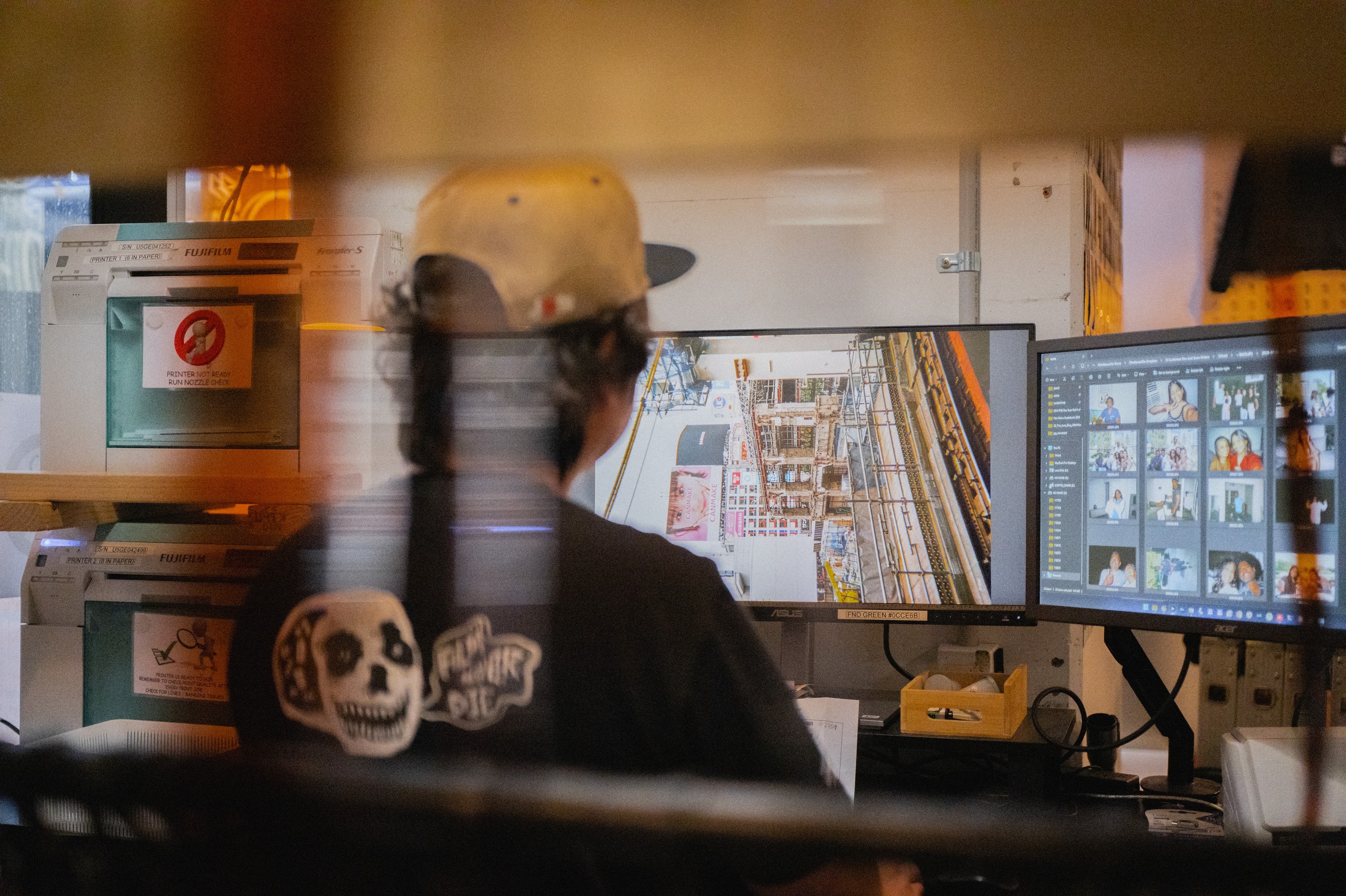
Behind the front counter is the lab, full of machines for developing, scanning and checking film before it goes out to customers by app or email. “This is where the magic happens,” Gary said, showing me the scanner. Every scan can be nudged by hand: the density, a little more magenta, a little more blue or yellow.
The Nana
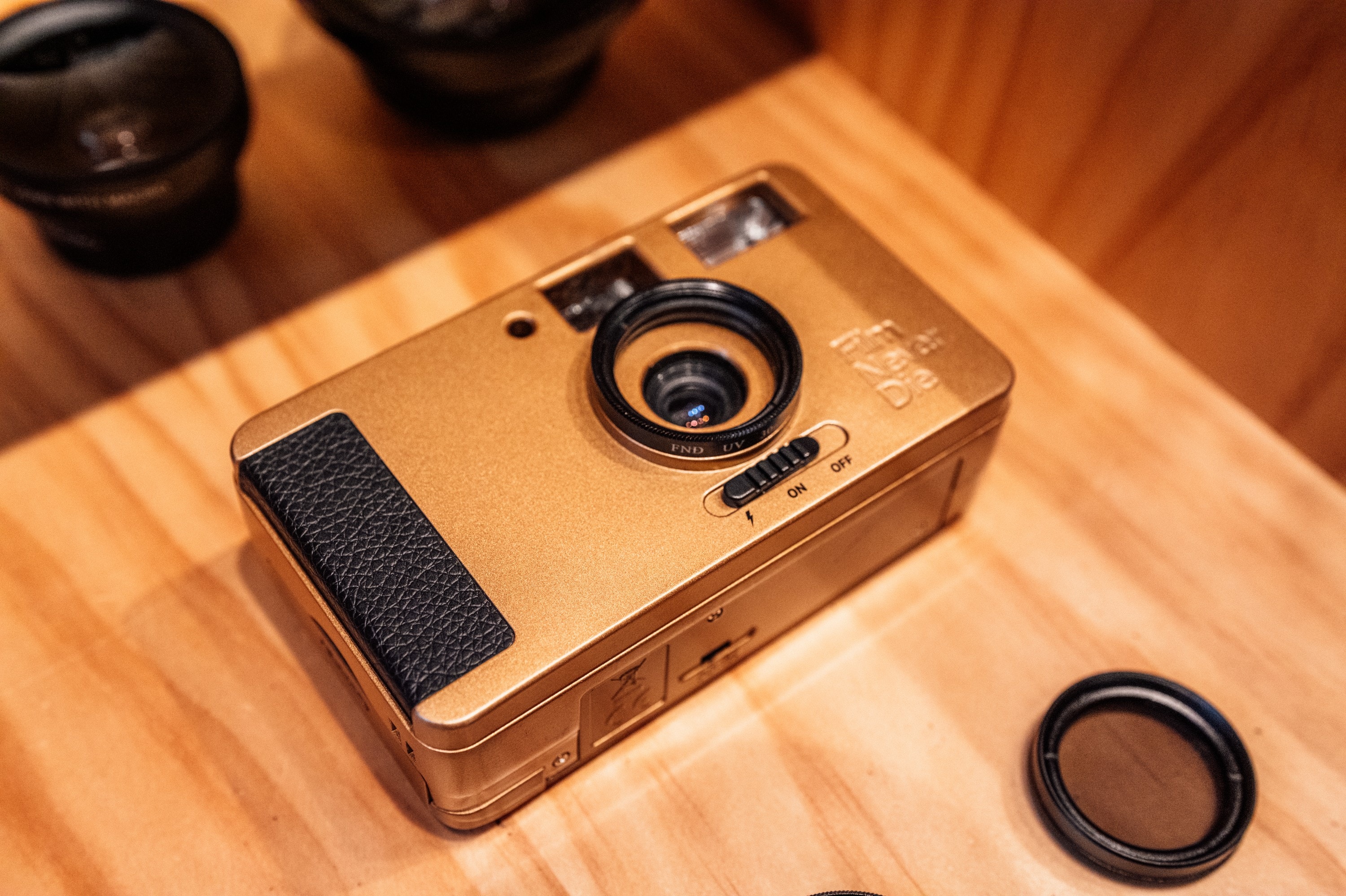
About two years ago, Gary went to a manufacturer that made disposable and entry-level cameras with a question: could they make something better, with a metal body and a better lens? It took two years of back and forth. The result is the Nana camera.
He is proud that it’s one of the first in its class with a metal body. Its form and feel are modelled on the Contax T2, a compact with a cult following. “I always believe the best camera is the one you have on you all the time,” he said. The name comes from his first daughter’s middle name.
Five things
Gary’s case for film starts with a digital camera. His first was a Sony Alpha 200, bought on a 30 percent discount. Two months later, the Alpha 300 came out. “There’s this consumerism where things keep getting better and more complicated,” he said. “The camera you use probably has a gazillion settings.”
Film strips that back to aperture, shutter speed and ISO, then composition and light. Five things to get right. “Sometimes you just need the fun of shooting again.”
He also thinks it’s a skill worth having. “The aesthetic, the way we need to go, is going to be very hard for AI to hit. I encourage people to learn it, because that’s what will set us apart.”
“The best camera is the one you have on you all the time.”
A walk with the Nana
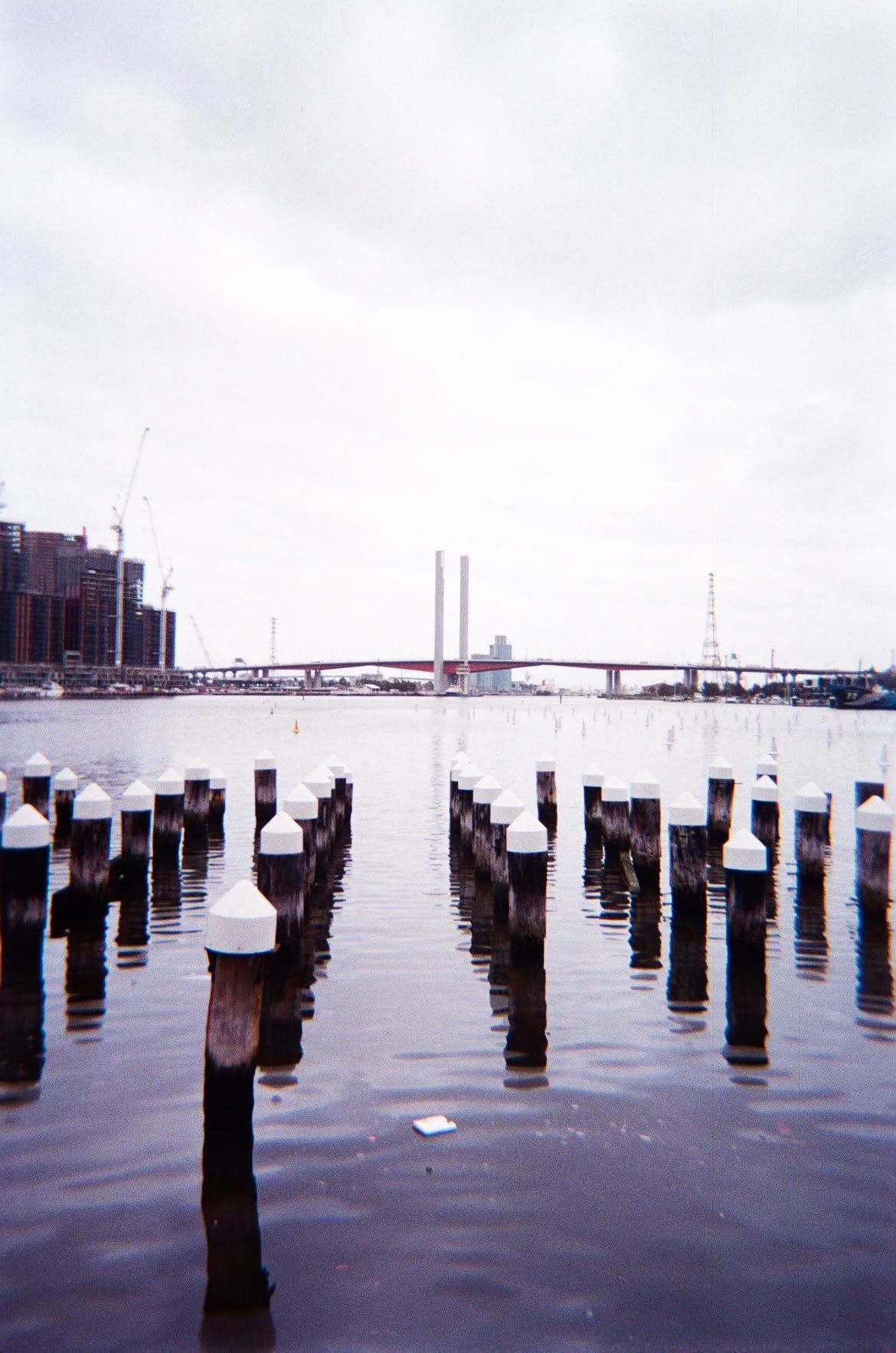
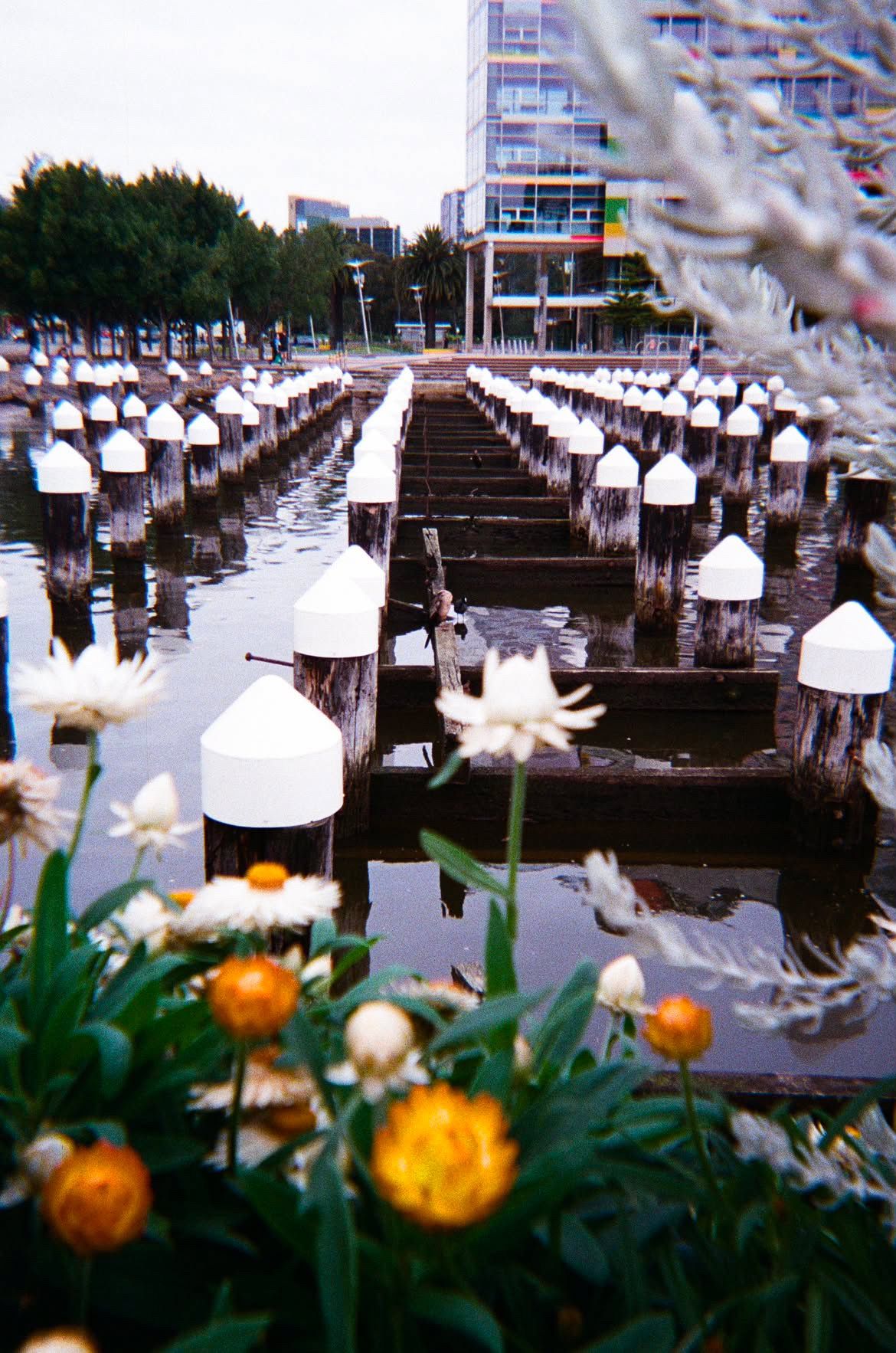
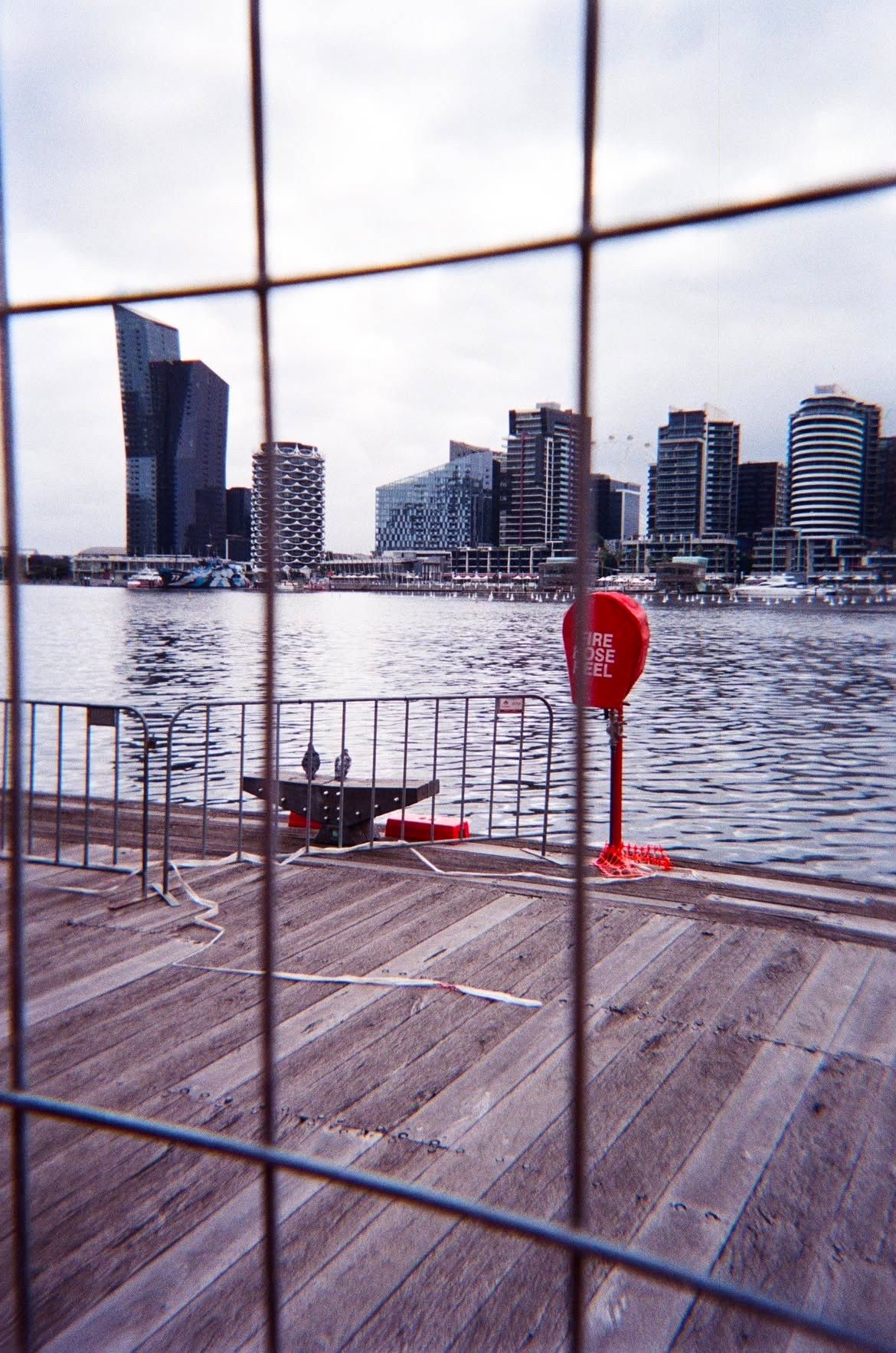
We loaded a Nana and went for a walk. Gary shoots by looking for lines and space: a wall of dots, a barrier, a door. He likes not seeing the result straight away. “Sometimes it’s good not to know, and just focus on the moment of taking the photo.” He tries to get out like this once a quarter, to walk, shoot and meet people.
No stupid questions
Gary has watched plenty of people pick up film, buy everything, sell everything and move on. But there’s always a next generation, someone who finds an old camera in the garage and wants to give it a go. Those are the people he wants walking through the door.
“We want people to feel they’re not just a number,” he said. “Whatever question they have, this is a safe place to ask. No stupid questions.” The hope is that they leave inspired to shoot more, and to be part of the community.
For Gary, that is the whole idea behind the name. “The longing for human connection never goes away,” he said. “Sometimes you’re dealing with information overload, and you just need to get back to the basics.”
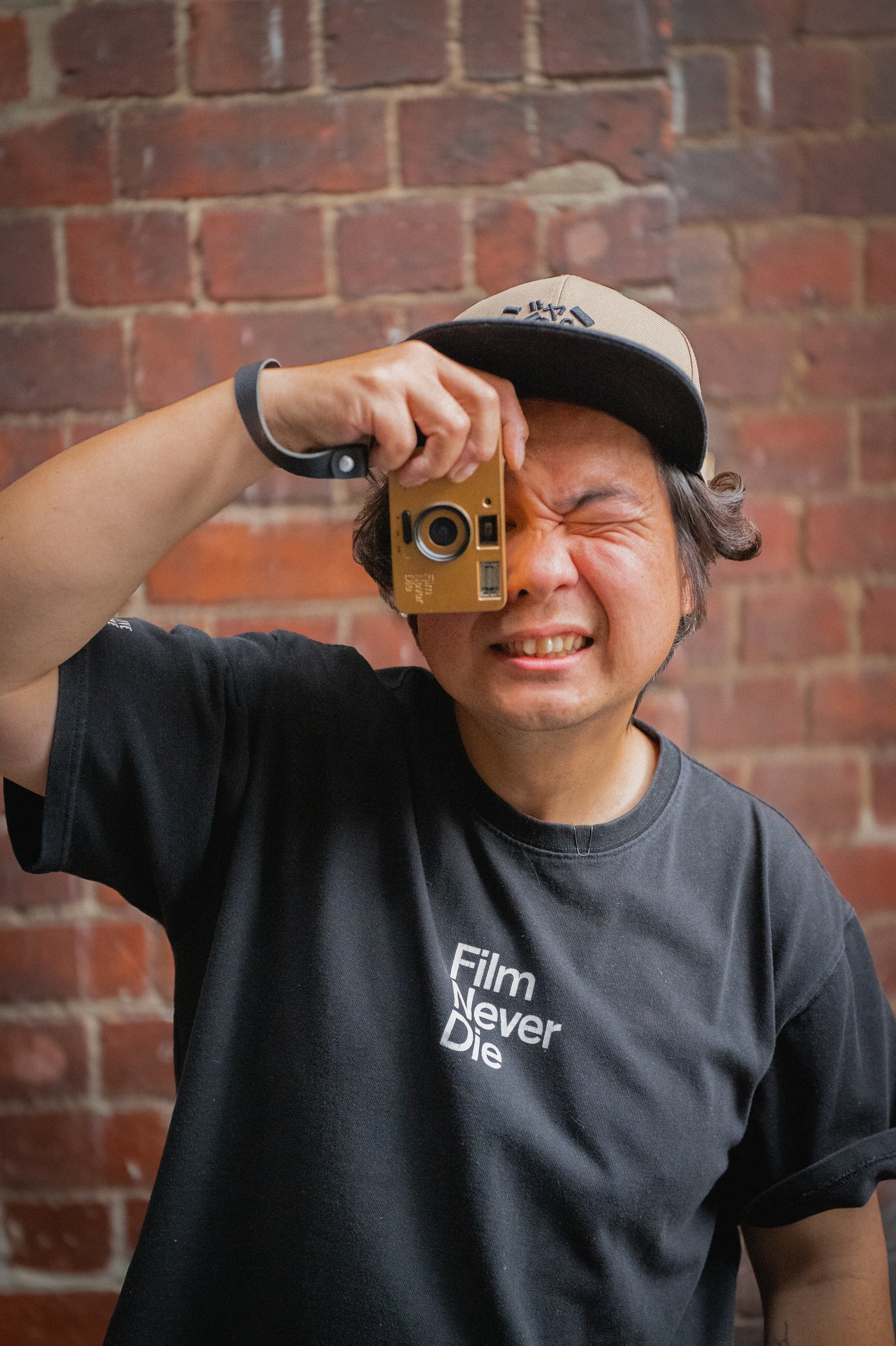
From the shoot
Related
From Negative to Print: A Complete Guide to Analog Developing
One negative, one print, and the time it takes to get there.
He Never Trained As An Artist. Now He's In The National Gallery.
Drawing as magic, play as a practice.
The Painter Who Started Painting to Heal
Painting as therapy, and as something to leave behind.
Inside the Workshop: The Reality of Custom Motorcycle Building
From the home garage to a full-time workshop, one story at a time.