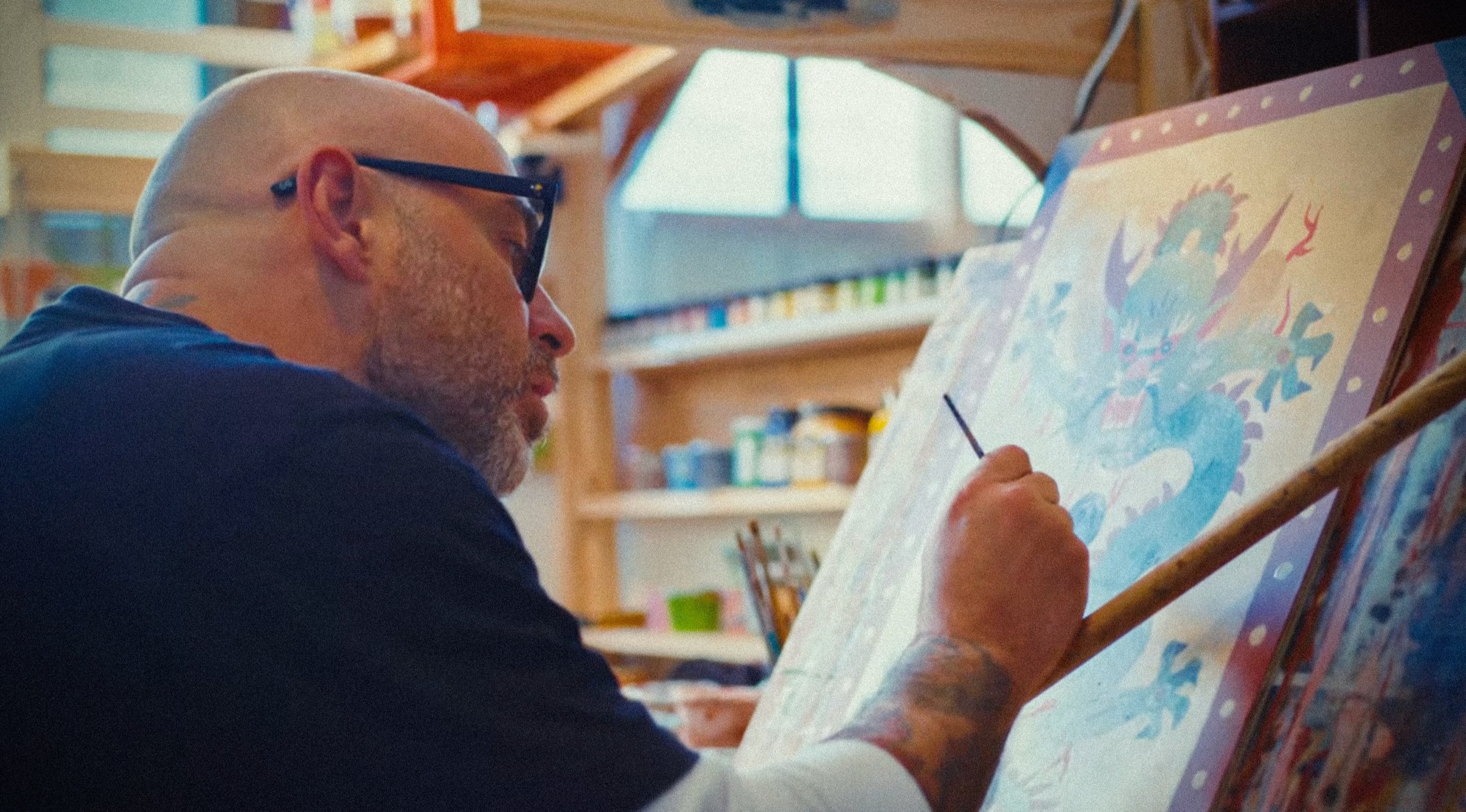
Why I Left Tattooing to Pursue My Passion for Painting
Jakob Morley started tattooing in the late 90s and began painting seriously at Christmas 2018. People responded, and painting took over.
“If it’s really fun, without thinking about it, you’ll just finish it, and it’s like, oh, I wasn’t trying to do that. It was just fun. And those pieces are often the ones that I love the most.”
Christmas 2018
Jakob Morley started tattooing in the late 90s. Painting came much later. “I started painting seriously Christmas 2018,” he told me.
He was lucky, he says, in how quickly it caught on. “People sort of responded to it, so I was able to start selling pieces pretty early.” From there he cut back his tattoo days and kept going like that until lockdown.
Lockdown changed things. With nothing else to do, he just painted, heaps. Before long his painting had grown bigger than his tattoo page. “I was like, oh, people kind of quite like it.”
“The world talks to you through symbols.”
Acrylic first, oil on top
“That’s all acrylic,” Jakob said of one piece. He lays down the main flat colours in acrylic first, then goes over the top with oil “to get these little details, or the texture that I want.”
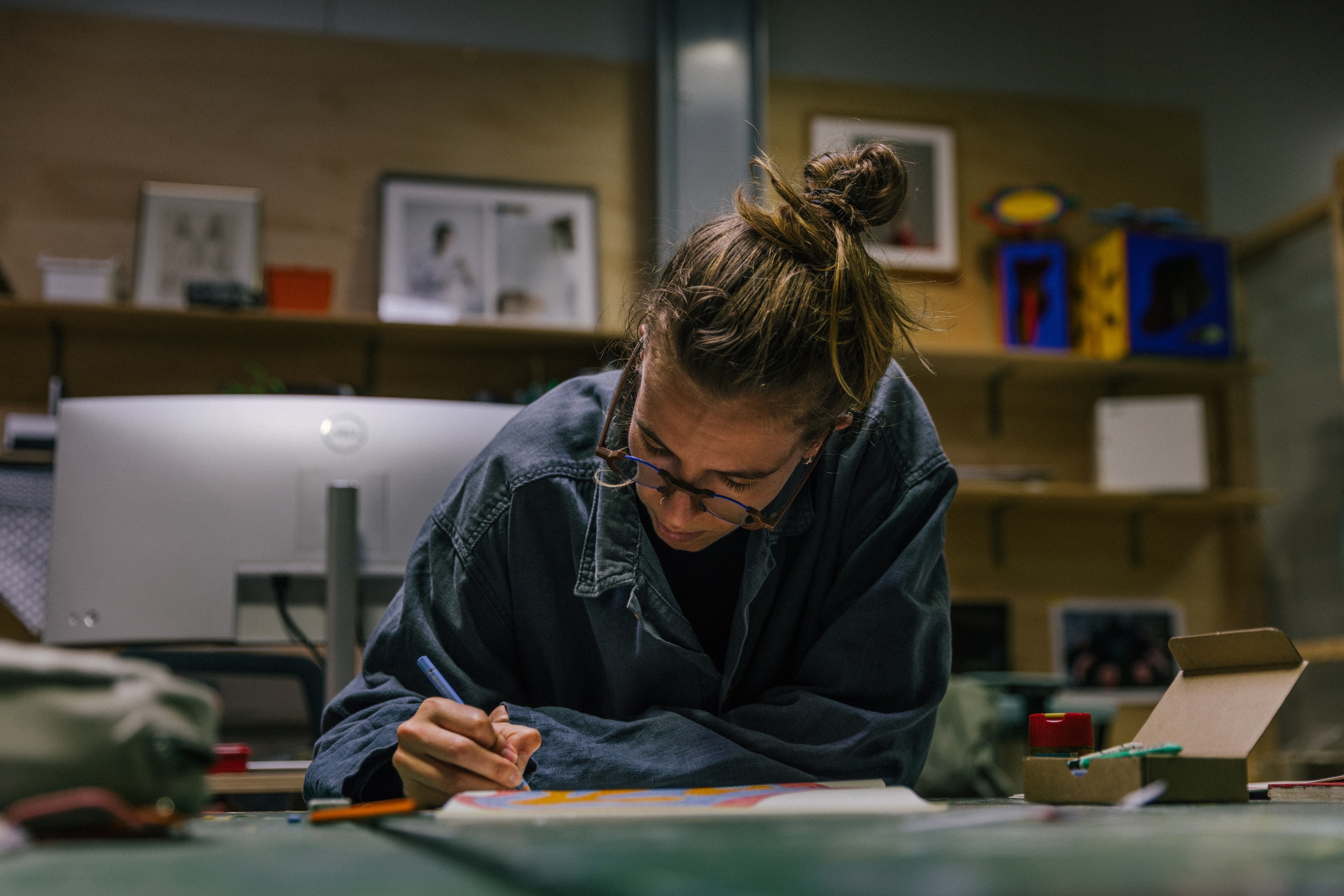
A day in the studio doesn’t follow a fixed pattern. Sometimes he does drawings. Sometimes he is prepping boards. Sometimes he works on little things and tries out different brushes. The process, as he describes it, is a loop. “It’s a mix of trying new stuff, and then going back to what works, and then getting bored of that, and then trying something new.”
He really enjoys working on wood, too. There are specific ways it reacts to paint, and he likes how it looks when it is finished.
A language of symbols
Symbols run through Jakob’s paintings, and he has thought about why. “The world talks to you through symbols. People know what they mean. When you see something, it conveys a feeling.”
He likes that a symbol can be read, almost like a language. Someone can look at it and think, oh, that means that. But it can also be simple, taken just for what it is, or interpreted in other ways entirely.
Then there is the fun of putting them side by side. “Some things work really well together,” he said. “Sometimes you can put two things that aren’t supposed to work together, and it makes a bit of tension.” And beyond all the meaning, he added, “they’re also just really fun things to paint.”
More aware of my time
Becoming a dad changed how Jakob uses his time, though not the way people expected. “A lot of people think when you have a kid that it’s going to chew up your time,” he said. “But I think it just really chews up the time that you’re wasting. For me, that was the case.”
His daughter is only two, and she already loves painting and drawing. He doesn’t really paint at home. “It’s cool to watch her, and just how free she is. She just goes for it.” He watches the way she holds the pen.
“If I’m forcing it, it can look really stale, and there’s something about it that’s a bit dead.”
Fun as a metric
That freedom connects to something Jakob uses to judge his own work. Fun, he reckons, is almost a metric for whether a piece is working. When it is fun, the piece seems to finish itself, and those are often the ones he loves most.
The opposite is just as clear to him. “If I’m forcing it, it can look really stale.” There is a feeling in the good ones that the forced ones lack. “It’s often the experiments,” he said. “When I’m not trying to do something, that’s when the good stuff happens.”
Bigger pieces
As for what is next, Jakob keeps it simple. “I just want to keep trying to do more and more bigger pieces and see where it goes.”
What matters most is that he keeps enjoying it. “I would hate for it to become like, you know, I might have financial stability and stuff, but a bit bored. I might as well work in a factory. What’s the point of it all then?”
Related
Inside the Studio of Painter Sam Octigan
A slow, steady visual language, and the small leap at the end.
Artist Studio Visit - Angharad Neal-Williams
Flat colour, quirky lines and imagined worlds.
What Happens Inside A Psychedelic Artist's Studio?
Clay, oils, Mr Cone Head and the battle between money and art.
Inside the Studio of Public Artist Abbey Rich
Art, furniture and playground, made for everyone.