Zander Clark paints one night a week
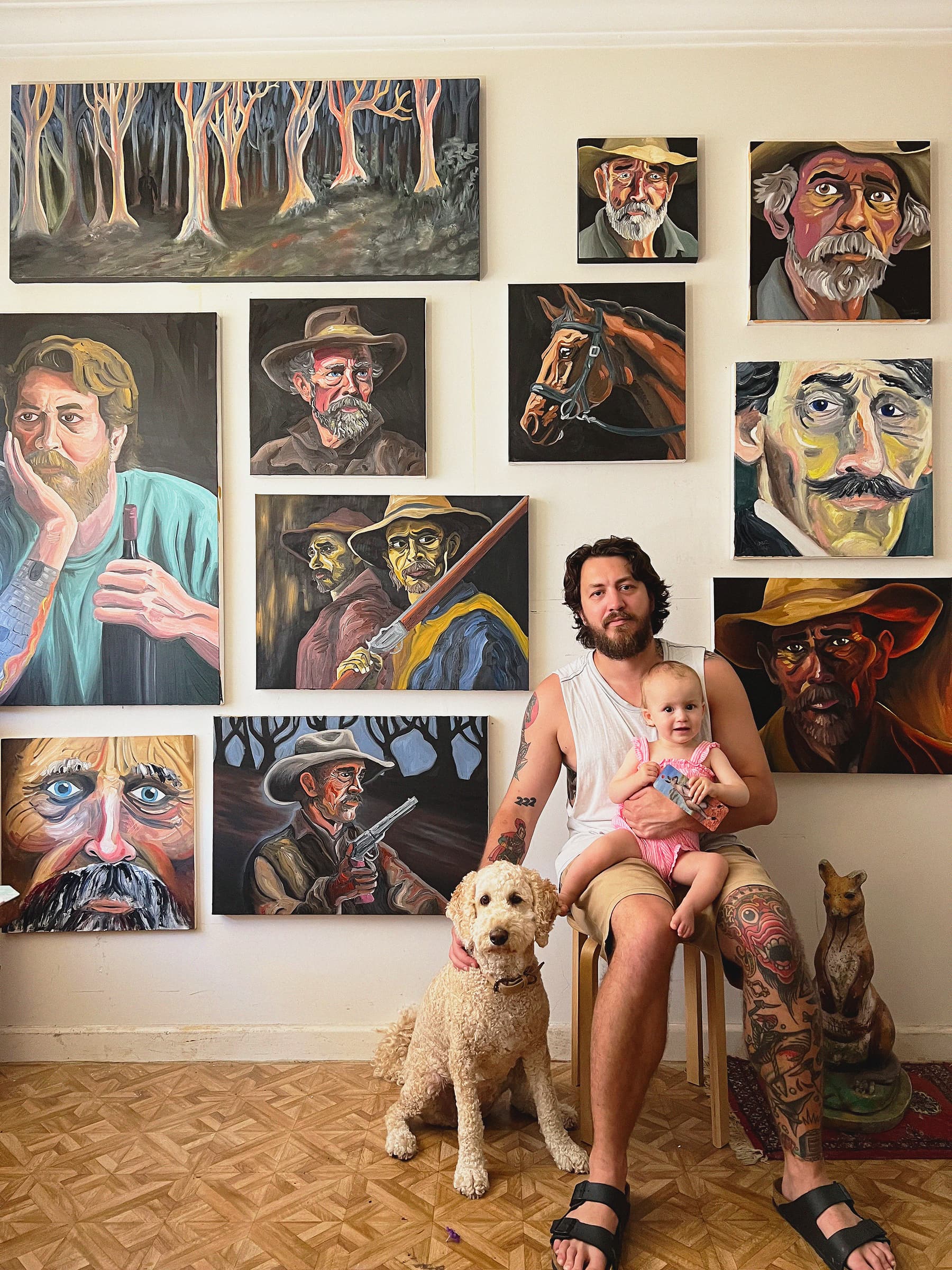
Zander Clark works full-time as a graphic designer and has two young daughters. He paints late at night, usually on a Saturday, after everyone's asleep, and most paintings are finished in one sitting. We asked him how he makes it work, and why he started when he had the least time of his life.
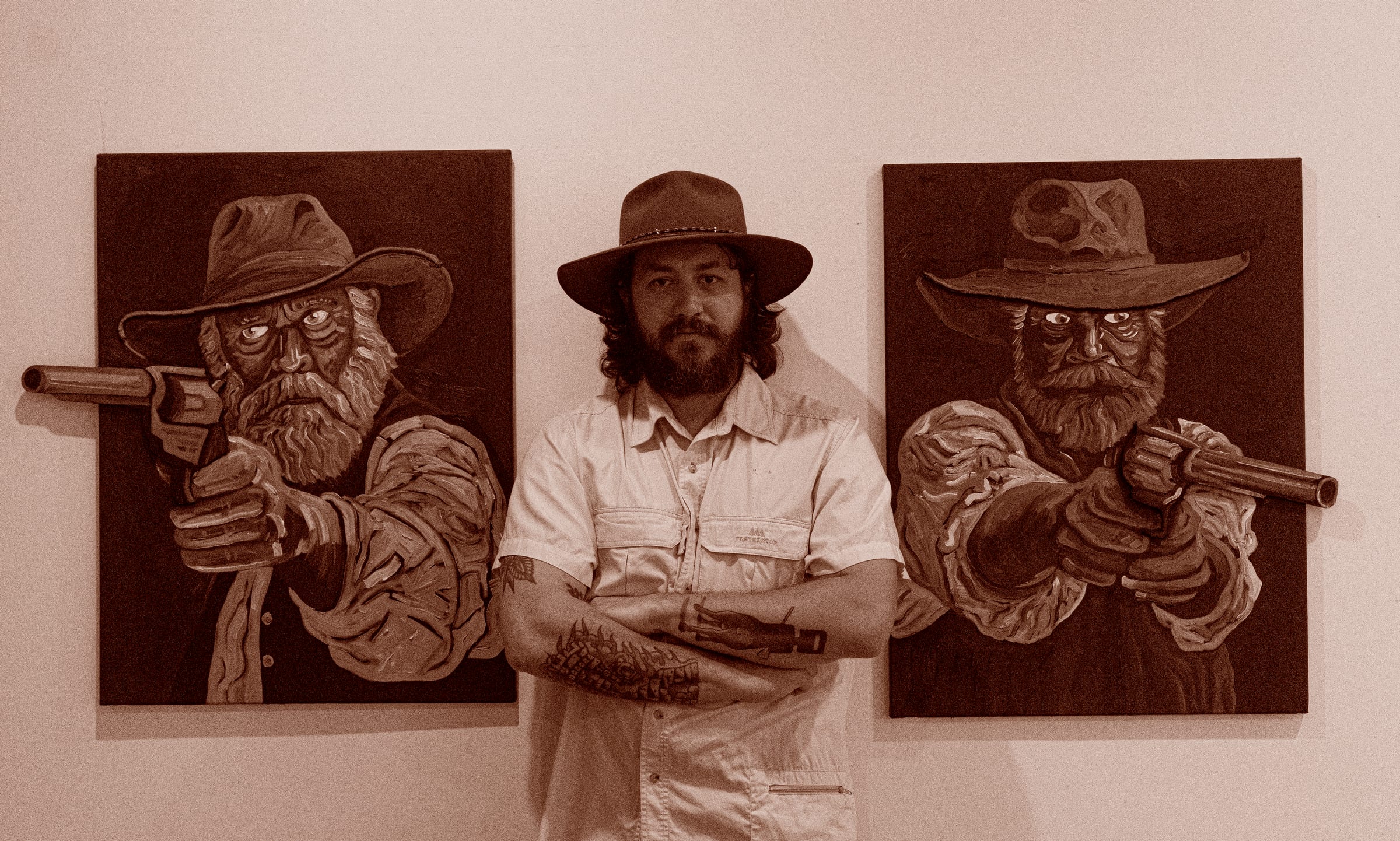
Zander Clark gets one night a week. "These days, most of my painting happens late at night when everyone's asleep, usually on a Saturday," he says.
The rest of the Sydney painter's week belongs to a full-time job as a graphic designer and to his two daughters, Arwen and Rúni. In the hours left over, he's built two solo shows of bold, thick oil paintings about bushrangers, convicts and the stories Australia tells about itself.
He answered our questions by email. Here he is in his own words.
Saturday night
The week is for getting ready. "I'll spend the week sketching, developing ideas and getting everything ready so that when I finally get into the studio, I can make the most of every minute."
When he does get in there, it's fast and loud. "I get in there, throw paint around, work out all that pent-up creative energy and gradually pull the chaos back into something I'm happy with."
“Painting is a real release for me. If I go a couple of weeks without it, I start to go a bit crazy.”
One sitting
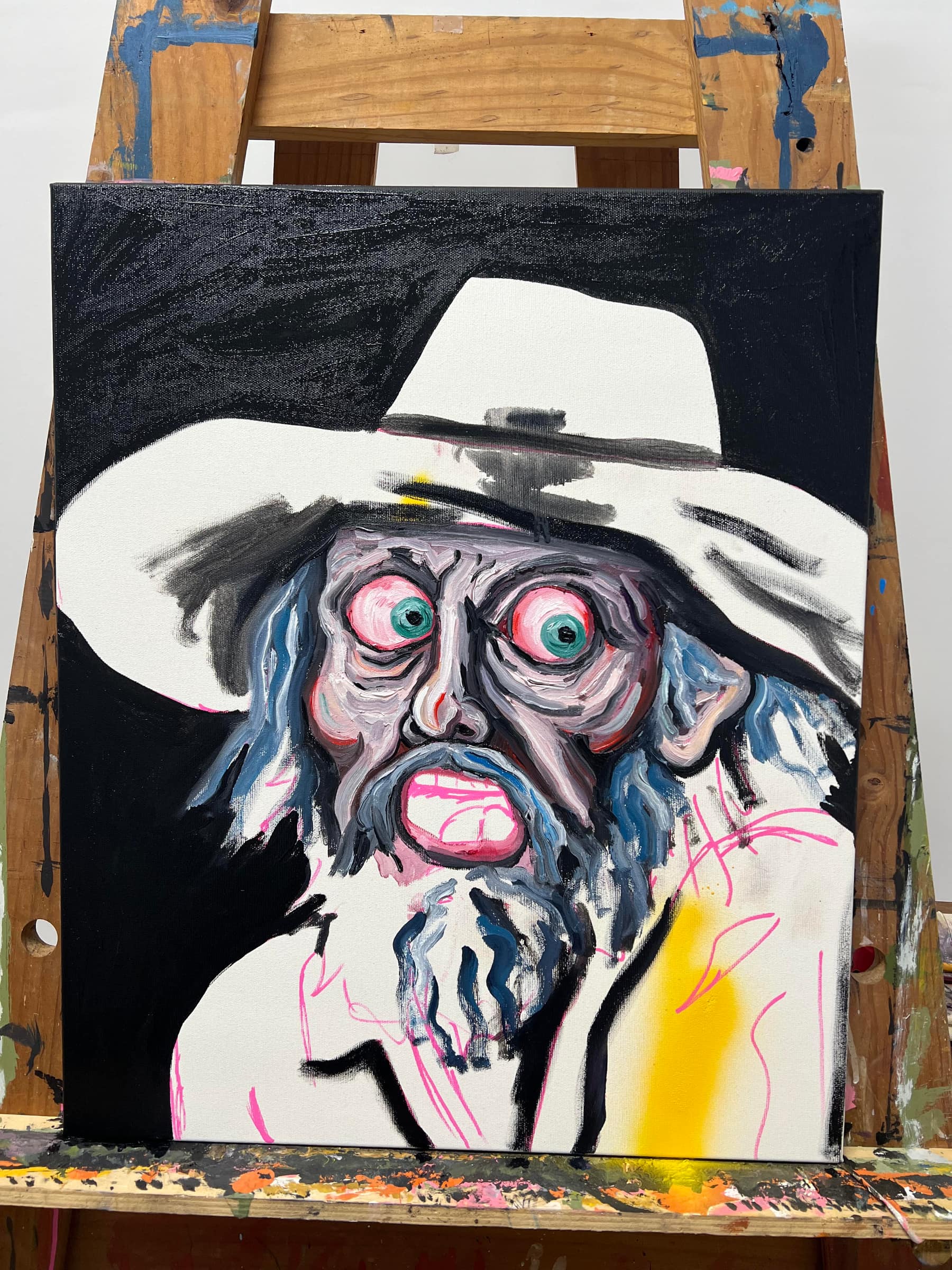
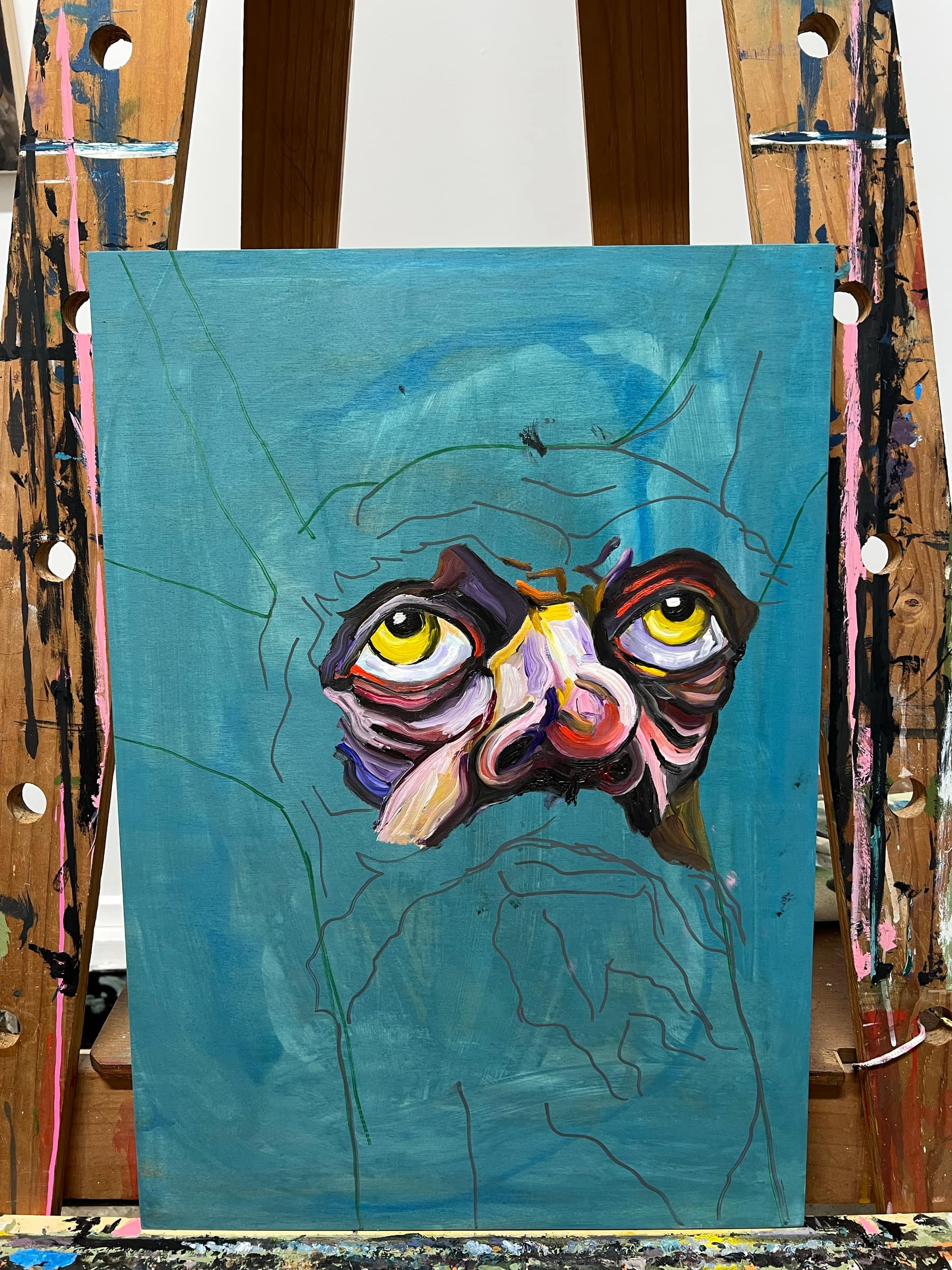
Zander paints wet-on-wet, thick, often with palette knives, so most paintings are done in one go. "Larger works might take two or three," he says. "I usually spend the last hour just staring at the painting, making little adjustments here and there. But once I leave the studio, that's generally it. The painting is finished."
The technique came from his heroes, he says, artists like Ben Quilty, Nicholas Harding and Paul Ryan. But it also suits a painter with a few hours a week. "I can throw everything into a painting in one session, finish it and move on to the next."
Design pays the bills
He still works full-time as a designer. Earlier in his career he did more illustration, influenced by artists like Reg Mombassa, but he realised he was pouring his best energy into work that wasn't his.
About three years ago, he moved to more commercial design to pay the bills, and kept his creative energy for painting. "It gave me the freedom to explore what I actually wanted to paint, rather than what someone else wanted me to create."
The baton
Art was always close. "My grandmother was an artist, I grew up painting in her studio, loved art throughout school and have always worked in creative fields," he says. "But it wasn't until I became a dad that I really decided to take painting seriously."
His grandmother died a few months before his eldest daughter was born.
“In a way, it felt like she'd passed the baton on to me.”
"All the artistic ambition she'd had throughout her life suddenly felt like something I wanted to carry forward," he says. "I wanted to see how far I could take it, not just for myself, but for her too."
He can laugh about the timing. "Of course, in typical fashion, I decided the perfect time to pursue becoming a 'serious' painter was right after having my first child, when I suddenly had absolutely no spare time." He sometimes wishes he'd worked it out in his early twenties. "But I think the limitations have actually made me a better artist."
The Down Underlands
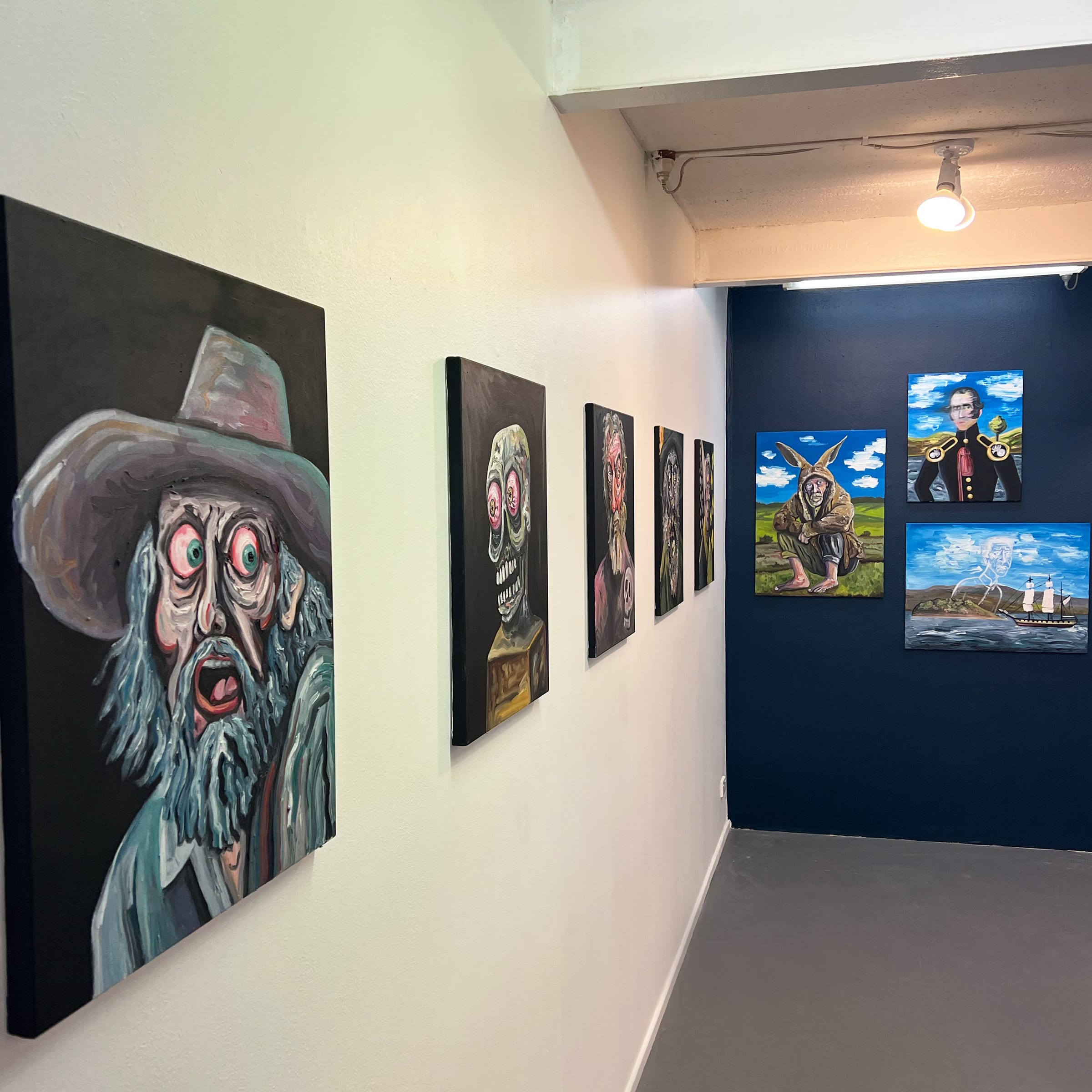
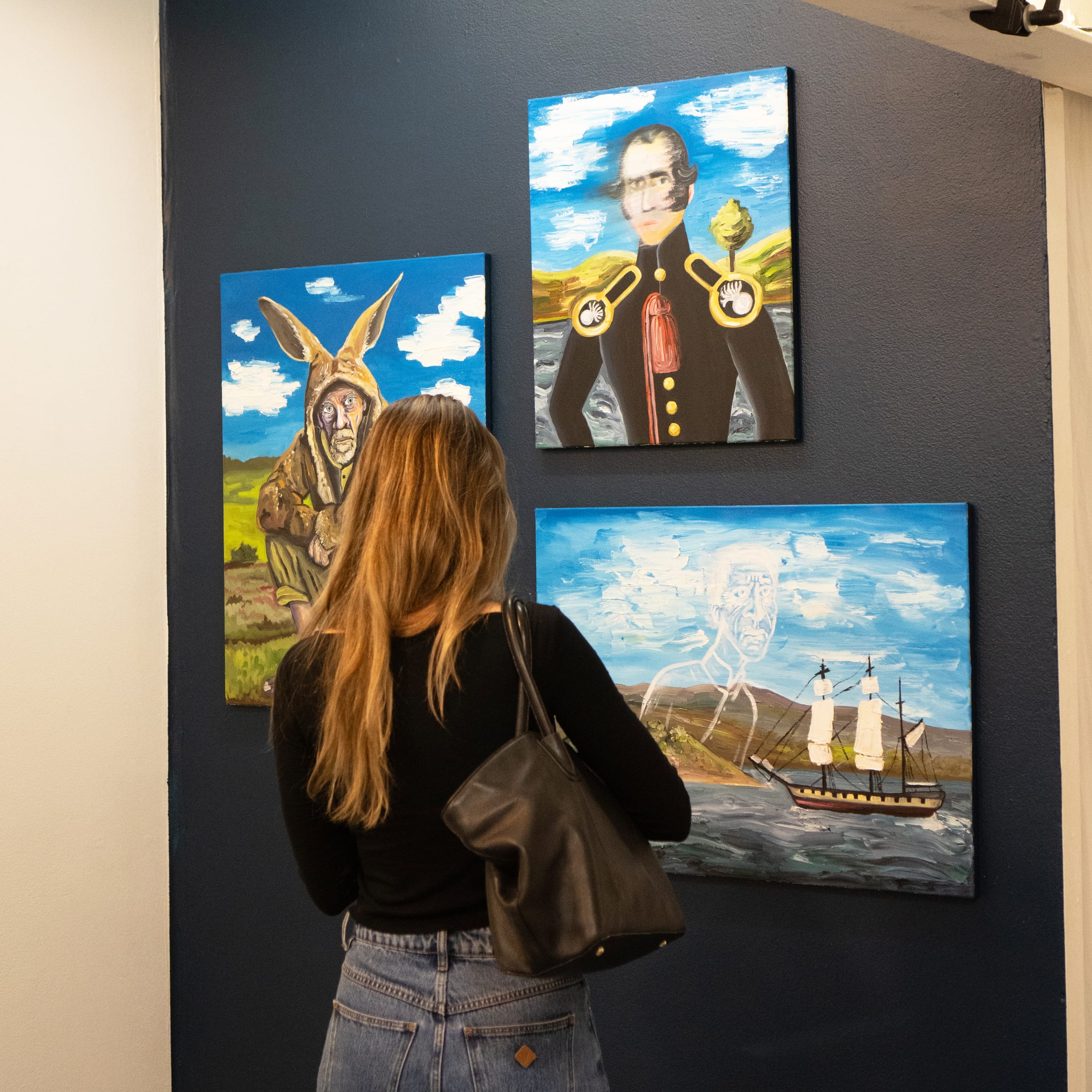
What he makes with those Saturday nights is a world. His first solo show, BOLTERS, at Brunswick Street Gallery in Melbourne, was "about the romanticism of escape and freedom, particularly through the stories of Australia's bushrangers." The second, MESSY PAST, went darker, into the penal history of Port Arthur. "I wasn't trying to explain or redeem anything, but rather sit with the discomfort of it all."
Both are part of something bigger he's building in his head, which he calls The Down Underlands. "It's almost my own Australian version of a Tolkien-esque universe, where real historical figures like bushrangers and convicts exist alongside bunyips, spirits of the bush, gumnut fairies and other creatures drawn from Australian folklore and my own imagination."
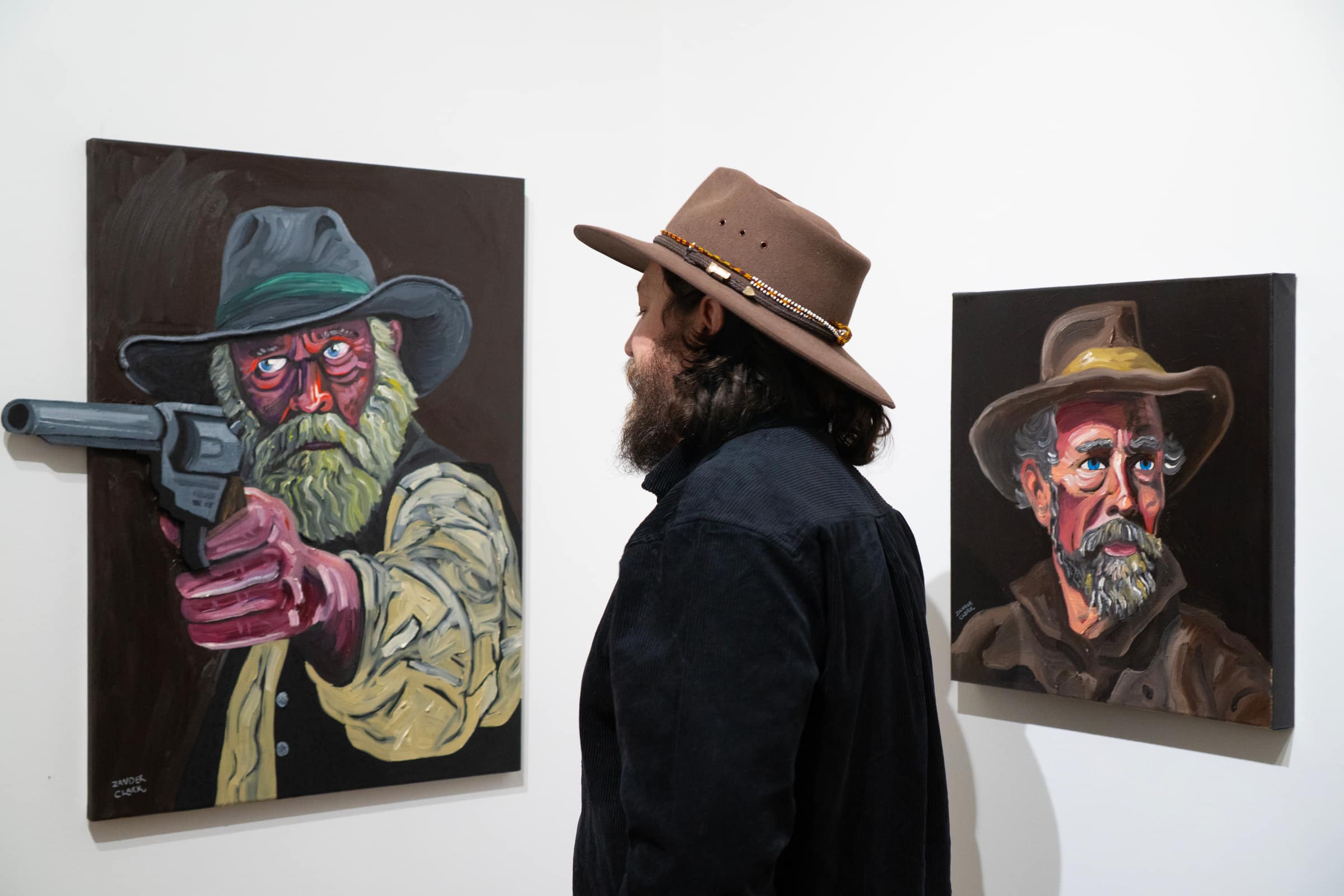
He loves Australia, and he's critical of its history, and he doesn't think those cancel out. "I think you can have a deep love for Australia while still being critical of its history. In fact, I think the two should go hand in hand."
“I'm not interested in rewriting history to make ourselves feel better, nor do I think we should be defined entirely by its darkest chapters.”
He doesn't see his job as telling anyone what to think. "I'm more interested in exploring those contradictions and letting the viewer wrestle with them."
Under the cameras
He was also on Portrait Artist of the Year, painting Casey Donovan against the clock, with cameras everywhere and a live audience. "She was an absolute legend and made the whole thing feel a lot more relaxed," he says. He didn't make the semi-final, but he walked away happy. "I walked away with a painting I was proud of, met some great people and had my work seen by a much wider audience."
Next
With Rúni born last year, he's being realistic. "Being a present dad was always going to come first," he says. So instead of another big solo show, this year is for smaller ideas and getting better.
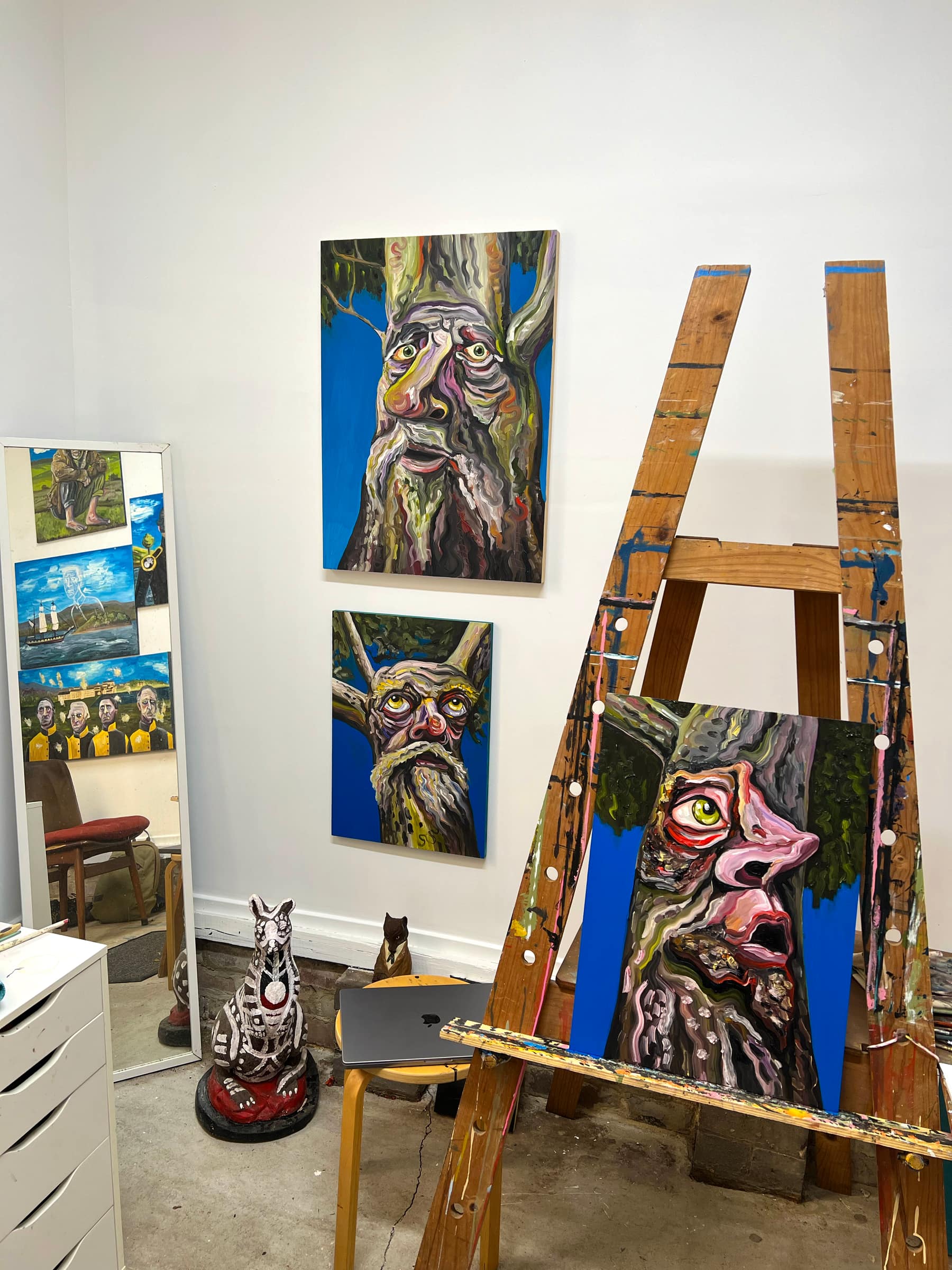
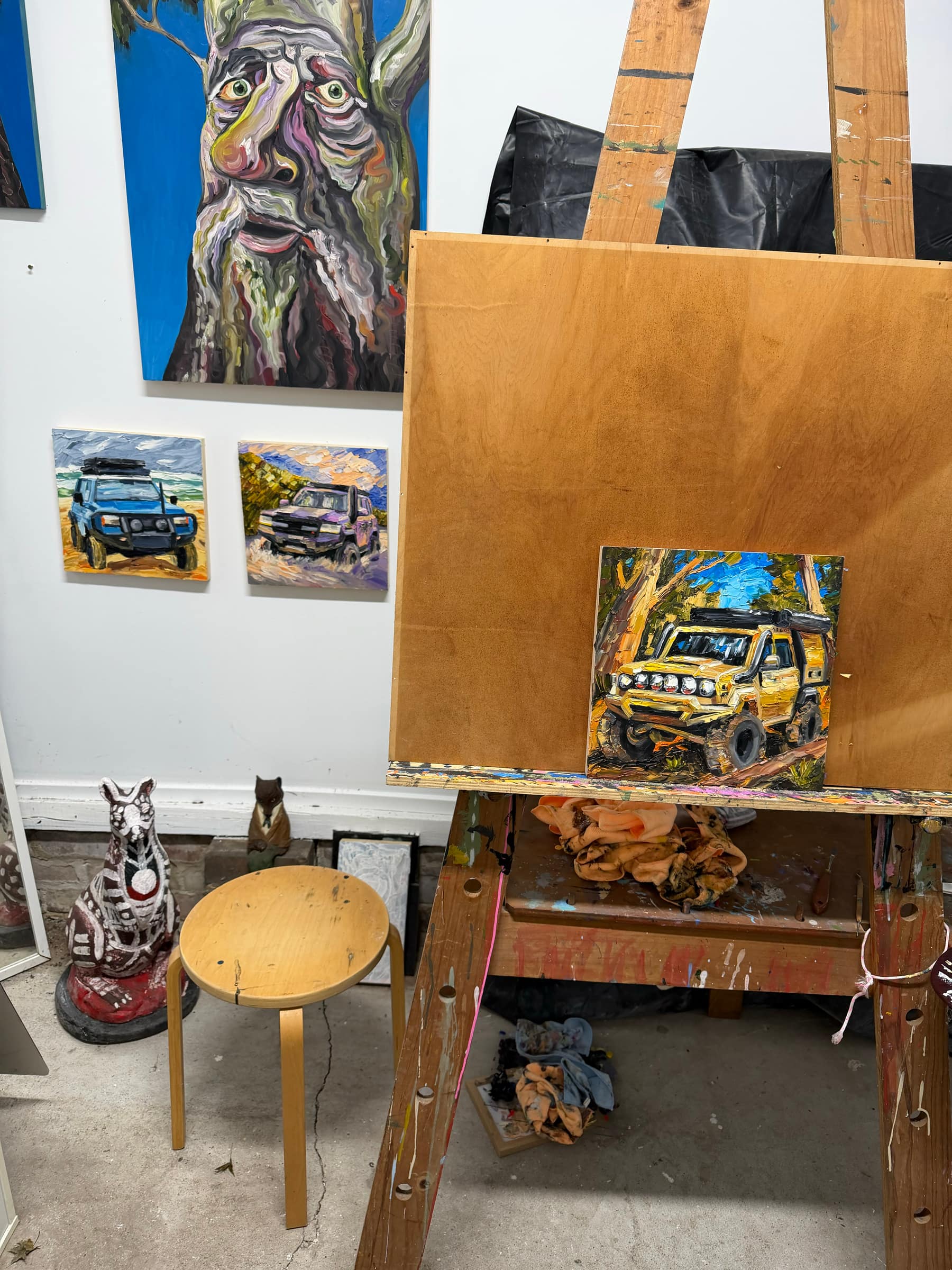
One series fills out the Down Underlands with its supporting cast: tree spirits, bunyips and gumnut fairies. The other is Toyota LandCruisers. "Getting a 250 Series Prado is actually a bit of a family dream of ours," he says. Their boxy shapes have been a good excuse to push the palette knife, "trying to work thicker, looser and with fewer marks."
Start where you are
We asked what he'd tell someone who wants to paint but has a day job and a family. "When you've only got a few hours max a week to pursue something you love, you tend to take those hours pretty seriously," he says. "It's made me more focused, more disciplined and much more conscious of how I use my time."
But don't be too hard on yourself, he says. "The only person you're really in a race with is yourself." Even a couple of hours a week sketching in a notebook counts. "When life eventually gives you a bit more breathing room, you'll have all those ideas ready to go."
“Start where you are, work with what you've got and be kind to yourself along the way.”
"Painting should ultimately add something to your life, not take away from it," he says. "If it's doing more good than harm, keep going."
See more of Zander's work at zanderclark.com and on Instagram at @_zander_clark.
Related
Why a Melbourne painter can't stop painting cartoons
Bright, loud, airbrushed cartoons, and the seven-year-old world underneath them.
Paul Richmond paints so people feel seen
Painter Paul Richmond makes men into pin-ups, paints strangers live on Instagram in his underwear, and once hung a painting in Dolly Parton's living room. He wants people to feel seen.
Hamish Fleming paints servos at night
Adelaide painter Hamish Fleming sets up at Hungry Jack's and service stations after dark and paints them from life. His new show is called Nowhere Is Ever Really That Dark.
10 artists known for one animal
A rooster, a cat, a koala, a frog. Ten artists who found one creature and kept going back.