Hamish Fleming paints servos at night
Hamish Fleming is a self-taught realist painter from Adelaide who paints servos, backstreets and fast-food car parks at night, from life, in the cold. His new solo show at The Mill brings together 29 paintings from two years. We asked him why he paints the places nobody looks at.
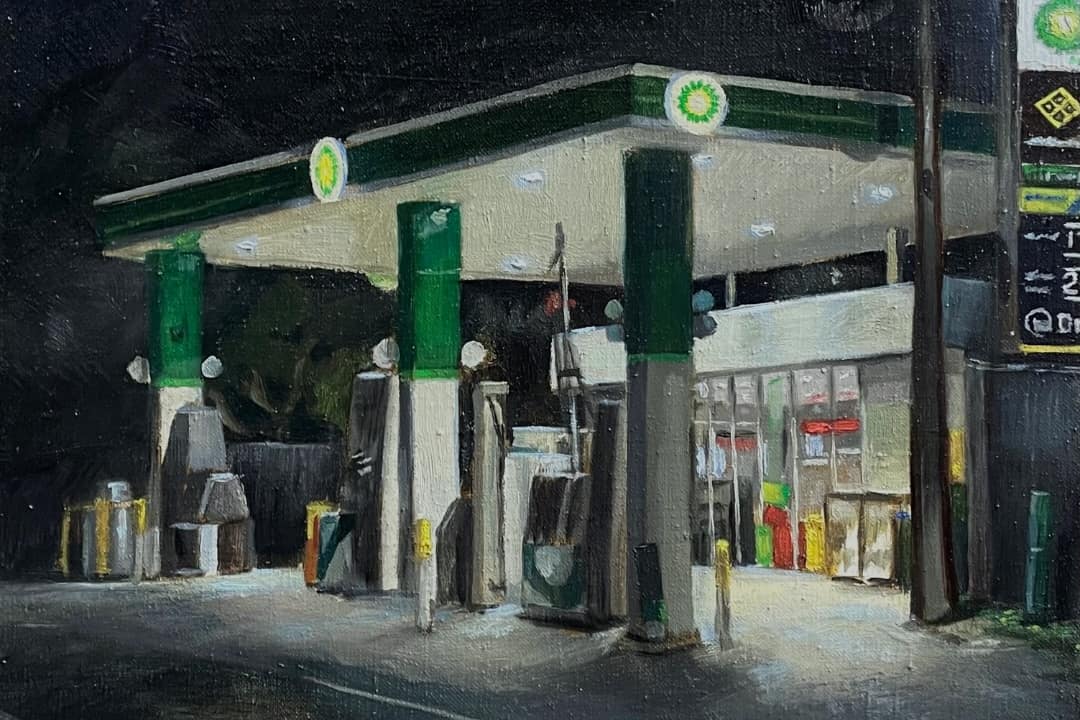
Most people see a servo at night for the time it takes to fill up. Hamish Fleming stands in the car park for hours with an easel and paints it.
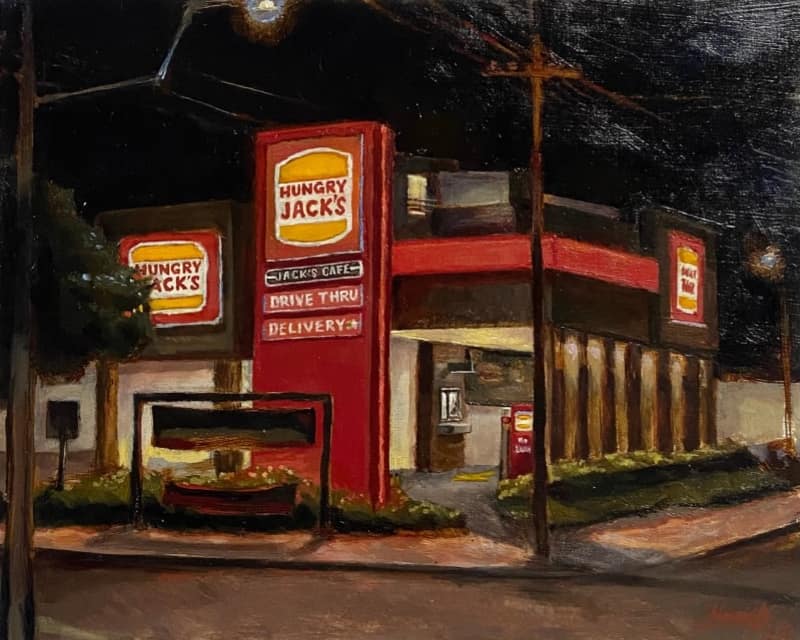
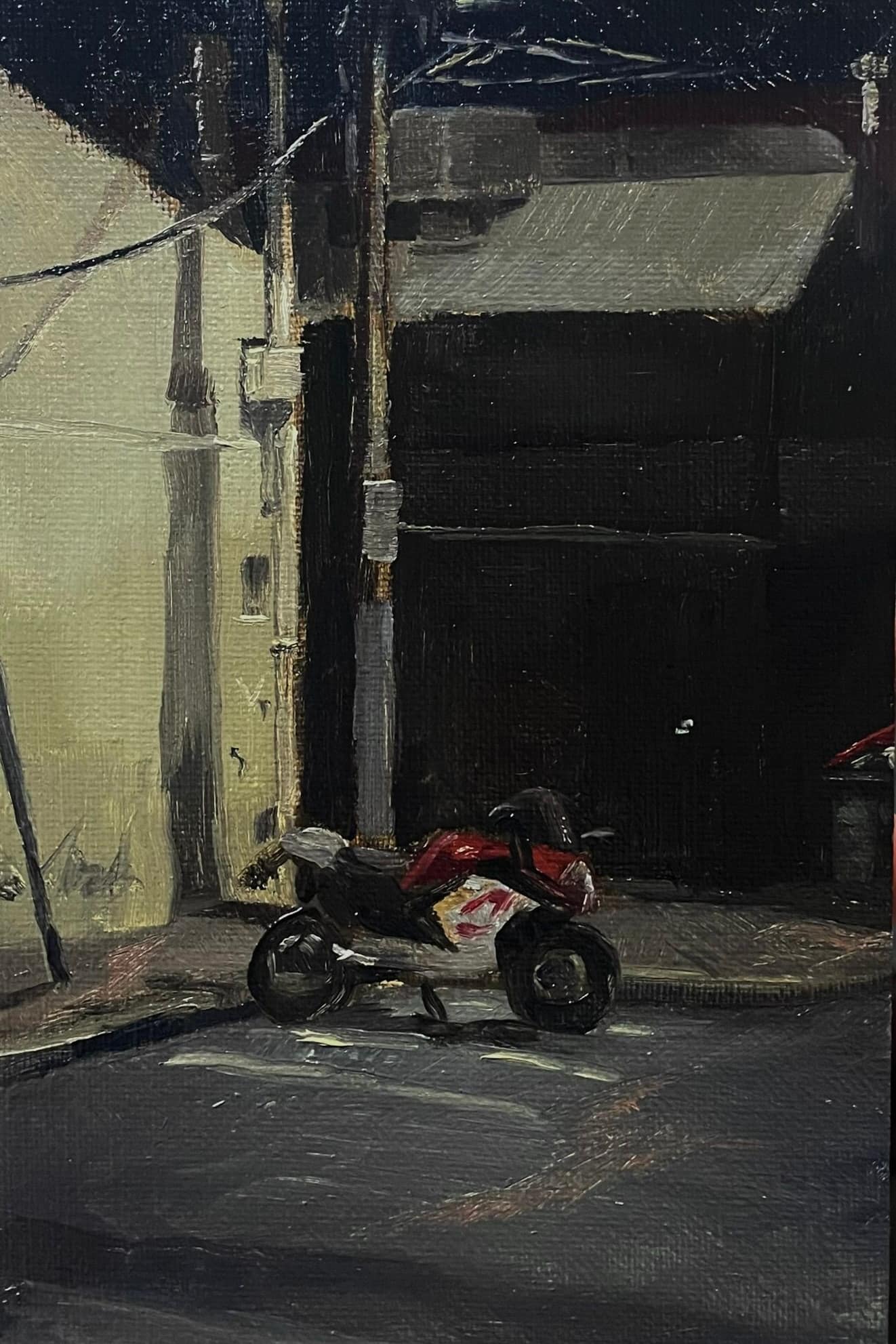
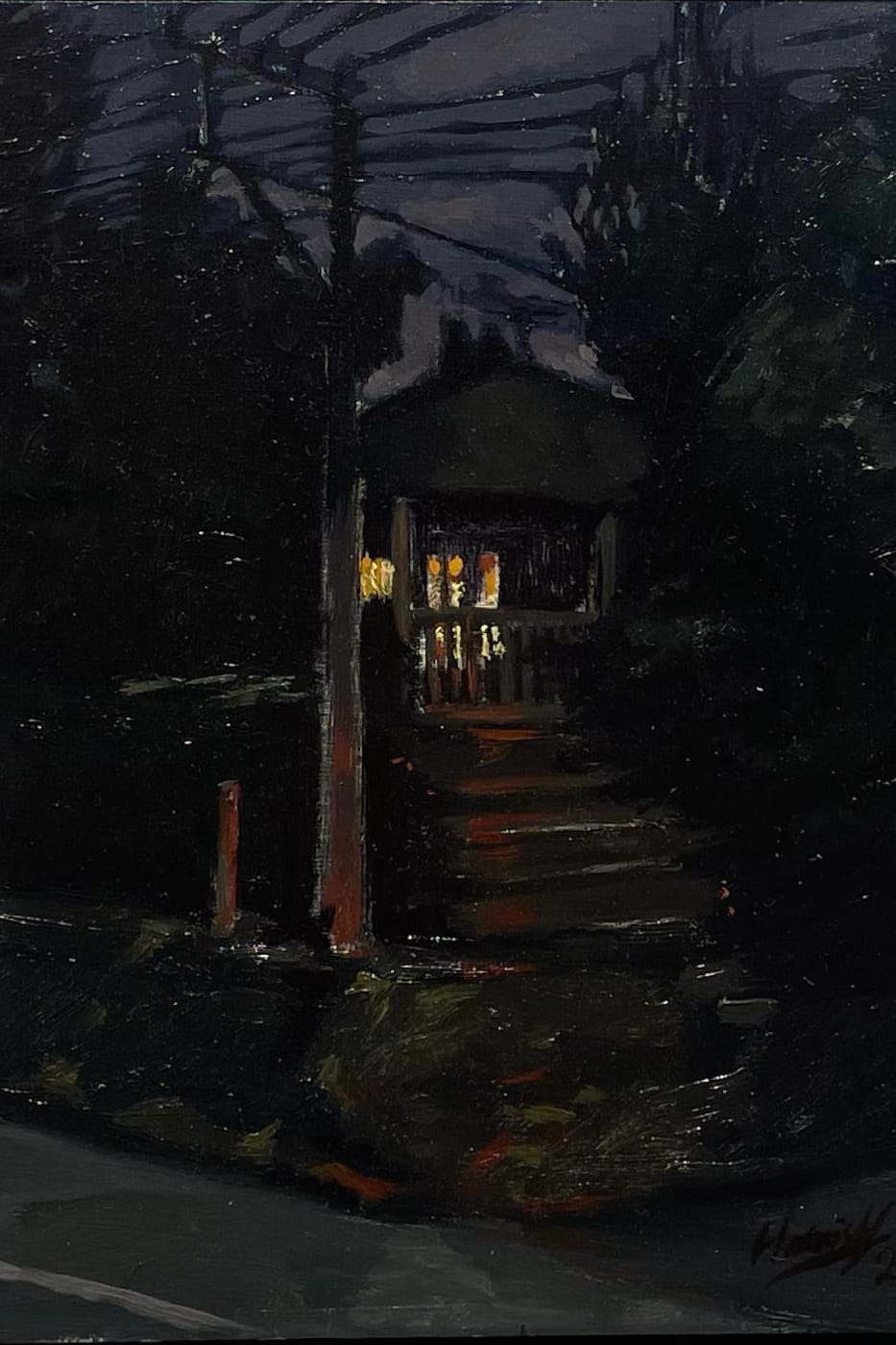
He paints Hungry Jack's, service stations in the Adelaide Hills, backstreets under one streetlight. All of it from life, no photos, often in the cold. His new solo show at The Mill in Adelaide is called Nowhere Is Ever Really That Dark, and it brings together 29 paintings made over about two years.
He answered our questions by email. Here he is in his own words.
A palette knife tattoo by 18
Hamish is self-taught. "I learnt to paint through primarily trial and error combined with research," he says. "I also had very informal mentoring from far more established artists along the way."
He knew at 16 or 17. At 17 he won a summer scholarship at the National Gallery of Australia. "After that I was really locked in from there, and the more pushback I got and the more I was told it wasn't a viable option or a good idea for me specifically or just as a profession in general, the more enticing it became."
“So by 18 I had a palette knife tattoo and fairly stubborn resolve.”
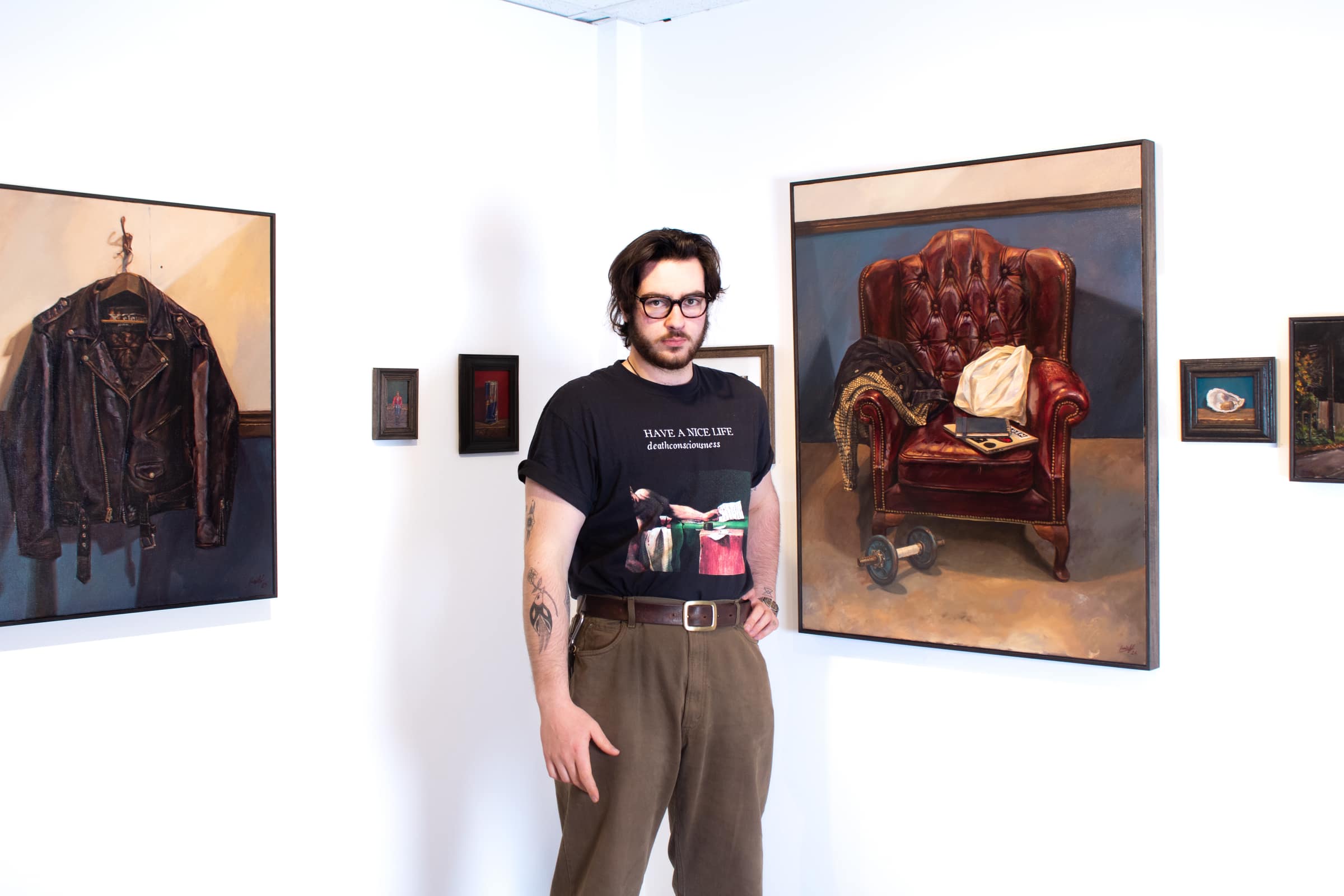
Places that feel like nowhere
The new show is full of Hungry Jack's, servos and backstreets after dark. Why there?
"They're kinda regarded as nowhere, nothing special that nobody particularly thinks of," Hamish says. "They feel right, I quite like being in them sometimes, sorta just feels like where I fit personally."
"It's also really interesting to show an audience something they usually only glance at in passing through something so inherently slow and considered like painting."
Cold. Really cold.
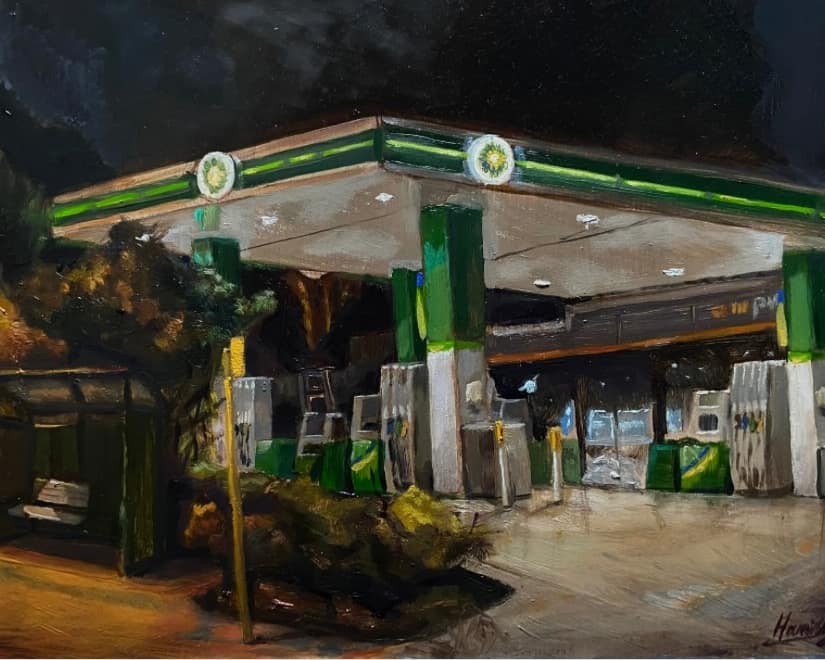
Every one of the night scenes is painted on the spot. "All of the night scenes are painted from life, it all is," he says.
It takes some planning. "I'll scope things out prior to going out, I've learnt to look for all these little indications to gauge things like personal safety and road visibility."
Some spots he goes back to again and again. "There's a bridge in Crafers that's just absolutely serene, I go up there all the time. There's some other places I've painted where I was very much of the mindset of get in, get the work down, get out."
And the servos in the Adelaide Hills? "Cold. Really cold."
“Learning to gauge how much of the feeling in one's hands can be lost before it's an issue is a skill.”
Just down the road on a Tuesday
The paintings have an old-world feel, like something out of a museum. Hamish says that's a choice, and not a new one.
"I think I always treat them with the same regard historic painters treated their subject matter," he says. "Genre painting has been a tradition in art history for hundreds of years, then it sort of fell off."
"We see those historic paintings as full of romance and grandeur but to them at the time that would've literally been just down the road on a Tuesday. Hopper's work has that incredibly cool vintage noir vibe, but that was what life looked like at the time."
A dialogue, not a monologue
Realism wasn't the plan. "When I started getting into art I thought realism was boring and irrelevant and even until 2021 I thought landscape was a painfully dull genre," he says.
What changed his mind was one test. "At the time I put out one big abstract work and an A3 realist work. The response and the interaction with the realism immediately flipped a switch."
“What I really wanted, still want with my work is a dialogue not a monologue.”
"Instead of conceptual gymnastics and symbolic wizardry, it was a little more blunt as a direction. I also really liked that it opened things up to an audience that maybe hadn't engaged in art before."
Stuff can be two things
How did he know the show was finished? "I ran out of time," Hamish says. "I had a list of priorities of pieces that absolutely had to make it in to the show, then some I thought would be really strong but not make or break, then the rest. Most of the rest didn't happen."
One that made it is Dad's Jacket, a painting of his dad's jacket that still has the holes his favourite cat tore into it 20 years ago. So how does he pick which everyday things are worth painting?
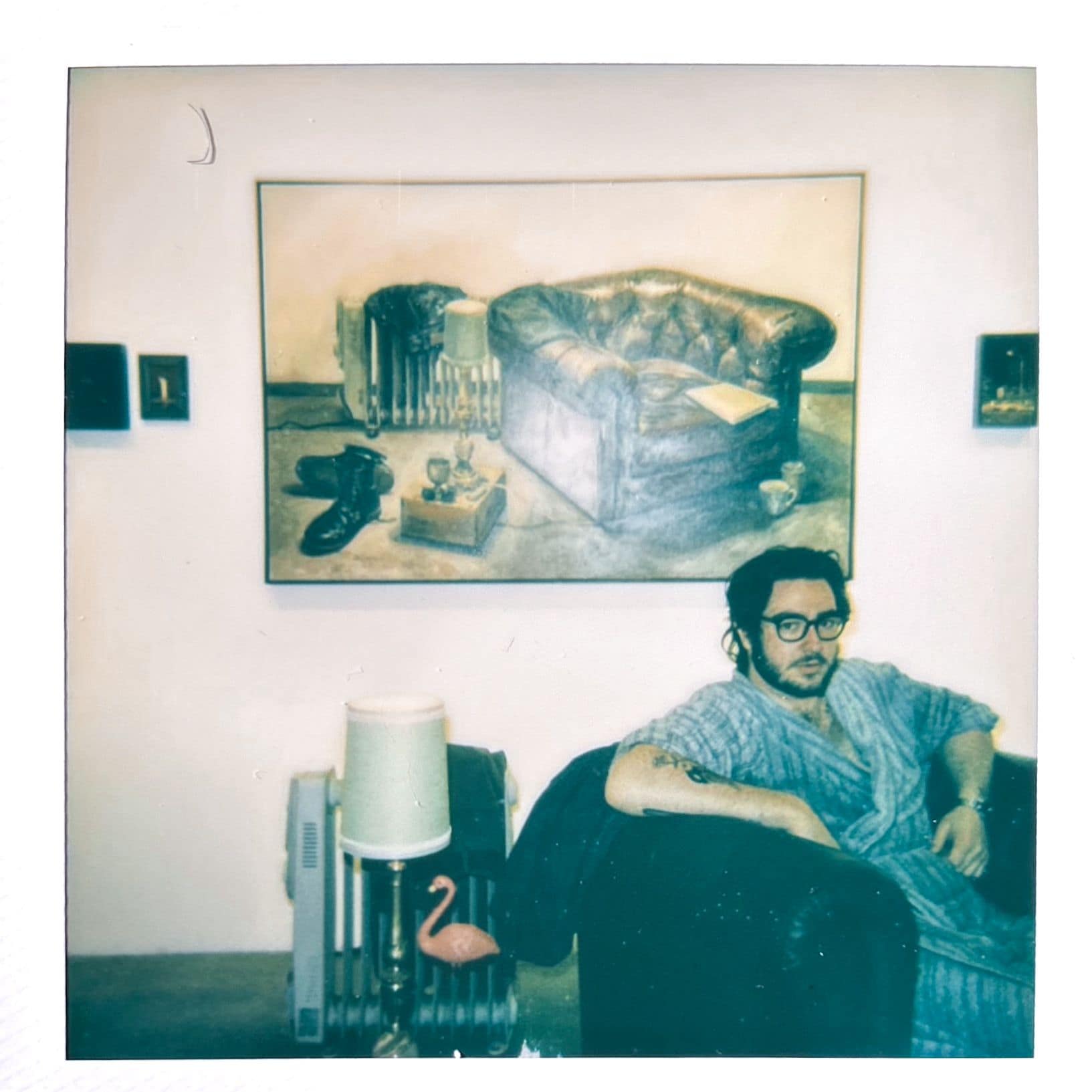
"Everything in this show possesses contrasting elements, basically the show of 'stuff can be two things'," he says. "Sometimes that's furniture that's simultaneously quite grand but also really shabby, I'm a big fan of patina, sometimes that's something inherently benign that's suddenly got a whole lot of meaning in this context."
The Roof Is Leaking
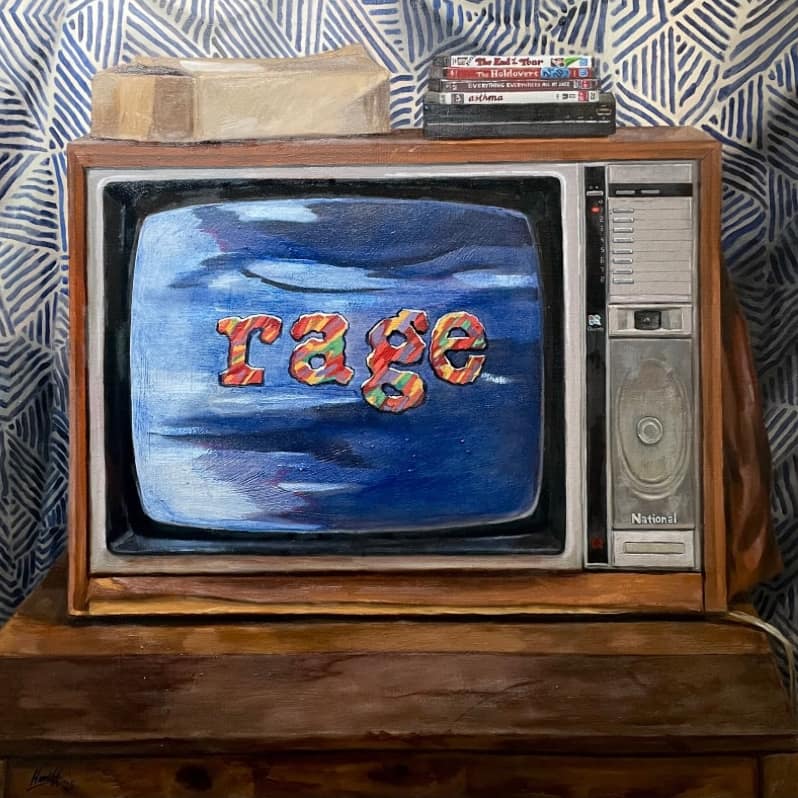
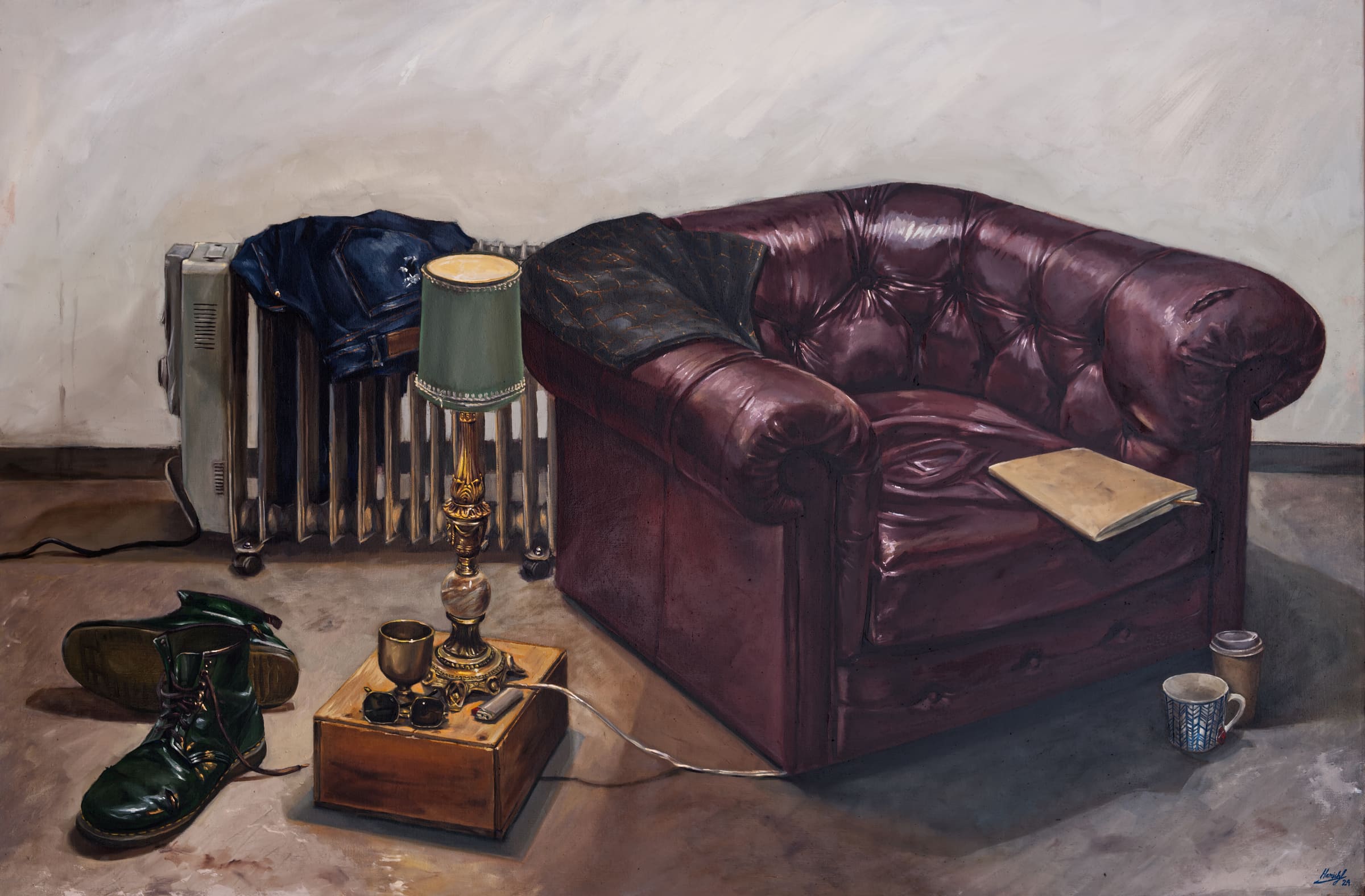
The painting that means the most to him is the show's hero image, The Roof Is Leaking.
"It was the first painting I knew I wanted in the show and it was abnormally good for what I was capable of making at the time," he says. "It's full of personal symbolism too, just subtly."
“Also I feel like I really nailed that concrete.”
Wait three seconds
More than 17,000 people follow Hamish's work online. He's practical about it. "The social media thing is kinda unavoidable. So long as you stand by what you're presenting 100% you don't have to be 100% on how it's being presented."
He has one tip. "Attention spans are short. The algorithm pays attention to content that's watched longer than 3 seconds, if you're gonna make a reveal video, yes we're all tired of this format but needs must, wait 3 seconds before showing the piece."
“Trim it to like 3.1 seconds on the clip.”
Not a creative person?
We asked what he'd tell someone who thinks they're not a creative person.
"You probably are in some way or another. There's lots of ways of creativity and many degrees to which it's present in someone's day to day," Hamish says. "But also, so long as that's not something that bothers you why care?"
"I'm not particularly apt with words or numbers but I apparently have this creative thing going for me so it's alright by me. But I do recommend everyone at least tries it here and there."
Nowhere Is Ever Really That Dark is on at The Mill, Gallery I, 154 Angas Street, Adelaide, until 15 January 2027. Open Monday to Friday, 10am to 4pm, free. See more of Hamish's work on Instagram at @hfleming_creative.
Related
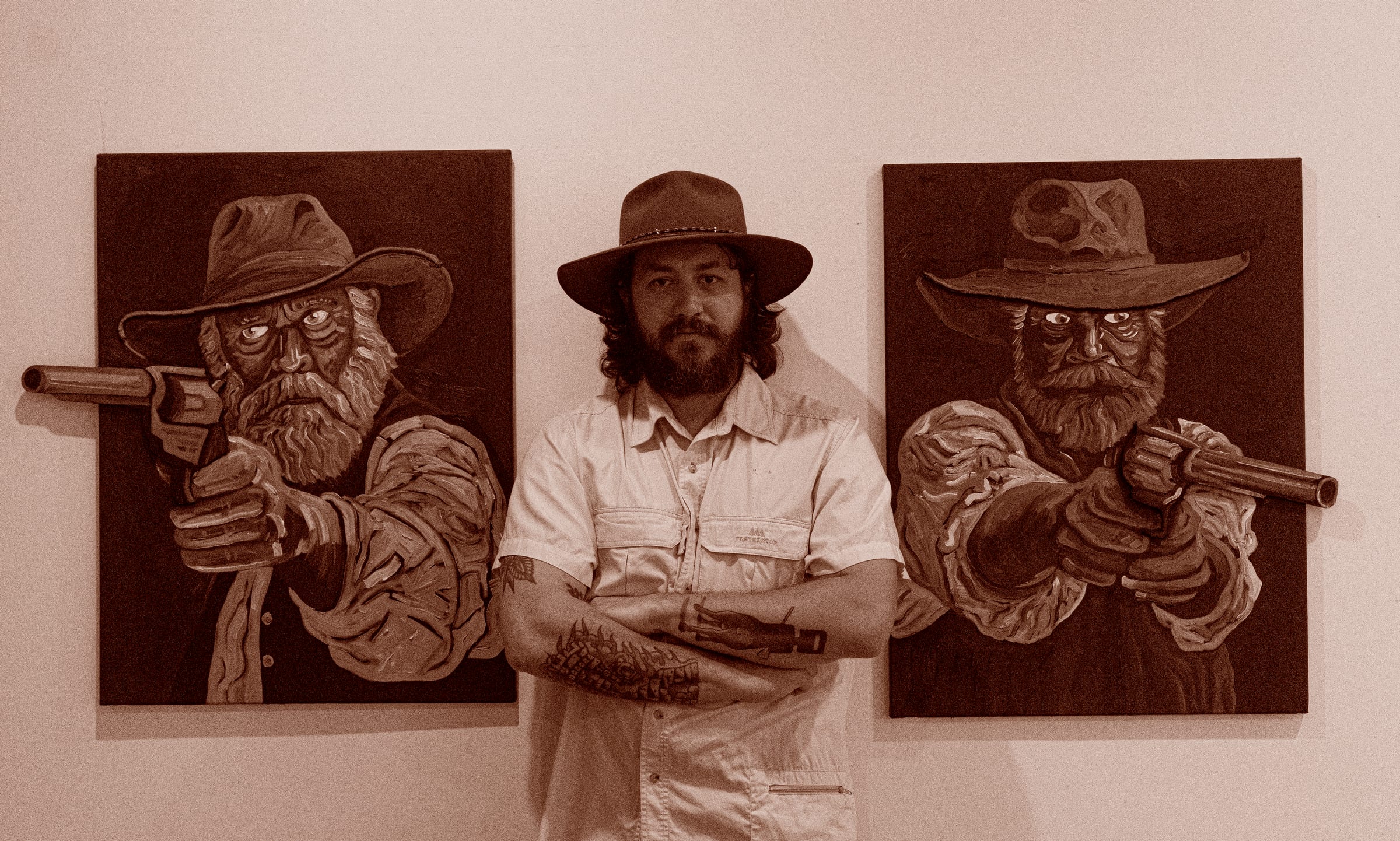
Zander Clark paints one night a week
A full-time designer and a dad of two, Sydney painter Zander Clark gets one night a week in the studio. Here's how he makes it count.
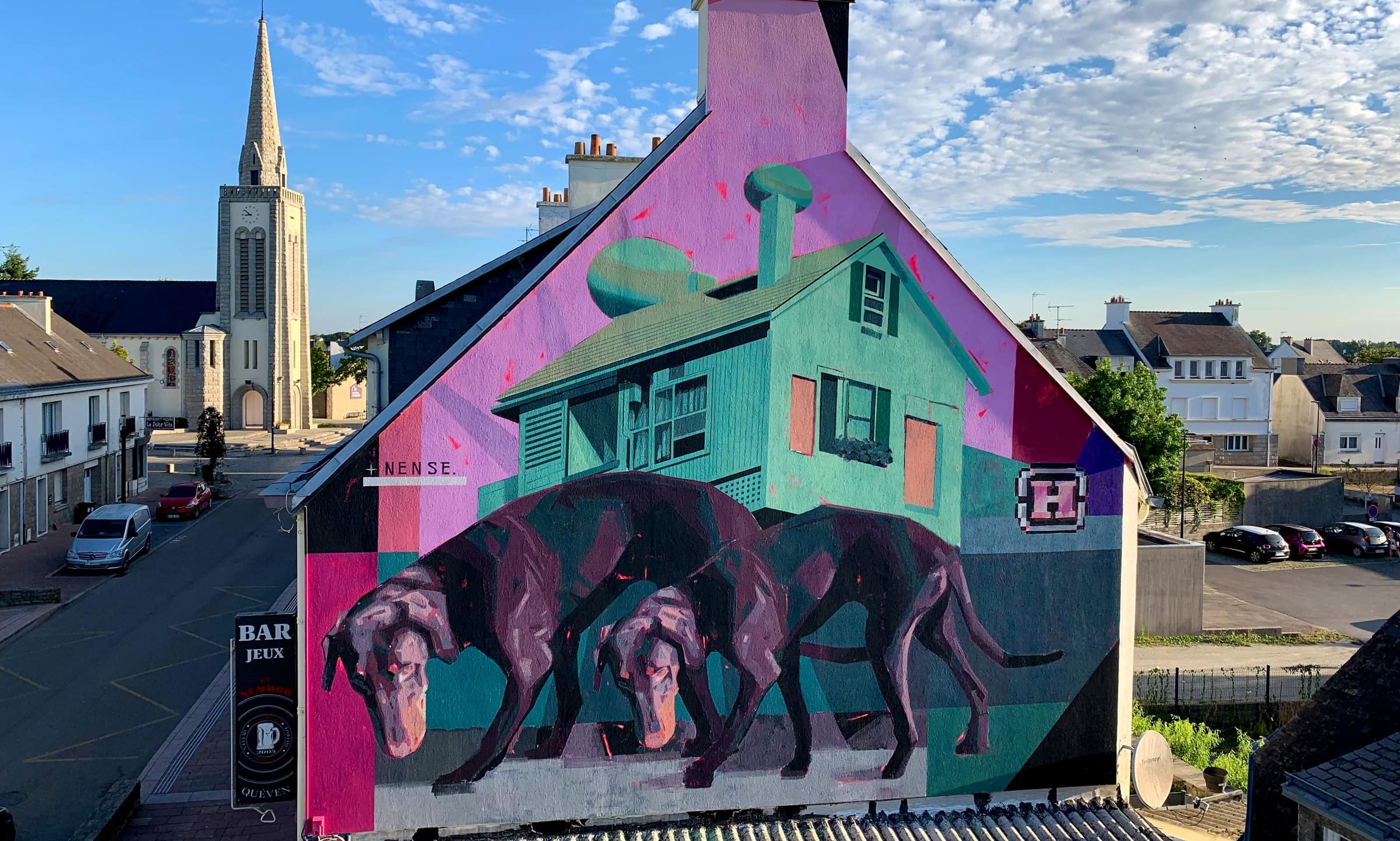
Nense Tango paints strays
Chilean muralist Nense Tango left home eight years ago and hasn't stopped moving. The dogs on the walls are strays, and so is the painter.
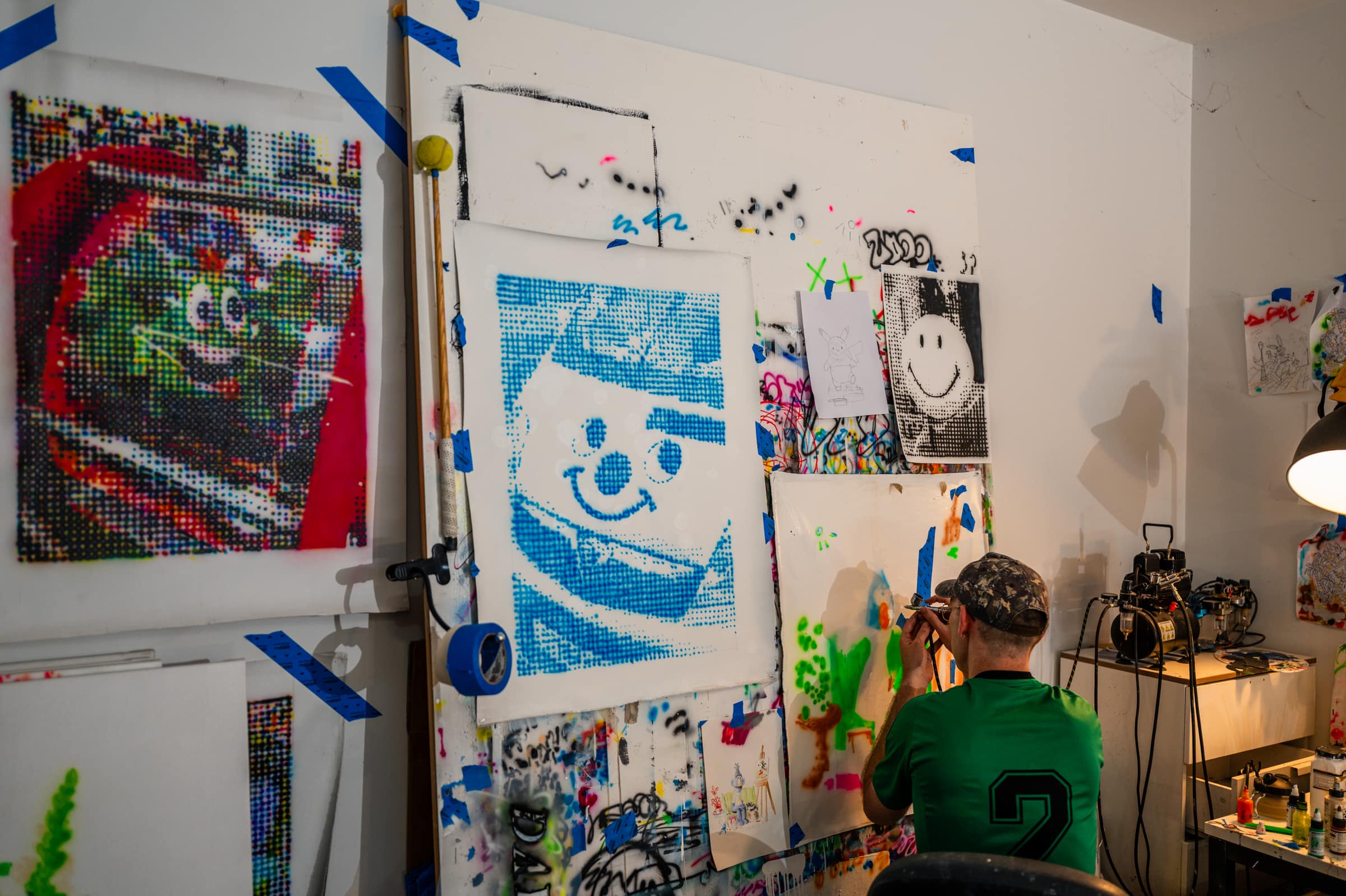
Why a Melbourne painter can't stop painting cartoons
Bright, loud, airbrushed cartoons, and the seven-year-old world underneath them.
He drew Victoria's most stolen car 1,000 times
Three and a half years teaching art in youth justice, then a thousand Holden Commodores in six textas.