Inside a Professional Glassblowers Workshop
Billy has been blowing glass for 16 years. Two years ago he opened Studio Dokola in West Footscray: a furnace that never switches off, a small team, and a practice he is still learning to call his own.
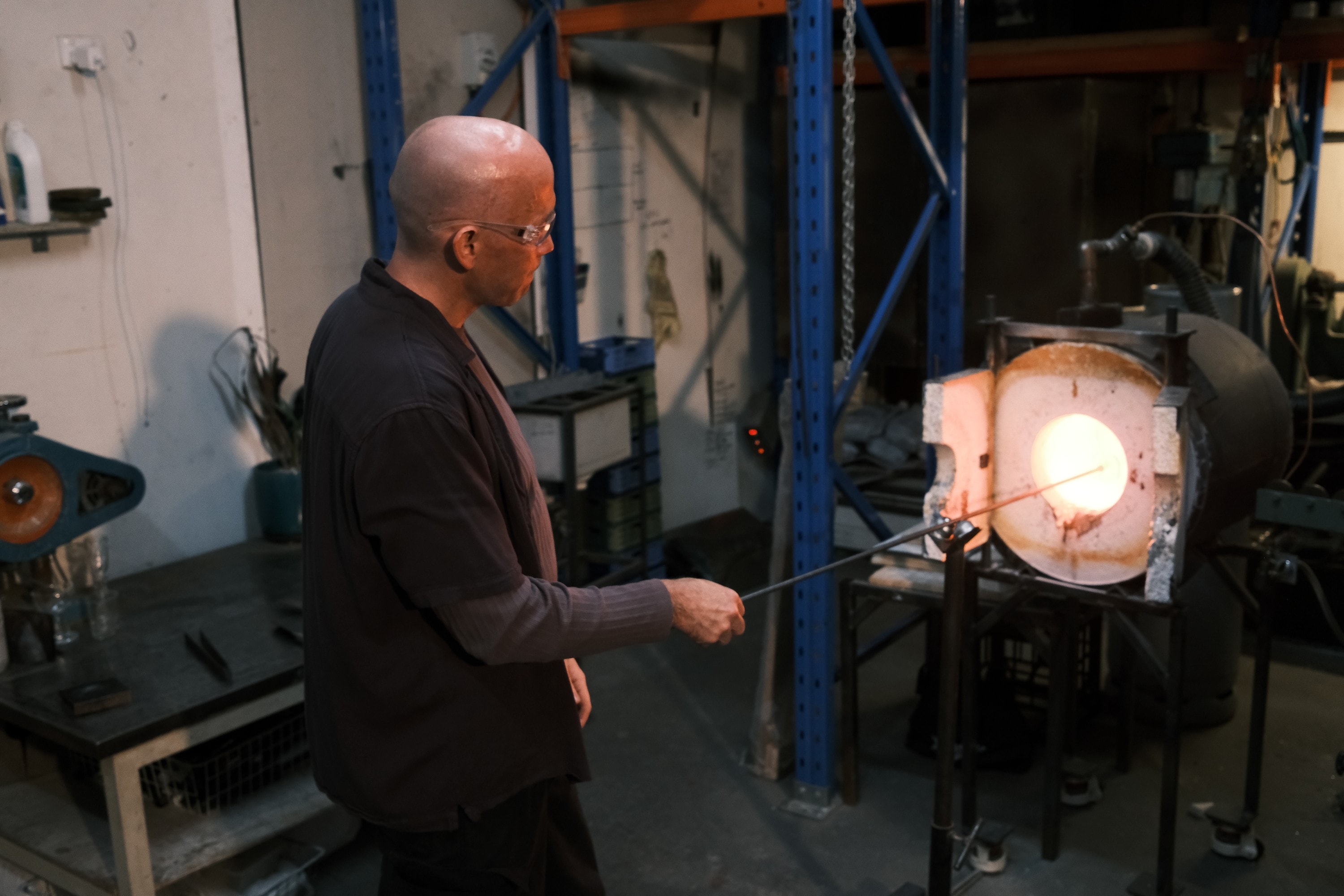
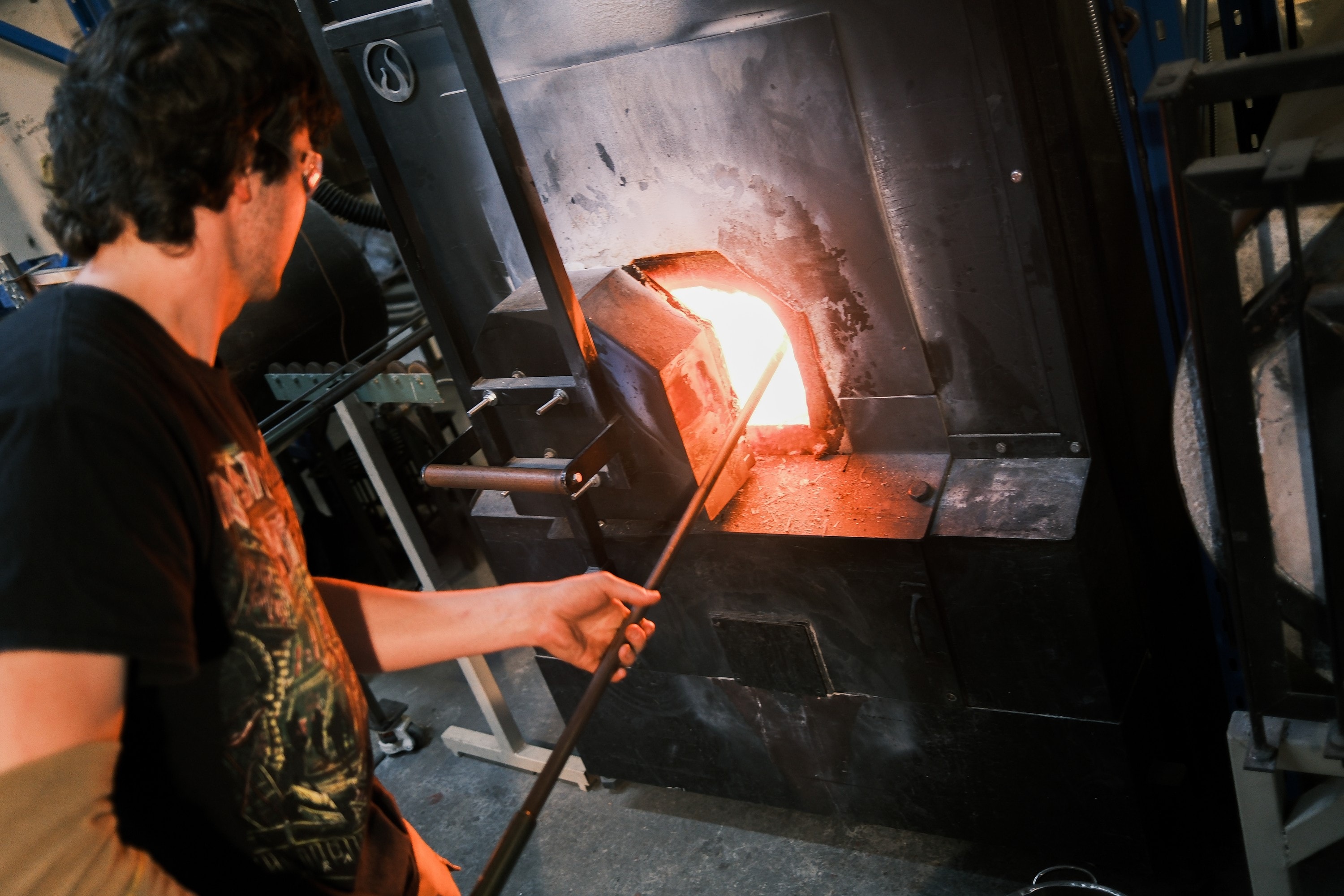
“It’s just intensely hot. We have these reheating chambers that are basically a can of fire, and opening that door is like turning the sun up. On paper it’s maybe glamorous. But we sweat, it’s dirty.”
A can of fire
Studio Dokola sits in West Footscray, a little under two years old. Billy Crellin runs it, and he has been blowing glass for 16 years. At the centre of the room is a furnace holding molten glass at around 1200 degrees, and it never switches off.
When I asked him to explain the process, Billy laughed. “It’s funny to have to describe your medium sometimes.” Then he did. The glass is gathered out of the furnace on six foot metal pipes, and the shaping begins. “It’s really a battle against the cooling of the glass. You’re very conscious of time, and gravity.”
Finding glass
Billy didn’t set out to be a glassblower. At Sydney College of the Arts he was studying fine art, making light and sound installations, and, like any student, hunting for free or cheap materials. Glass kept turning up in the work. “It was this omnipresent material that just kept popping up,” he told me. Then he found out there was a glassblowing studio on campus, and the chance to work in three dimensions pulled him in.
He learned quickly that glass is treated as a craft, and a demanding one. “Because of its immediacy and its molten nature, it just wants to do its own thing,” he said. “You need to be quite devoted to the material to figure out how it works.” He was finishing his degree, he knew he wanted to stay in the arts, and here was something with a clear path to follow. The difficulty was the appeal.
“Mistakes are really hard to replicate.”
Master and apprentice
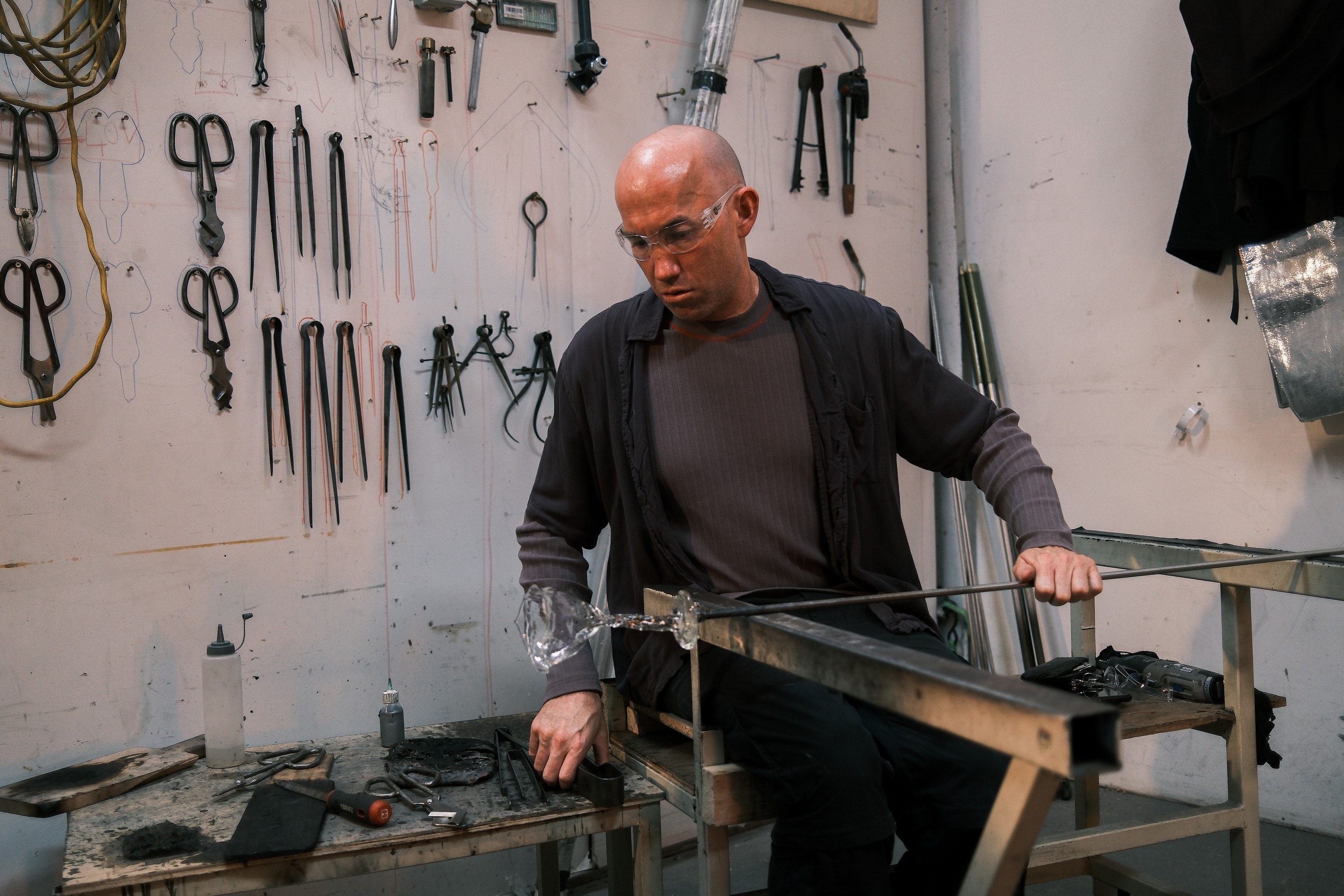
That path is an old one. Glassmaking is still taught the way it has been for centuries: you assist someone more experienced, you watch for hours, you do the menial jobs, and slowly you start to understand how the material moves. Only then do you get your turn at the bench.
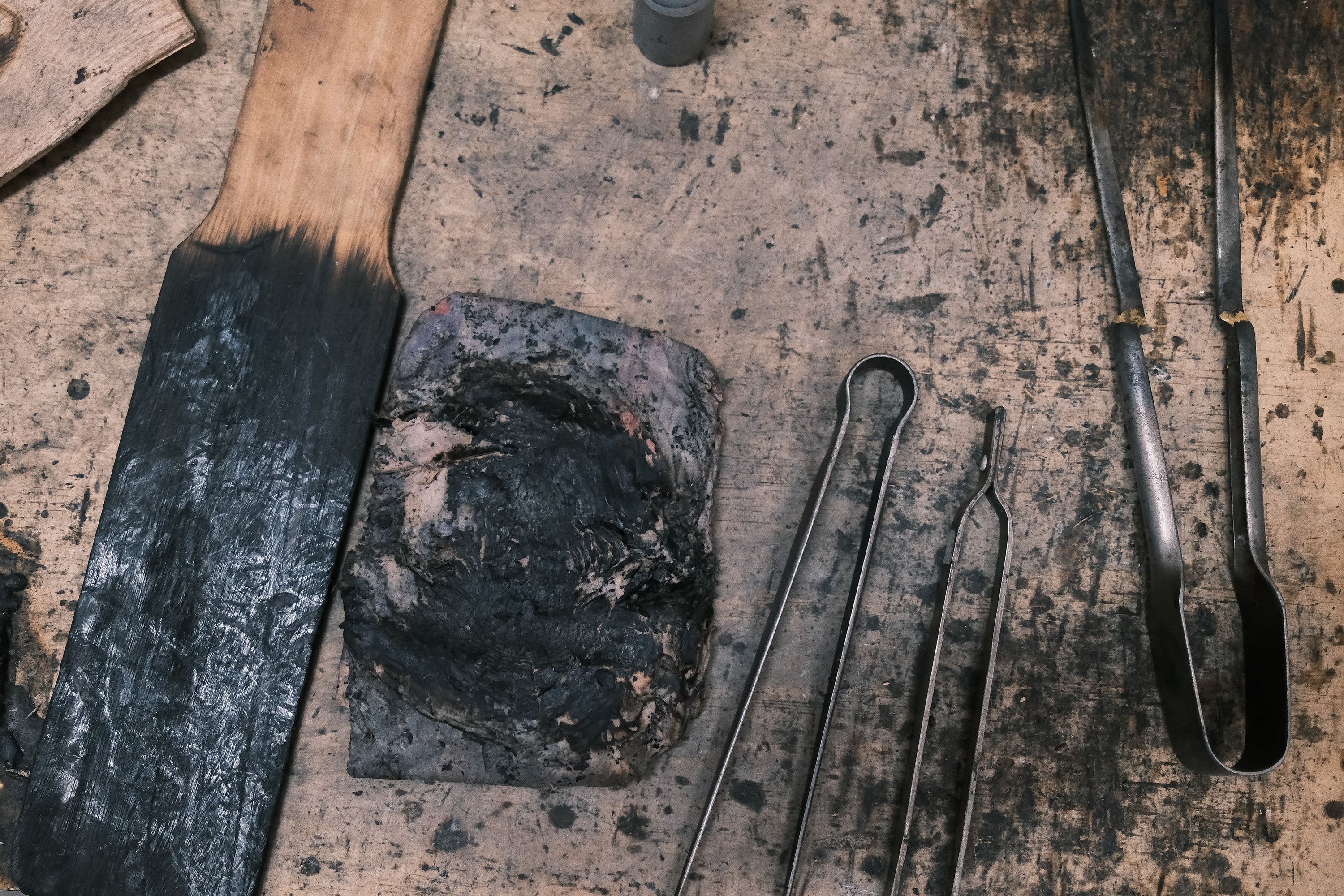
After that come years of copying other people’s designs, trying to decode how a piece was made. Billy described the range of techniques as vast, and so physical that much of it lives in muscle memory. “If you don’t practise something, you get rusty or forget it entirely.”
Unlearning
Sixteen years in, Billy can take a design on paper and know exactly how to make it. The hard part now, he says, is undoing all of that to find his own style. “That’s where I am right now.”
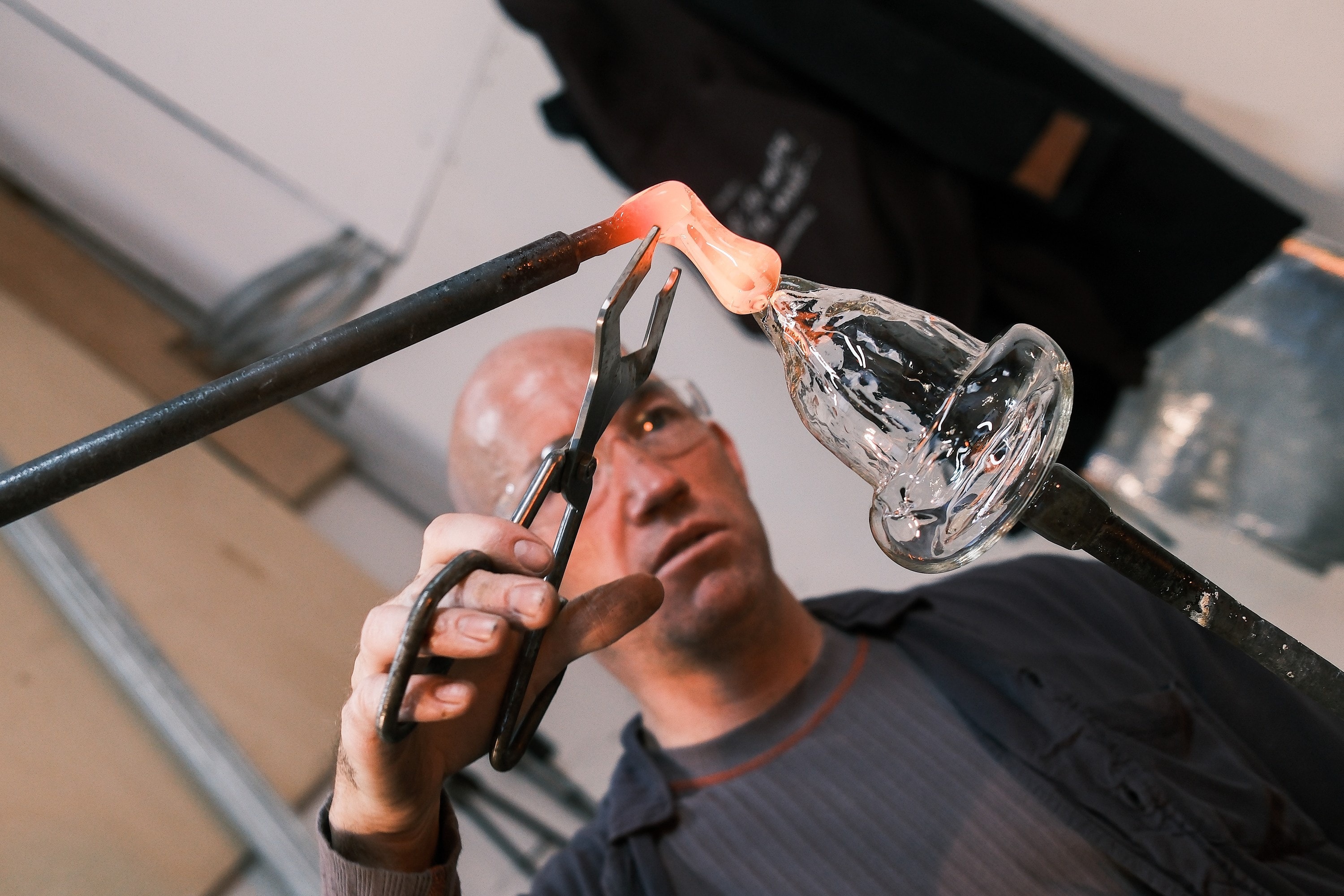
For years he chased fine, delicate tableware, the kind of perfect European wine glass that takes enormous energy to get right, and it wore him out. Designing on paper, away from the heat of the material, stopped appealing. So he went back to the beginning: sitting at the bench and prototyping directly in the glass, the way you do when you are first learning.
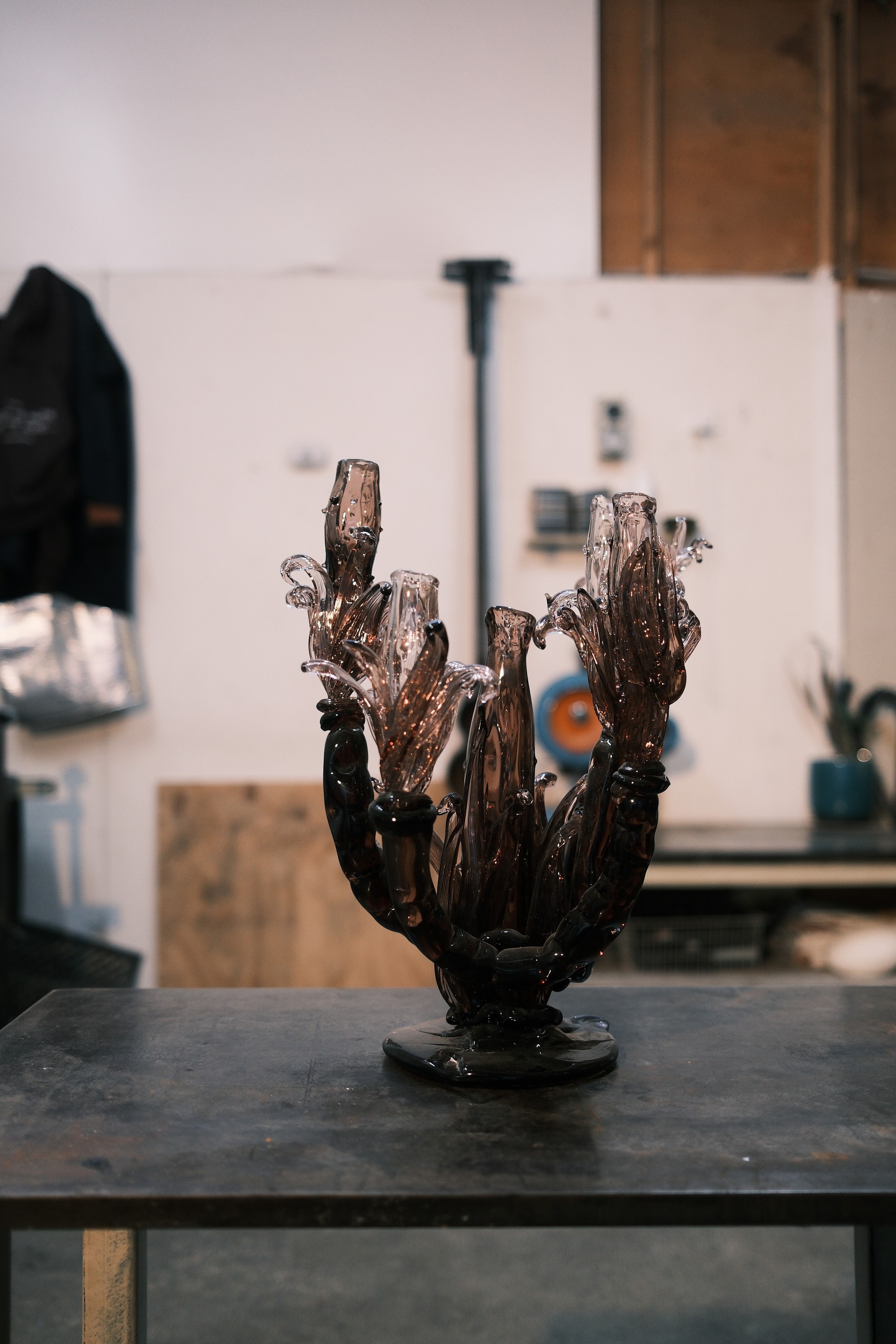
What he finds there are mistakes, and he has come to value them. “There are always amazing visual details in mistakes,” he said, “and they’re really hard to replicate.” They usually come from several things going wrong at once, which means working backwards to understand them before they can become part of a process.
Running a studio
A studio like this needs more than one way to pay for itself. Billy teaches a little and takes on a lot of fabrication work for commercial clients. Selling his own work makes up maybe 20 percent of his income. He doesn’t resent the rest. He enjoys the challenge of fabrication, and last year the studio made work for Mecca and a handful of architects.
Glassblowing is never really done alone. The biggest job Billy has worked on needed eight assistants to make a single object. “Getting eight incredibly skilled, specialised craftspeople into one room on one day and getting it right is tricky.”
Glass that mimics
His own work starts with research, a habit from art school that stuck. Lately he has been thinking about mimicry. Glass, he pointed out, was first made in an effort to imitate precious gemstones. He is interested in what happens when something valuable is copied, and where the value ends up. He sees the same question in jewellery now, in the choice between a mined stone and an engineered one.
“Building a studio is no small feat, and it's good to take risks.”
Old world knowledge
Glass is hard to get into. With ceramics you can buy a bag of clay and borrow a friend’s kiln. With glass, the furnace alone is a serious piece of infrastructure, and you need a team just to blow a piece. That is why glassmakers have always formed communities and shared workshops.
Billy calls it “old world knowledge”, 3000 years of it, and he isn’t sure what comes next. Energy costs are rising, glass is falling out of university courses, and new people are learning in very different ways to how he did. He doesn’t pretend to know the answer. “It’s a curious question,” he said.
What he does miss, having stepped away from a big shared workshop to build his own, is the shared learning: being able to turn to someone with more experience and ask how part of a process works.
Passing it on
Now he is the one passing it on. Studio Dokola runs with a lot of younger people, most of them early in their careers, assisting on Billy’s work and learning as they go. He likes watching each of them head in a different direction. “It’s a daunting and exciting prospect to realise you have a really influential role in people’s lives,” he said. “It’s pretty lucky to have that opportunity.”
The studio is two years old and, in Billy’s words, making great gains. He sets himself challenges and sees them through. The thing he is still working on is slowing down. “Taking time to pause and reflect is really important,” he said. “Perhaps I’m getting better at that.”
From the shoot
Related
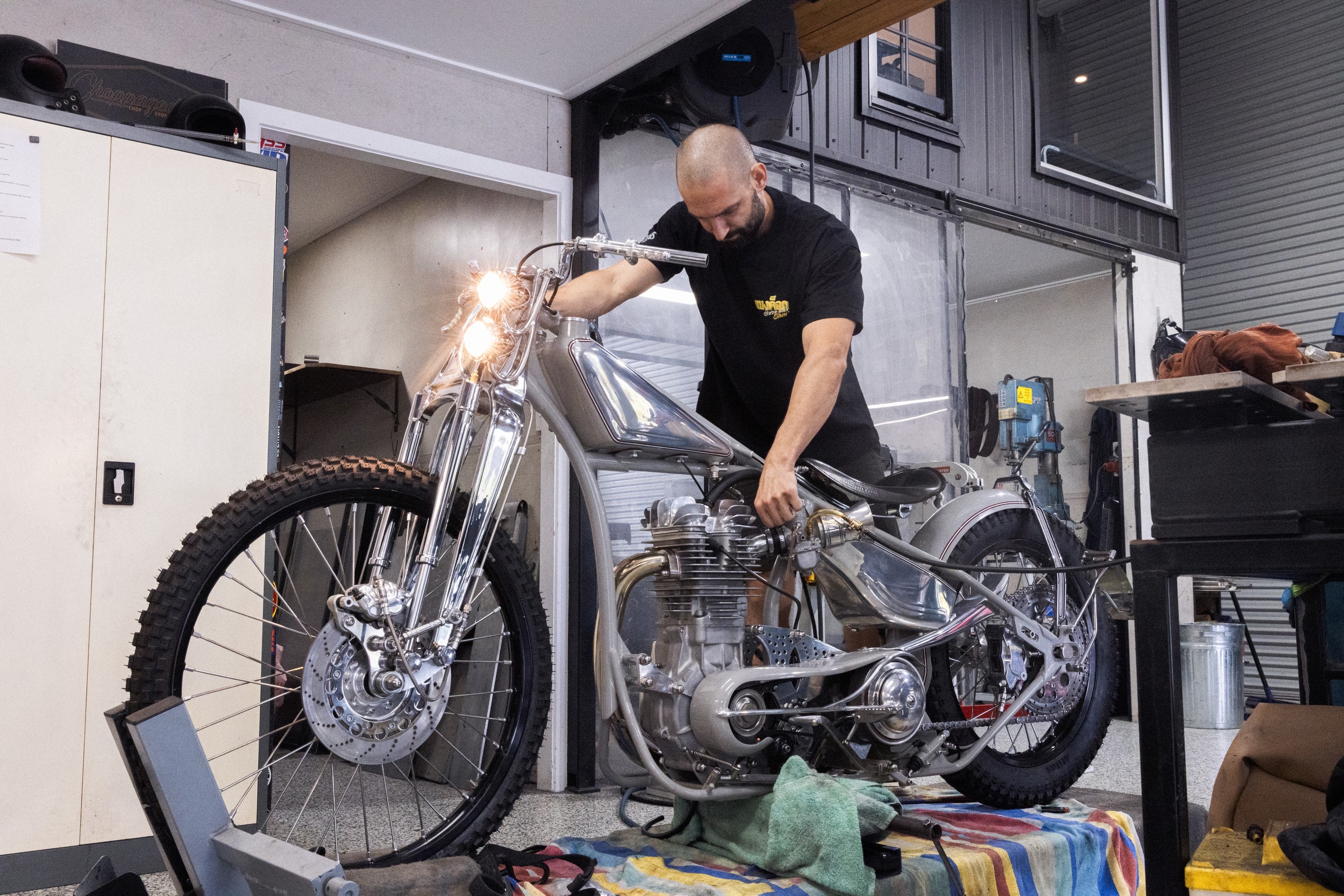
Inside the Workshop: The Reality of Custom Motorcycle Building
From the home garage to a full-time workshop, one story at a time.
The Reality of Being a Handmade Jeweller in Melbourne
Silver, made slowly and properly, at a bench at home.
Inside the Epic Studio of an Abstract Artist
A second chance, and the work that came out of it.
The Painter Who Started Painting to Heal
Painting as therapy, and as something to leave behind.