Why Daniel Butterworth paints on cardboard
Daniel Butterworth has been shortlisted for the Archibald, the Doug Moran and a string of other national prizes, and he paints most of it in house paint on cardboard. We asked him why, and about the self-portraits, the Cancer Series and the town he grew up in.
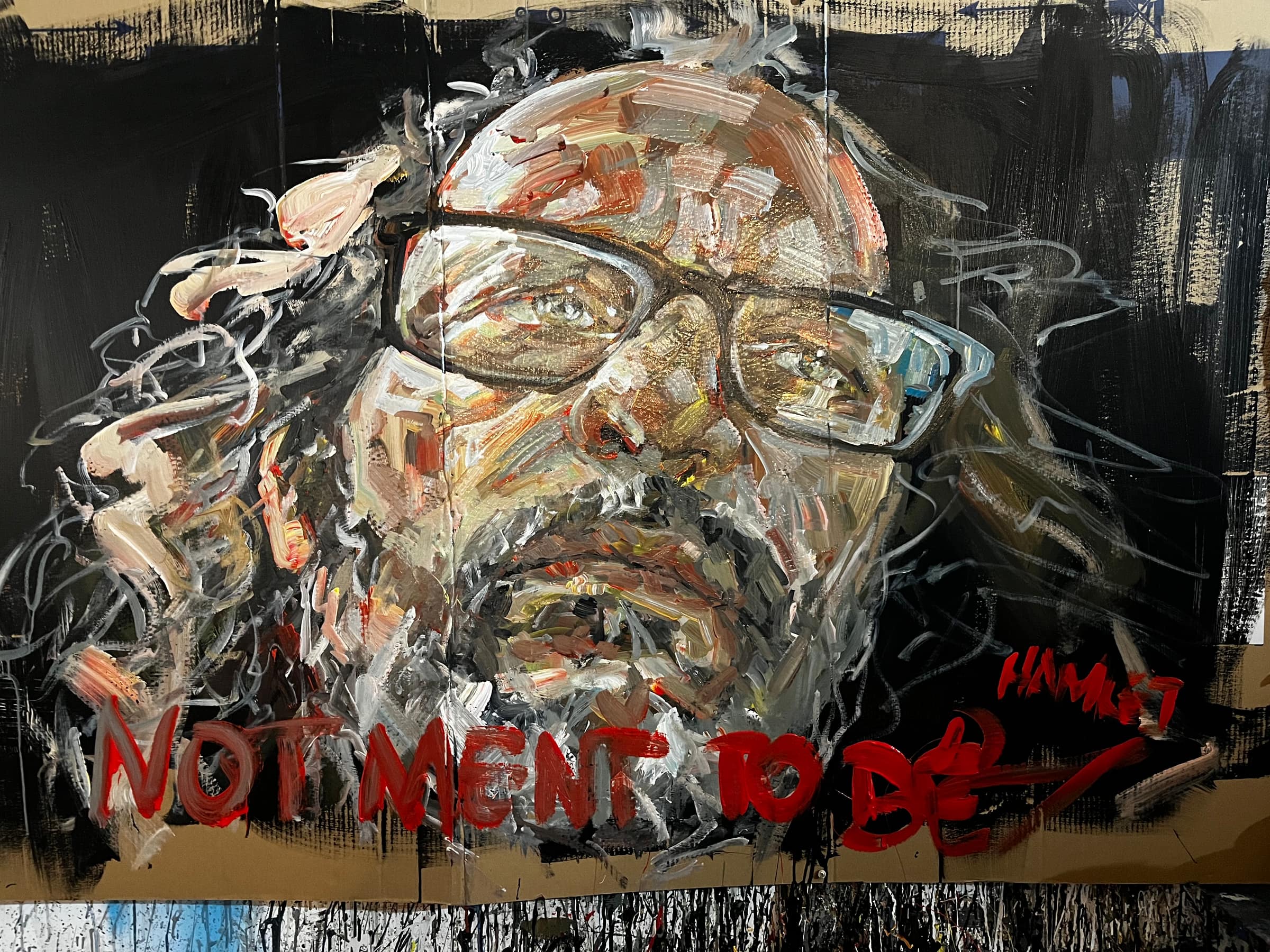
Daniel Butterworth knew what he wanted to do at eight. He was standing in front of one of Rembrandt's self-portraits. "I said to myself I want to do that," he says.
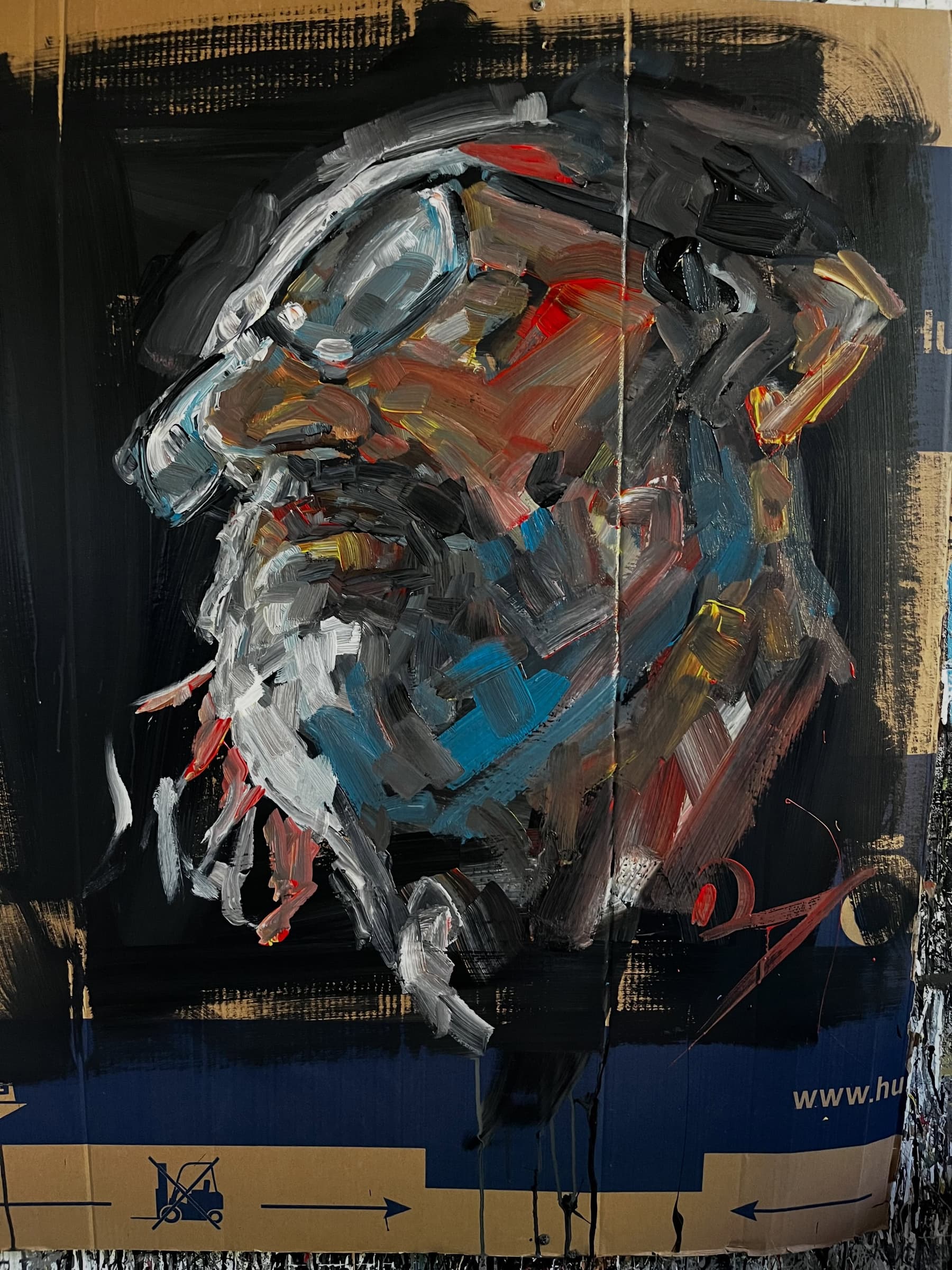
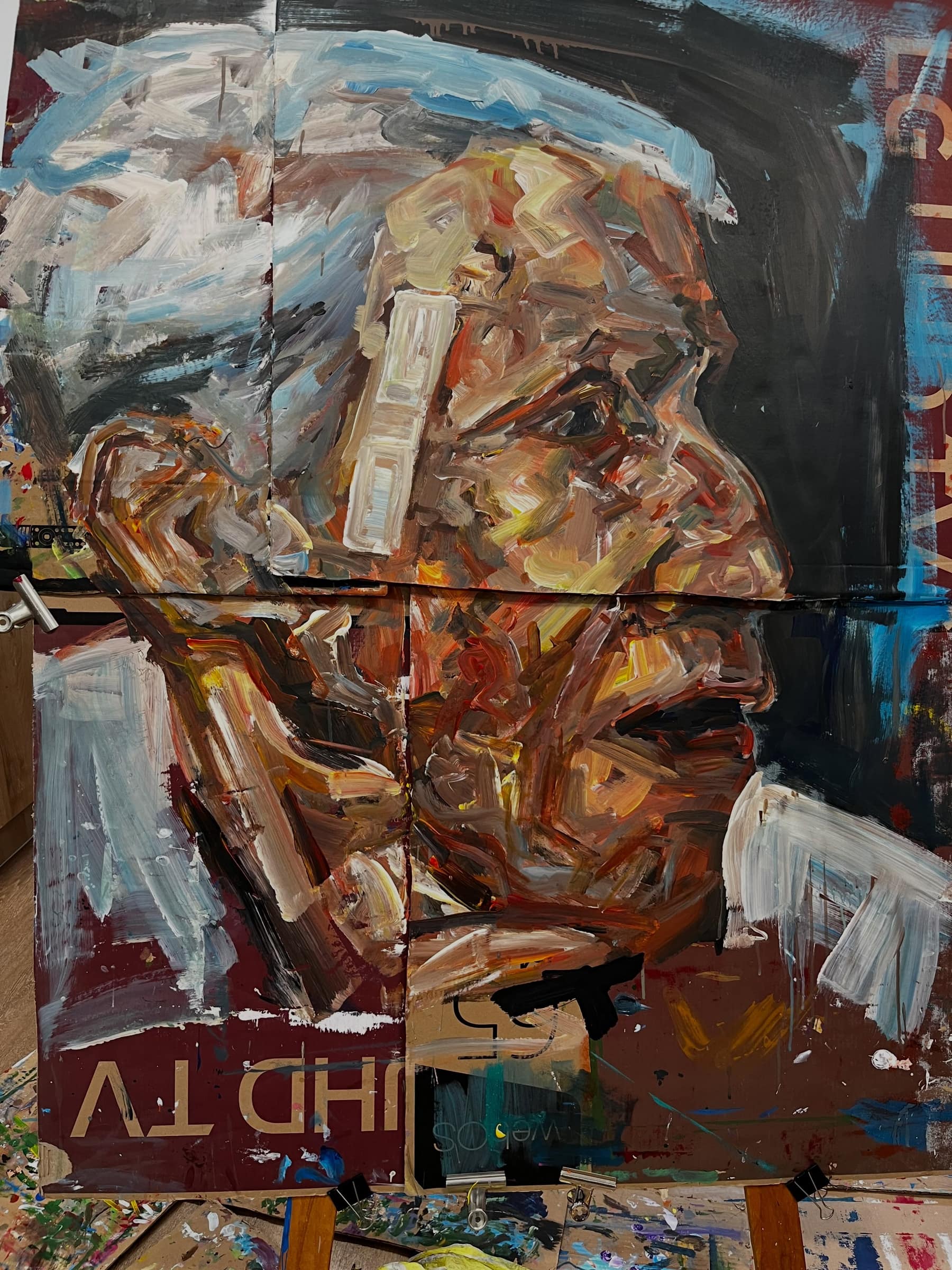
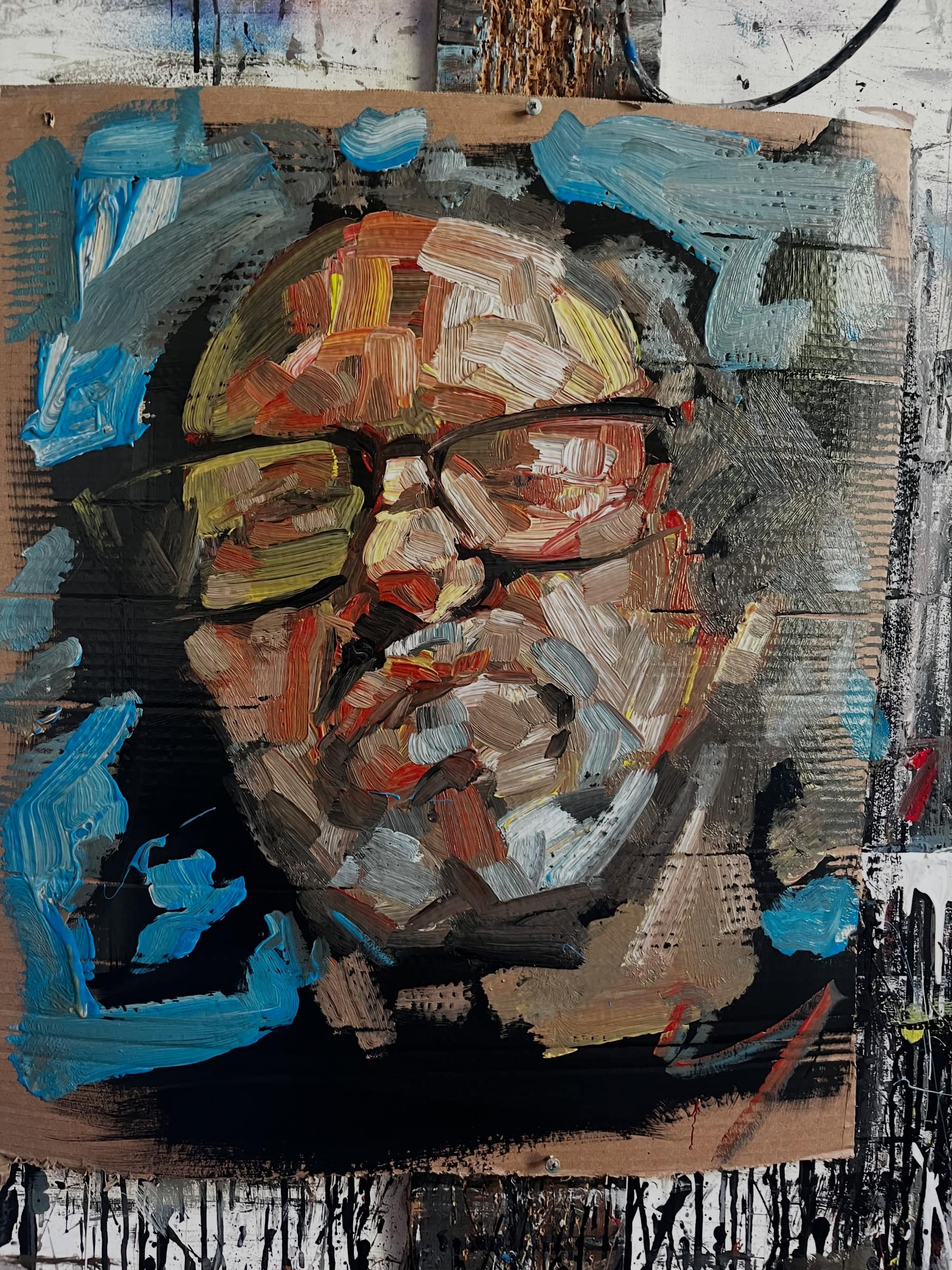
Decades later he's a full-time painter in Kyneton, in central Victoria, with work shortlisted for the Archibald, the Doug Moran, the Black Swan, the Blake, the Jacaranda and the Alice prizes. Most of it is painted with house paint, on cardboard, and a lot of it is of himself.
He answered our questions by email. Here he is in his own words.
Sign-writing first
At fourteen, everyone was asking what he was going to do for a job. "I didn't know any practicing artist who were making a living from it, so I didn't see this to be a feasible option," he says. "I loved to paint so the choice of being a sign writer was made."
He wasn't a natural. "I learned a lot from sign writing, but I was too impatient and messy to ever be any good."
“It taught me rules that I now love to break.”
A box from the motorcycle shop
The cardboard started with money. "Originally I used cardboard because I couldn't afford canvas," he says. He had a young family, things were tight, and he was working part time at a motorcycle shop, where the bikes arrived in big cardboard boxes.
He brought one home for his three-year-old son. "Knowing that children love boxes, and he did. Two weeks later he was done with it and I was disposing of it and realised its potential." He was painting in oils at the time, so he primed the cardboard. "That was the start of my love for cardboard."
The question in London
Once he started selling, he went back to canvas. "I had it in my head 'to be a real artist you had to paint on canvas'," he says.
Then he travelled through Europe to see the masterpieces he'd studied. Standing in a gallery in London, he asked himself something he couldn't answer. "Why are you painting with oils and why are you painting on canvas?"
When he got home he went to the local hardware store and bought house paint in the primary colours, black and white, and painted on plywood. "The last painting I did with oils on canvas and the first I did using house paint on board, you could not tell the difference, so that answered my questions." A couple of years later he went back to cardboard, and stayed.
“I have unlimited paint and can paint as big as I want without having to compromise.”
"House paint and cardboard for me allows me to paint without barriers," he says.
Painting himself
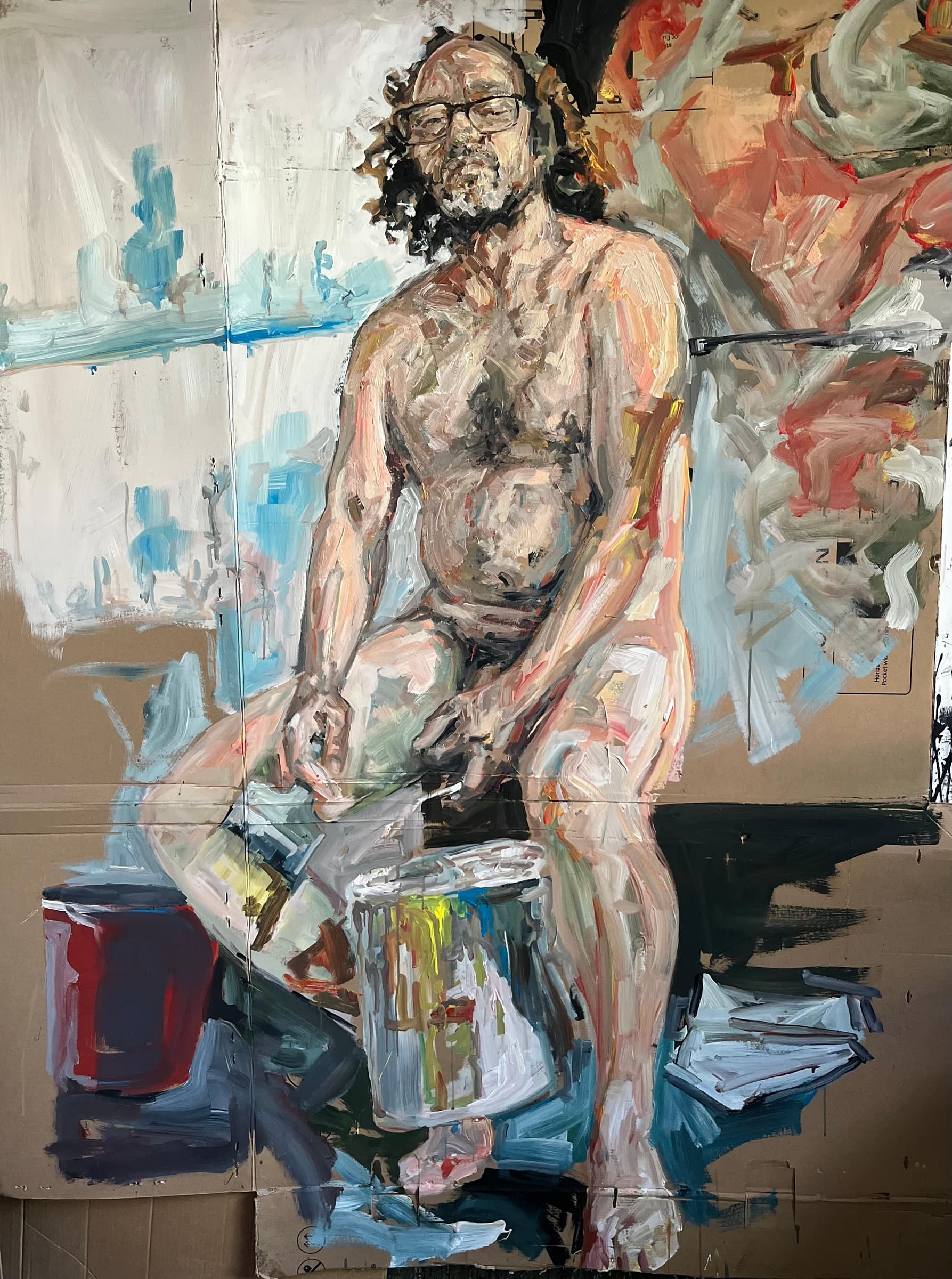
"I believe the self-portrait is one of the most powerful images that can be seen," he says. "When I am painting myself I am most free, most edgy and connected."
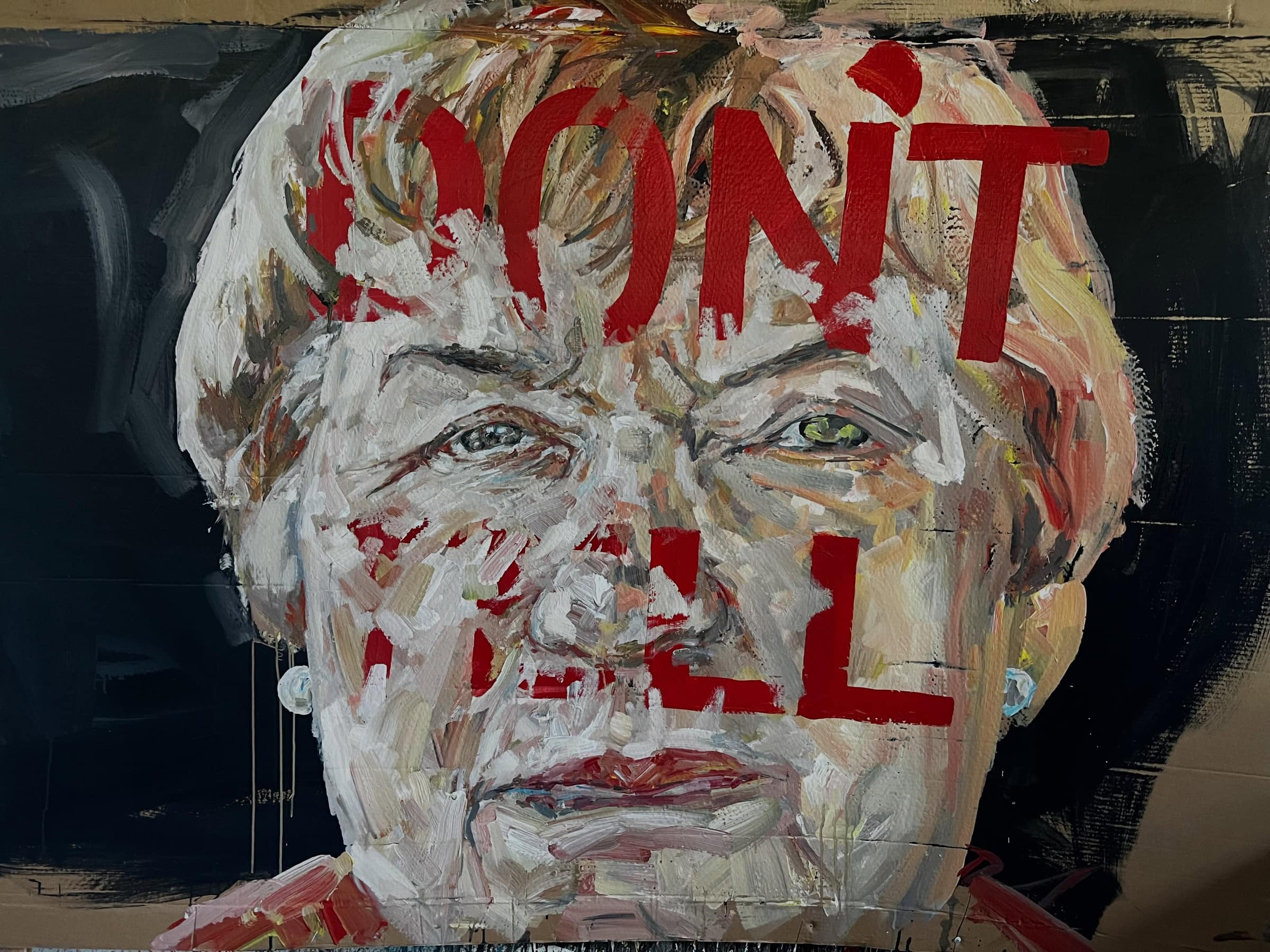
Some of the work takes on social and political subjects, and he'd rather put those on his own face than someone else's. "If I was to put my response onto someone else they may not realise what I am trying to say. This is me, this is my feelings, so why would I place them on the image of others?"
And he thinks the Rembrandt is part of it, subconsciously. "I feel that is another reason why I revisit the self."
Self as Hamlet
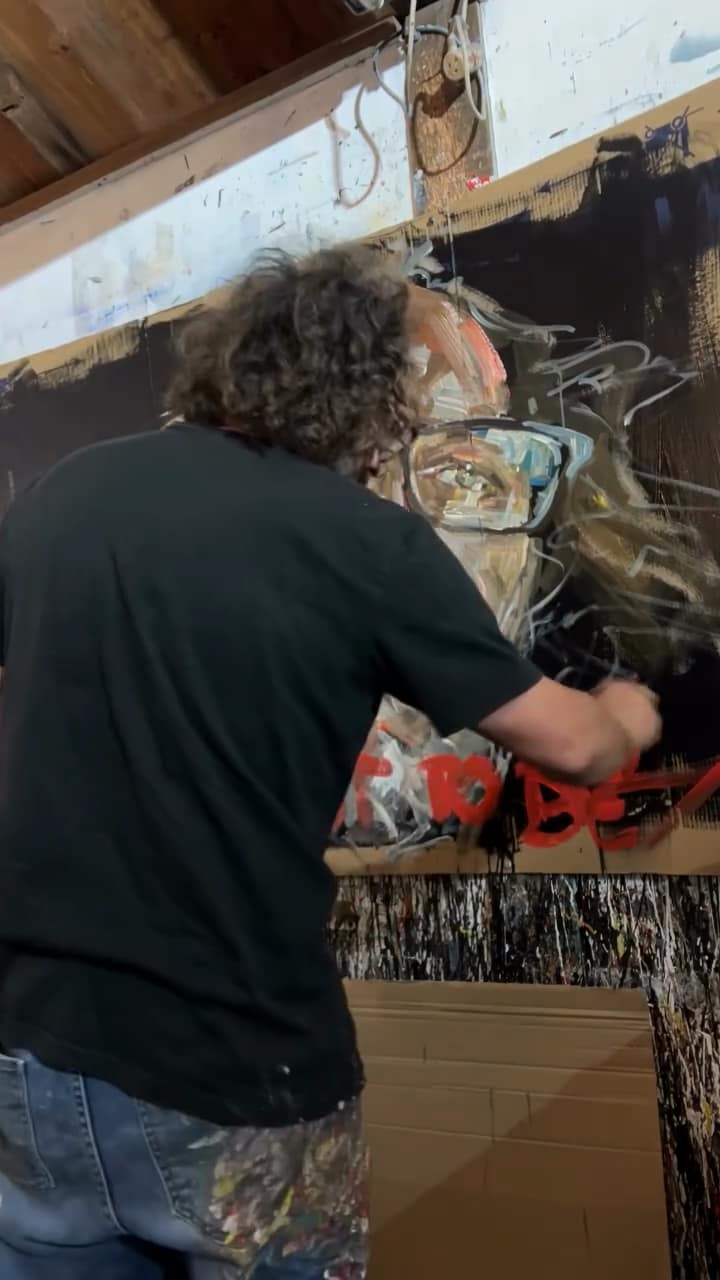
The self-portrait at the top of this story is Self as Hamlet, painted on cardboard over a black ground. At one point it pulled him back out to the studio. He was in the house watching TV, he wrote on Instagram, "and this painting called me back."
In a video he posted, he paints the words NOT MENT TO BE across the bottom in red, with HAMLET in the corner.
Prizes
He's honest about what prizes are for. "Art prizes are great exposure and without these I believe I wouldn't be able to be the full time artist that I am. I will keep entering them for this reason."
He tells his students not to read too much into the results.
“Getting into an art competition doesn't make the work any better and doesn't make it any less if you don't.”
The Cancer Series
Dan has painted cancer more than once. The first series came after friends and relatives were diagnosed. "It was a way of me dealing with it all," he says.
The second followed a young boy's life, from his birth to his coffin. He died of brain cancer, and the series was made "to make noise about the brain cancer in children."
Something else came out of it, he says, as it has with other hard subjects he's painted. "By having the paintings there, people were able to talk and share their experiences and grievances. It was giving people permission to talk about the topic."
Kyneton
"Kyneton is a beautiful part of the world," he says. His current exhibition, Landscapes by the Painter, is at the Campaspe Mill Gallery, and ninety percent of the landscapes in it are local.
The town is changing, and that's in the work too. "Kyneton has changed from when I grew up here and is still changing, but that is life, and this idea has also been finding its way into my work."
No palette
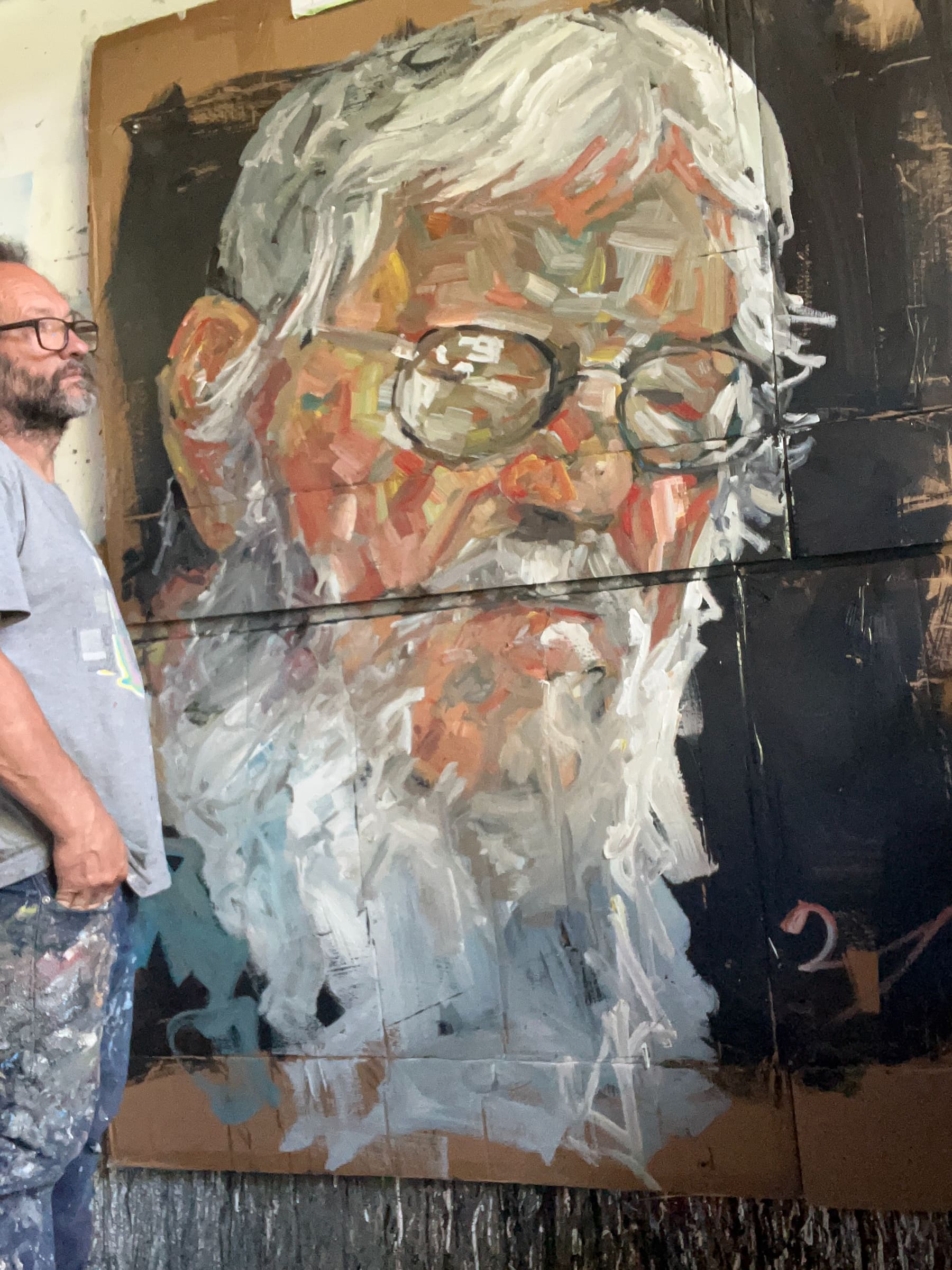
Dan teaches and paints live, and the first thing people notice is how fast he goes. "I paint with emotion and try to harness that emotion while I have it, then to vomit it on the cardboard," he says.
The second is that he doesn't use a palette. "I mix straight on the painting."
The ones that matter most
"I always say my best work is always my last, but that is different to what means the most to me," he says. The paintings that mean the most are three small oils: one of his wife, one of his son and one of his daughter.
Be yourself
More than 90,000 people follow his work online. His advice is short: "Be yourself, and people want to see honesty."
And to anyone who thinks they're not a creative person:
“There is no such person.”
"Creativity can be decision making, it can be kicking a football, it can be in the garden or making a meal," he says. "People may choose to suppress it but it is there."
See more of Dan's work at danielbutterworth.com and on Instagram at @dan_butterworth_artist.
Related
He drew Victoria's most stolen car 1,000 times
Three and a half years teaching art in youth justice, then a thousand Holden Commodores in six textas.
The Painter Who Started Painting to Heal
Painting as therapy, and as something to leave behind.
Why a Melbourne painter can't stop painting cartoons
Bright, loud, airbrushed cartoons, and the seven-year-old world underneath them.
10 artists known for one animal
A rooster, a cat, a koala, a frog. Ten artists who found one creature and kept going back.