Why Rhys Viorr hung his paintings in a ruin
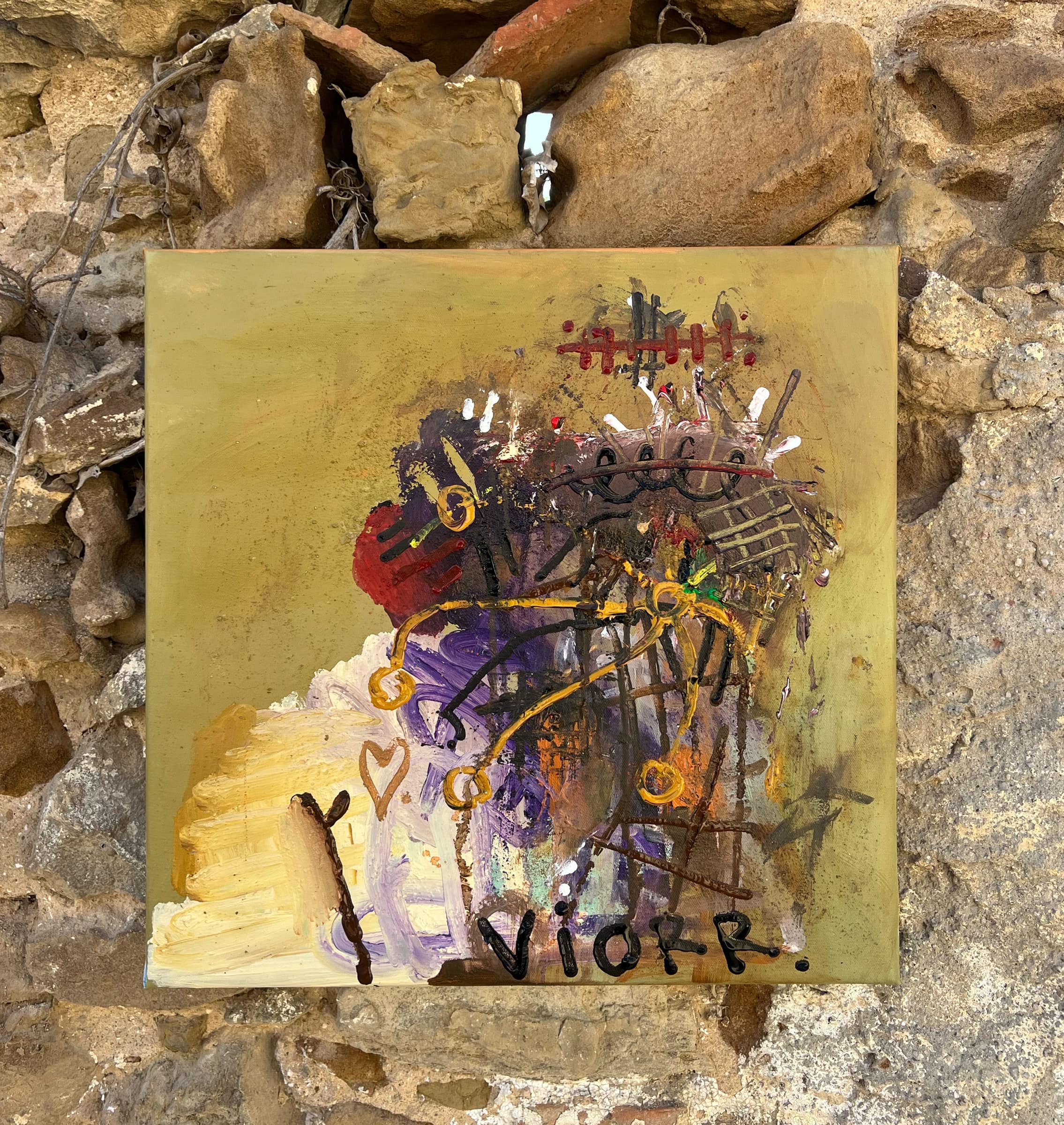
In the middle of a Portuguese summer, Rhys Viorr couldn't buy art supplies, so he painted on tiles he found by the side of the road. Then he showed the work in a ruin. We caught up with him after the residency, days out from his next show in Brisbane.
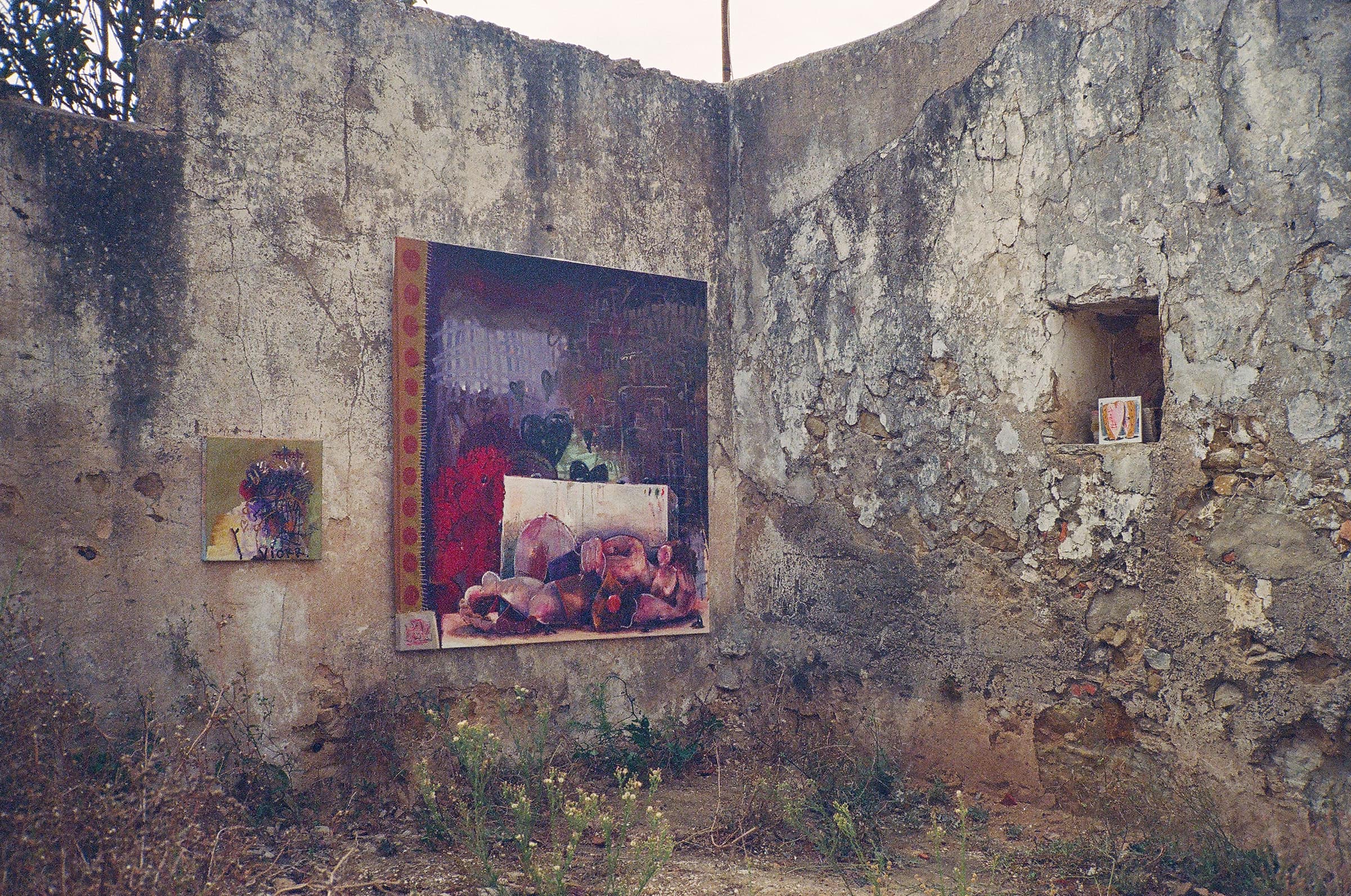
The last time Rhys Viorr was on Ordinary Giants, we filmed him in his studio, ripping up paper and painting with an endless energy that came out of a hard year. Since then, he has changed his name, spent a summer at a residency in Portugal, and shown the work he made there somewhere most artists wouldn't: inside a ruin.
He answered our questions by email. Here's the residency, in his words.
Three names
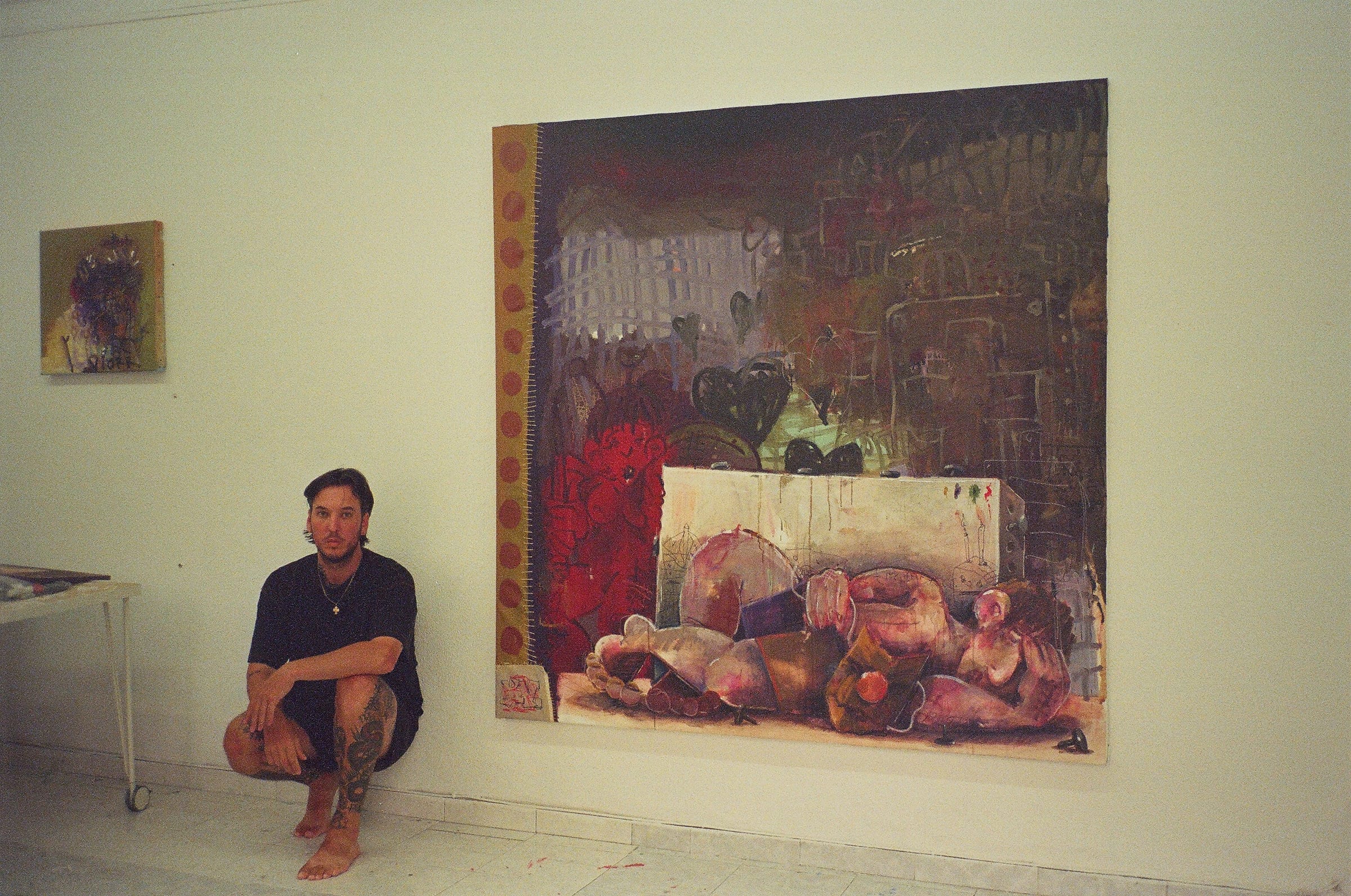
He has been John Kaye, then Rhys John Kaye, and now Rhys Viorr. John Kaye came from his dad's name. "I originally borrowed it to use as an alias when I was a teenager getting into painting and it stuck," he says.
That habit comes from graffiti. "I grew up doing graffiti in the early 2000s, and it was normal to make up a name/tag as a way to sign what you did." Over the years he has used different names for different projects, "to remain somewhat anonymous and to separate different bodies of work."
Viorr was always the plan. "It just took a while to close those other chapters and feel ready to use it publicly."
What graffiti left behind
Graffiti still runs through the work, he says, "in subtle ways." He has kept what was useful and dropped the rest. "The energy, dedication, resourcefulness and persistence that exist within graffiti are all things I still think about when I'm making art."
Portugal, second time around
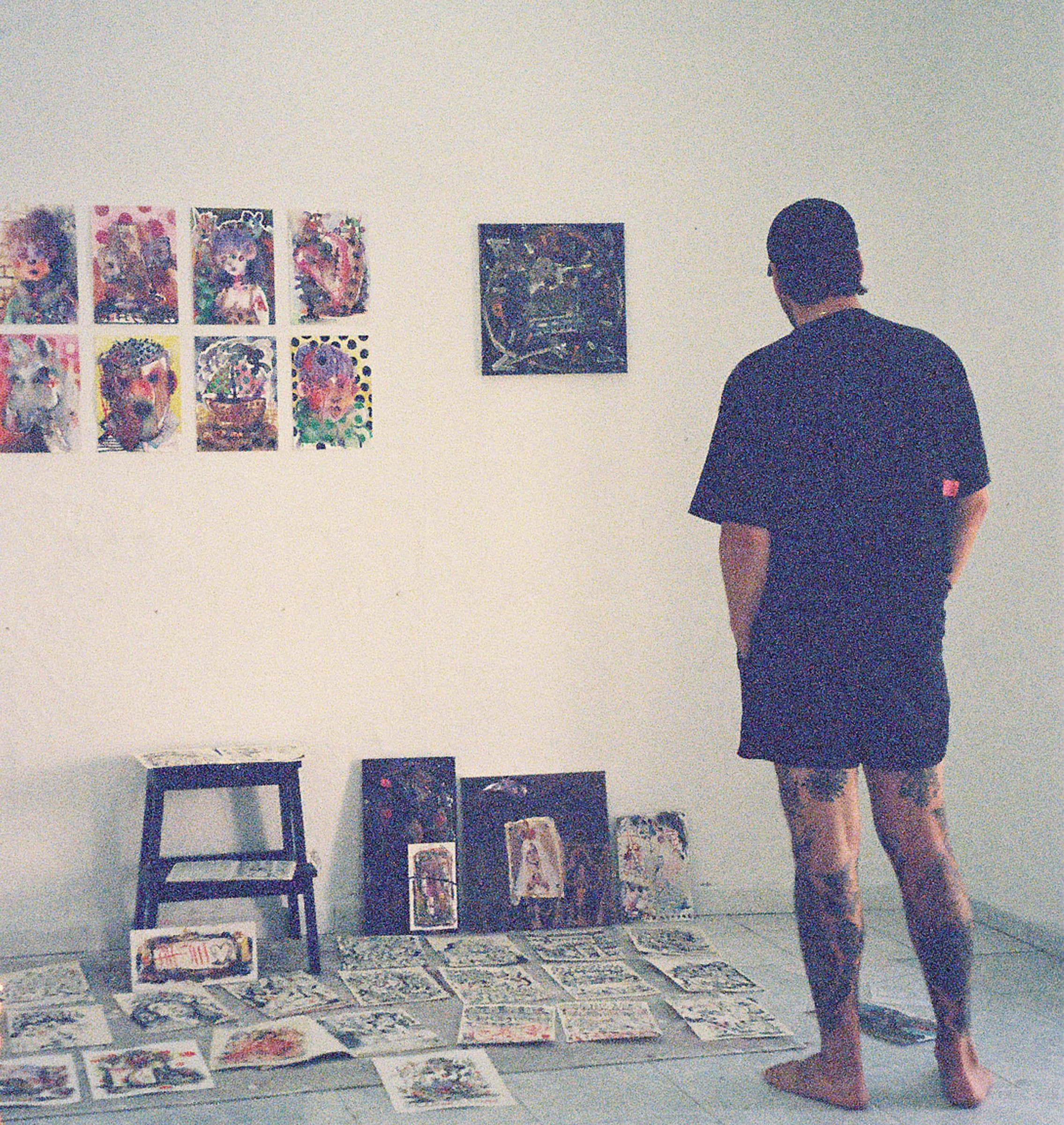
A few years ago, Rhys was asked to take part in a residency and exhibition in Lisbon, and couldn't make it. "It stuck in my mind though and it was something I wanted to do," he says. When the time was right, he reached out again. A gallery had closed and plans moved around, but a residency came together near Ericeira, on the coast. "It went really well."
Being there changed the work, the way places always do for him. "All these experiences seem to soak into the work gradually," he says. "I'm always responding to the world around me through my work so it's inevitable that they creep in some way or another."
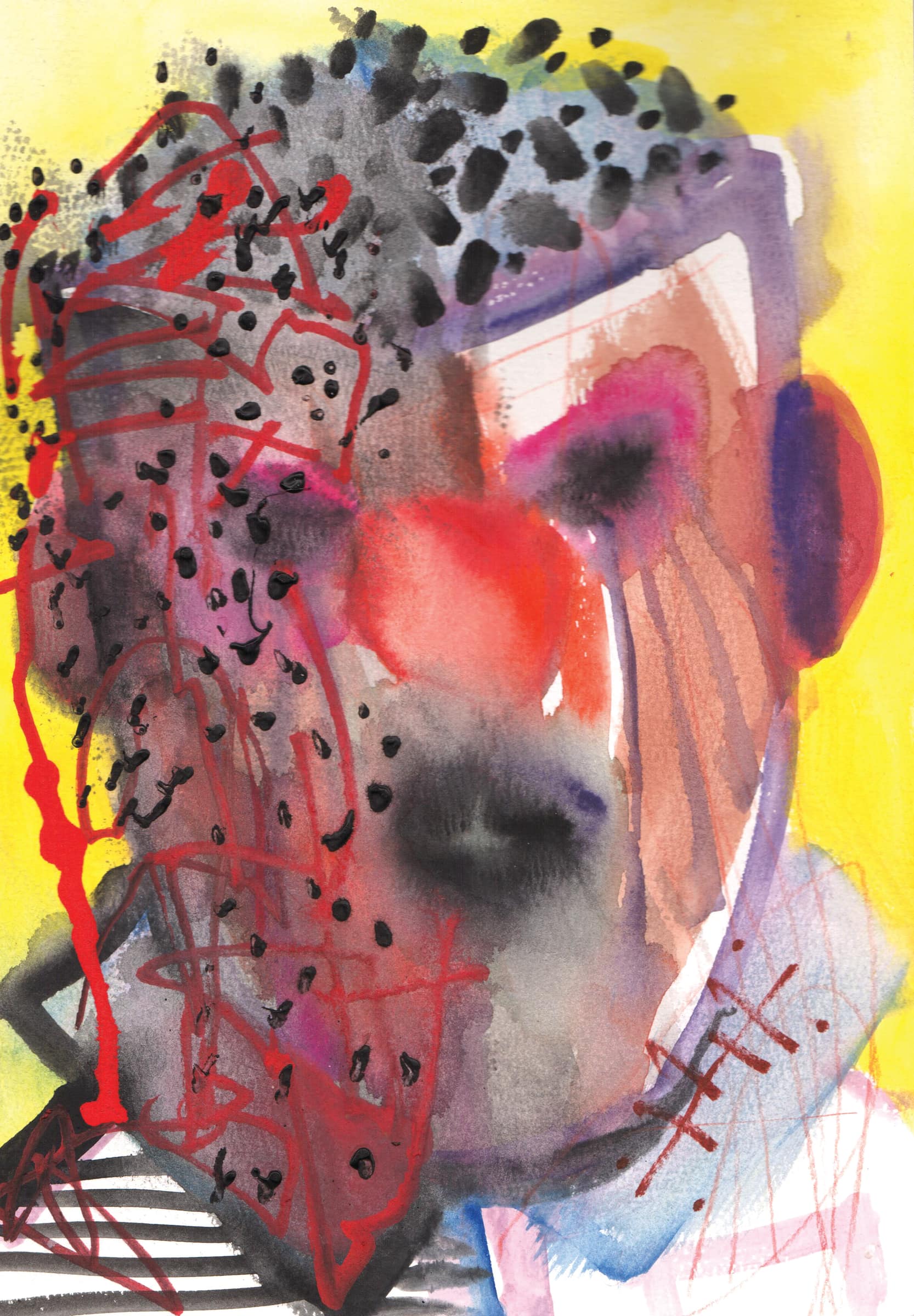
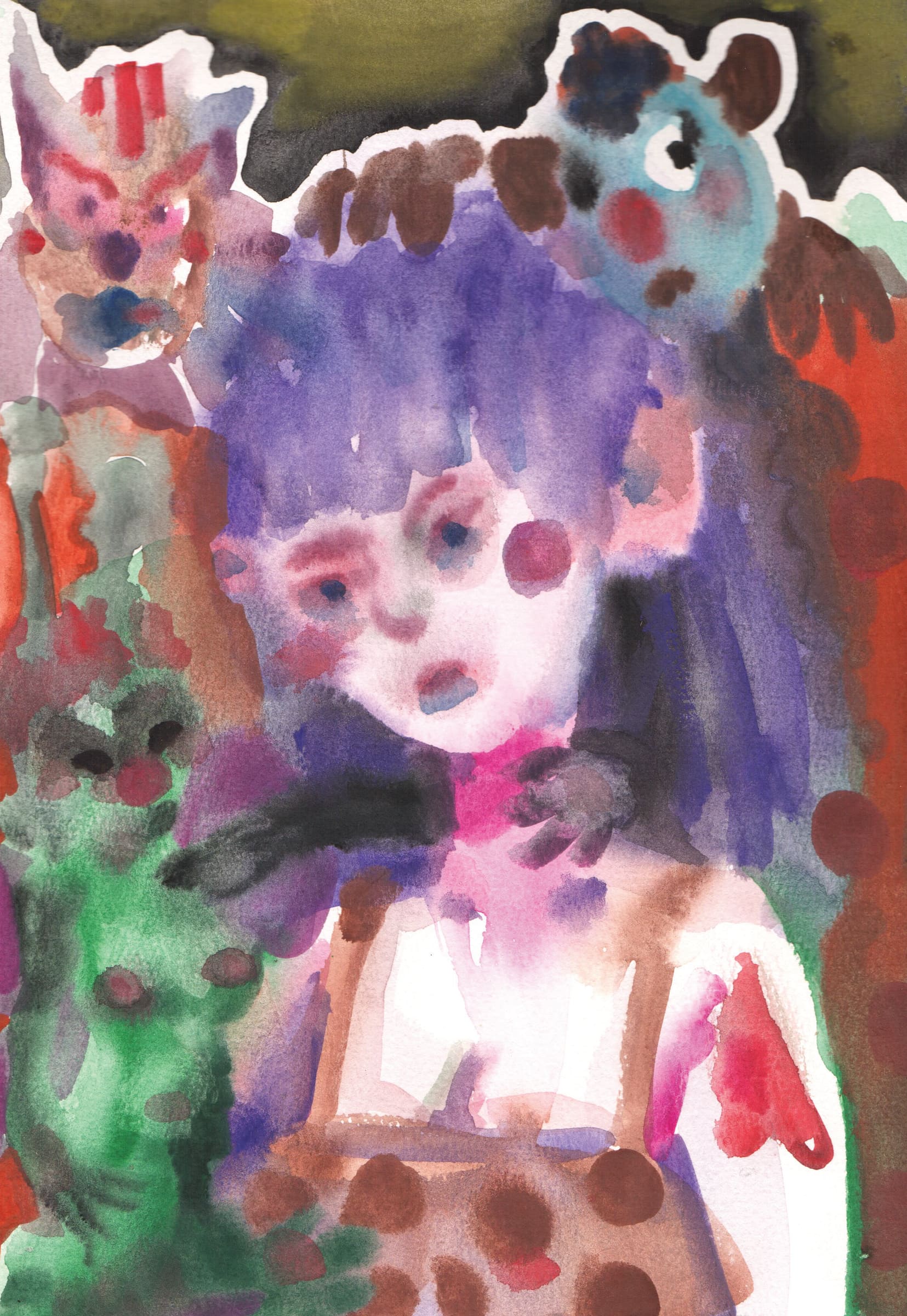
Tiles from the side of the road
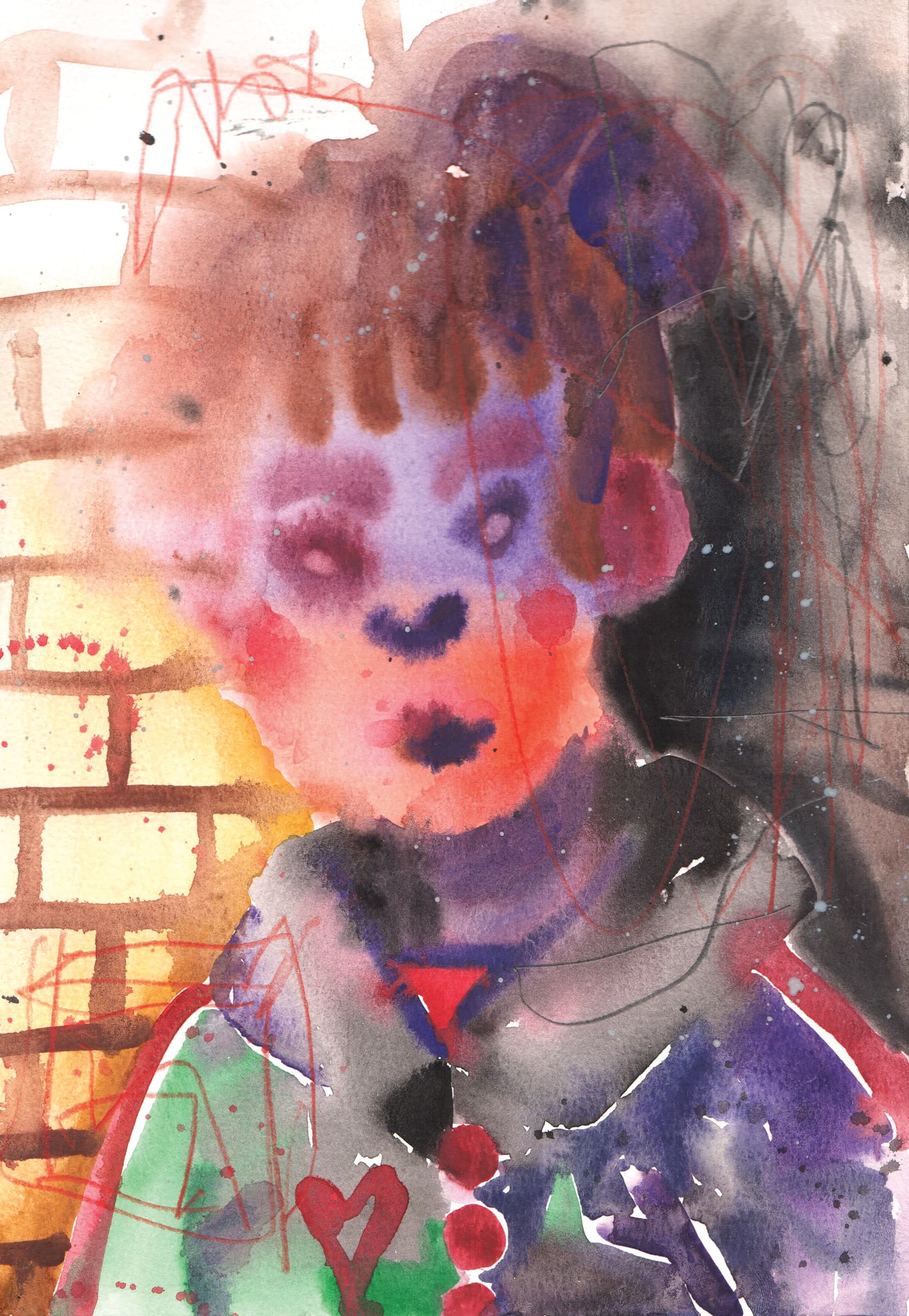
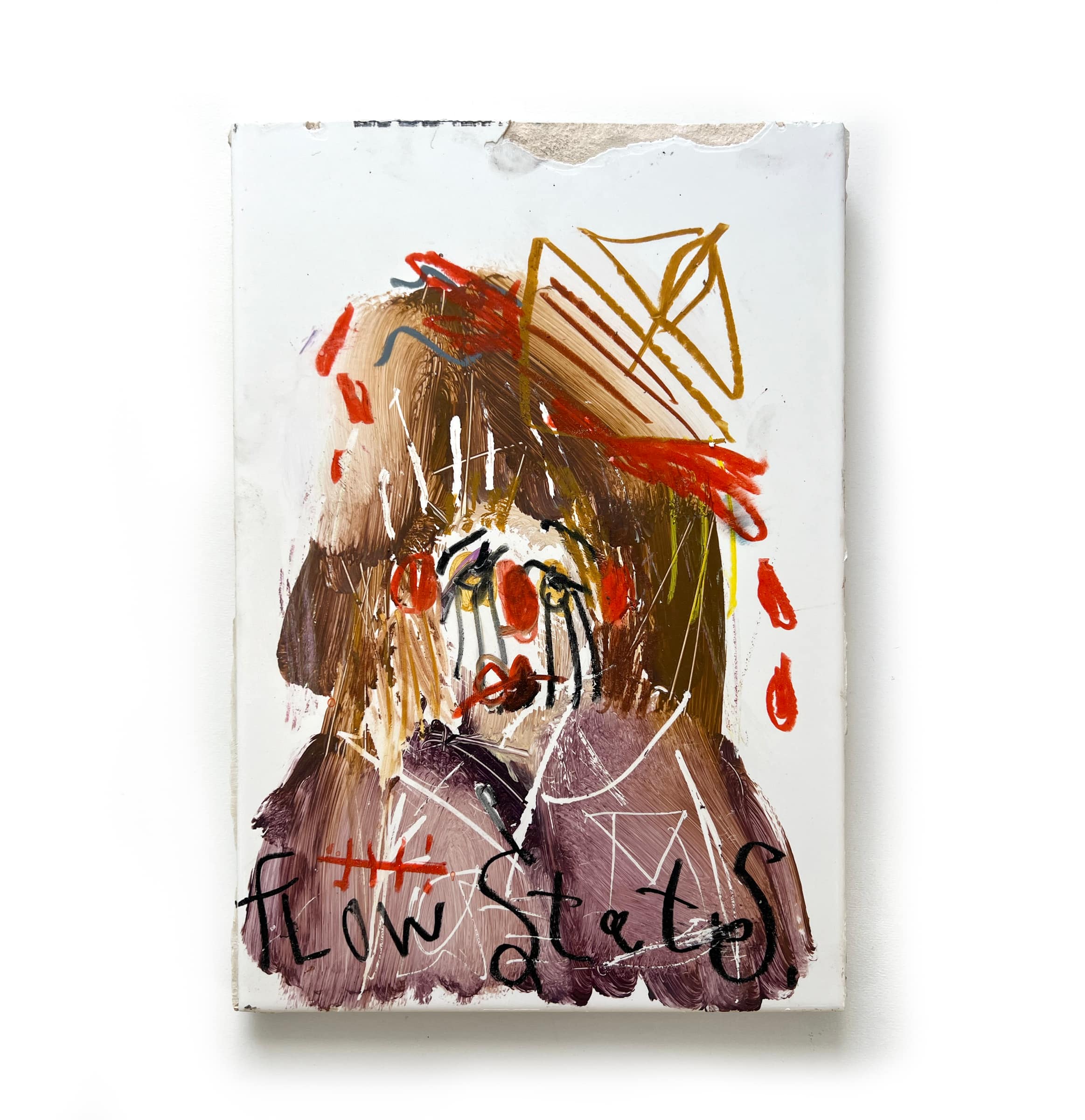
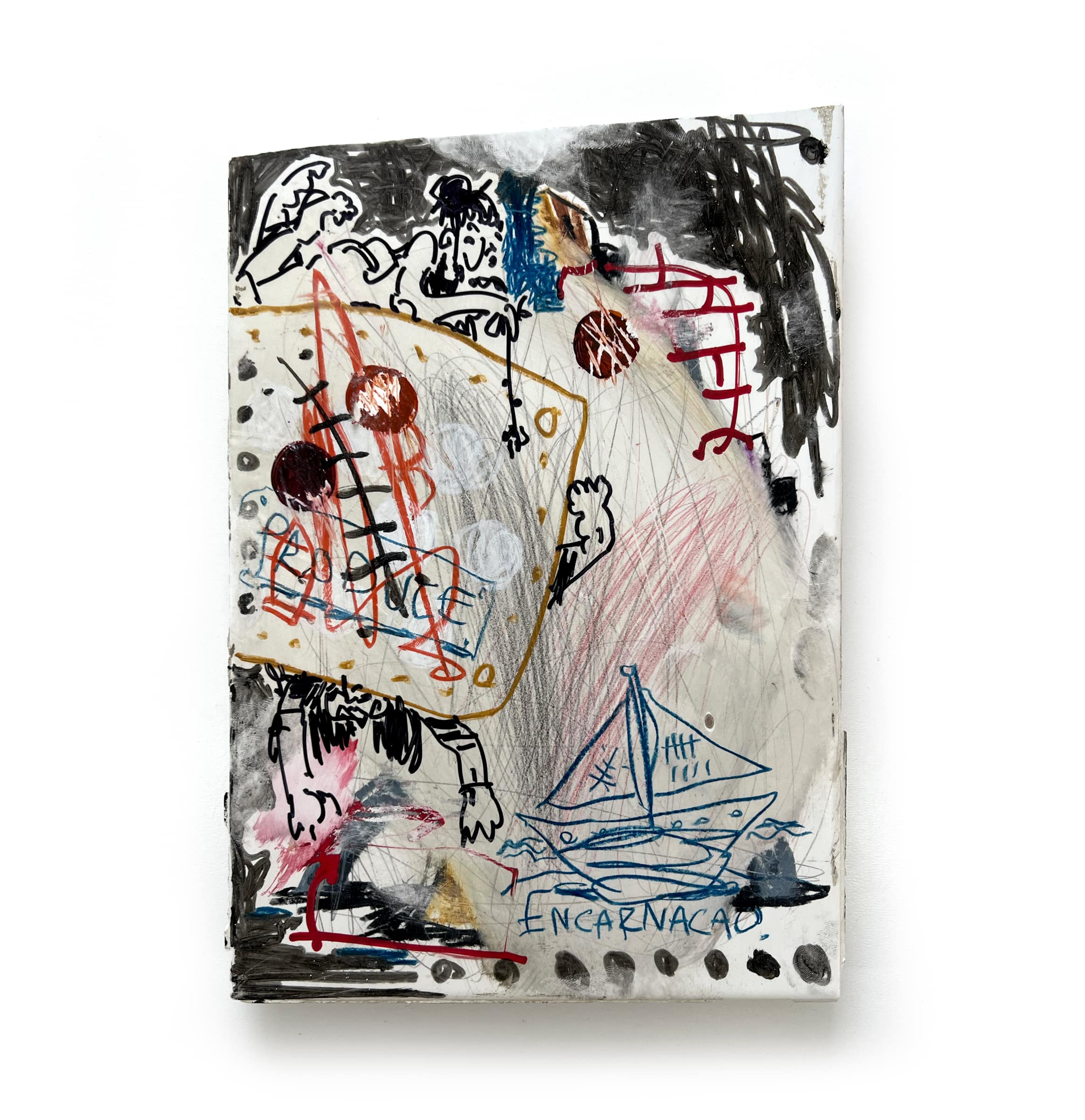
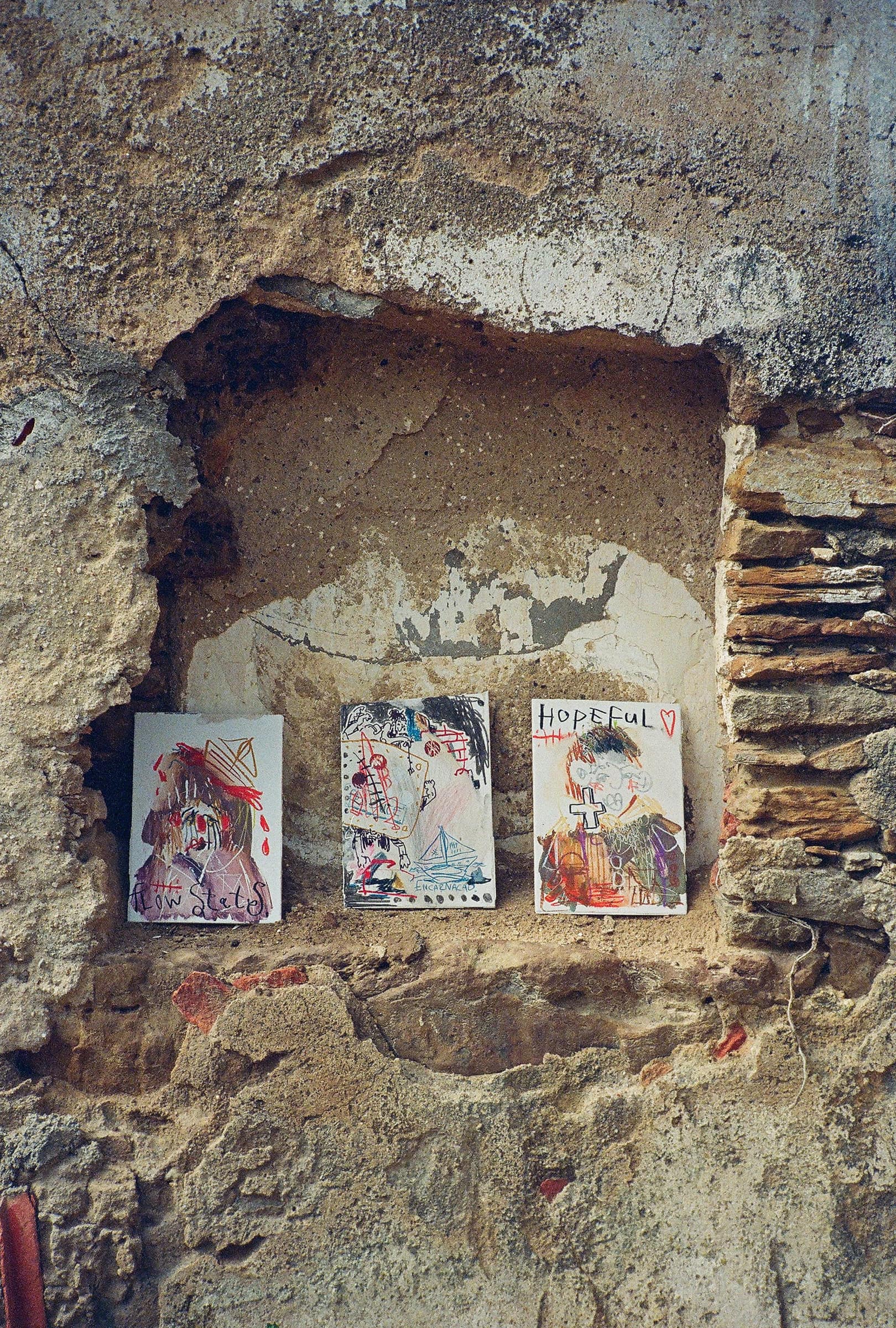
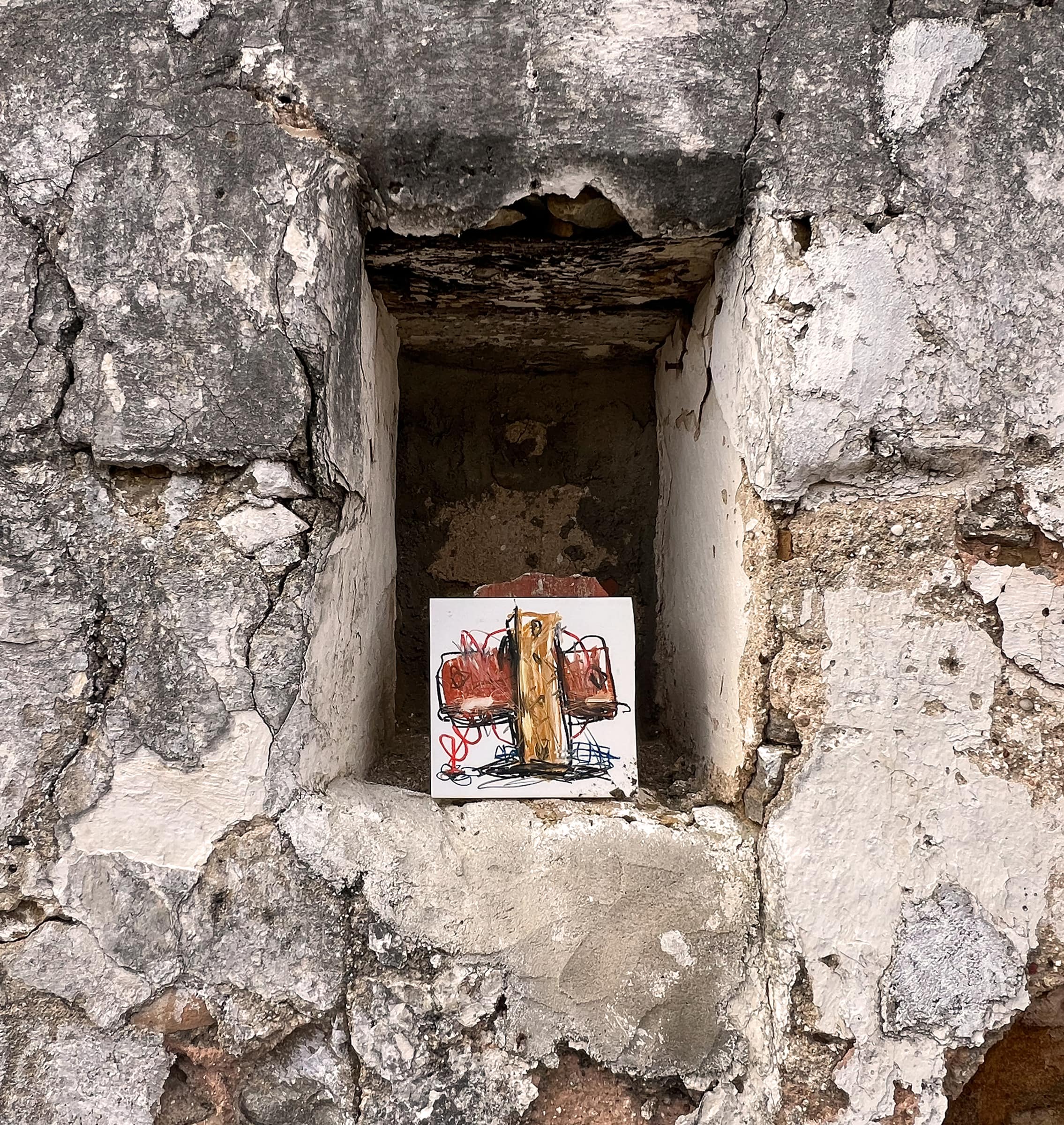
A lot of the Portugal work is painted on tiles. Partly, that's Portugal: he was inspired by what he was seeing, and the country is covered in painted tiles. But it was also necessity. He was somewhere remote, in the middle of the summer break, and couldn't get art supplies.
"I found the tiles on the side of the road near where we were staying and I had oil sticks and paint with me already," he says, "so it was partly through necessity and it felt like it made sense."
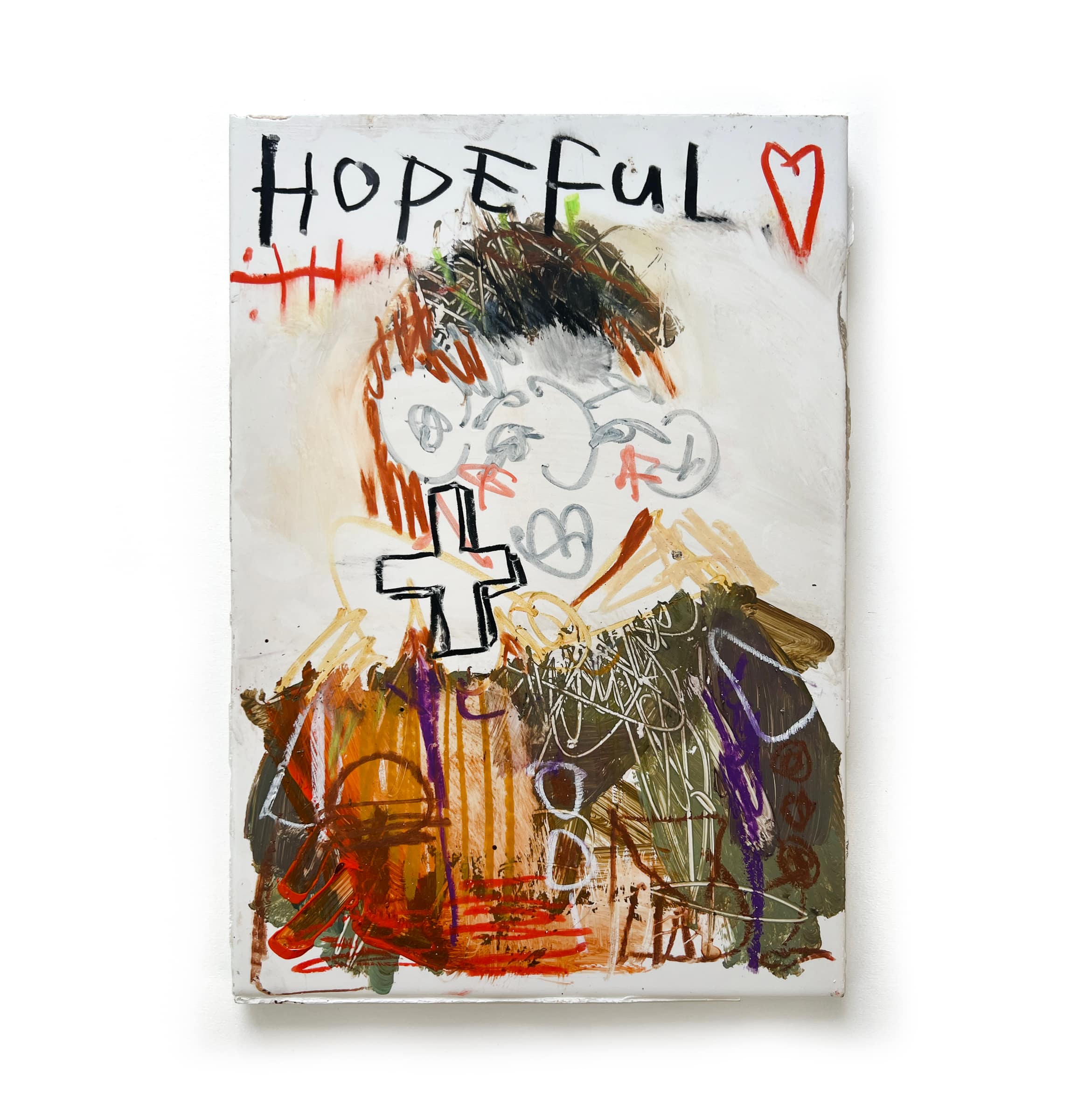
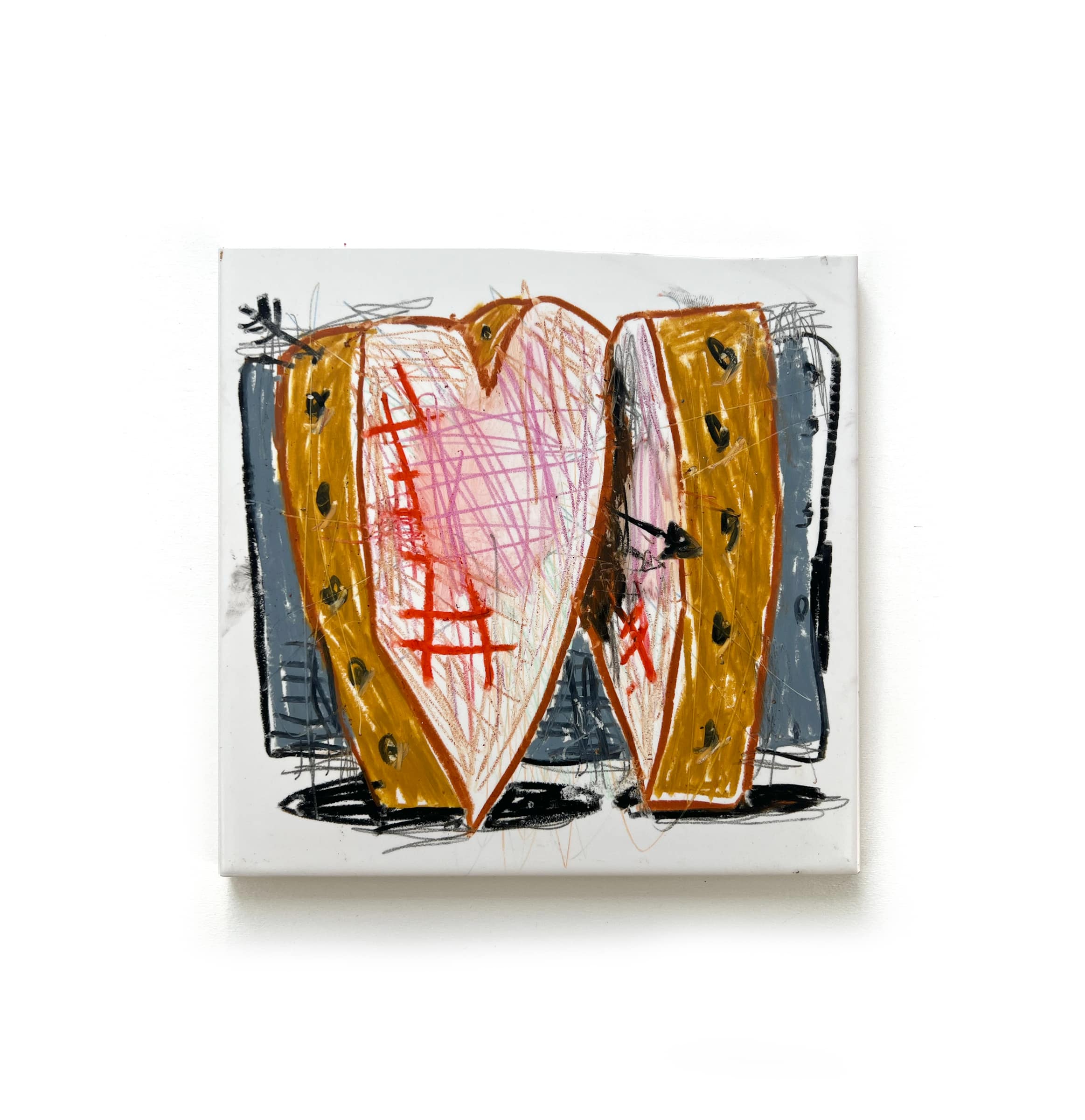
Fragility, growth and time
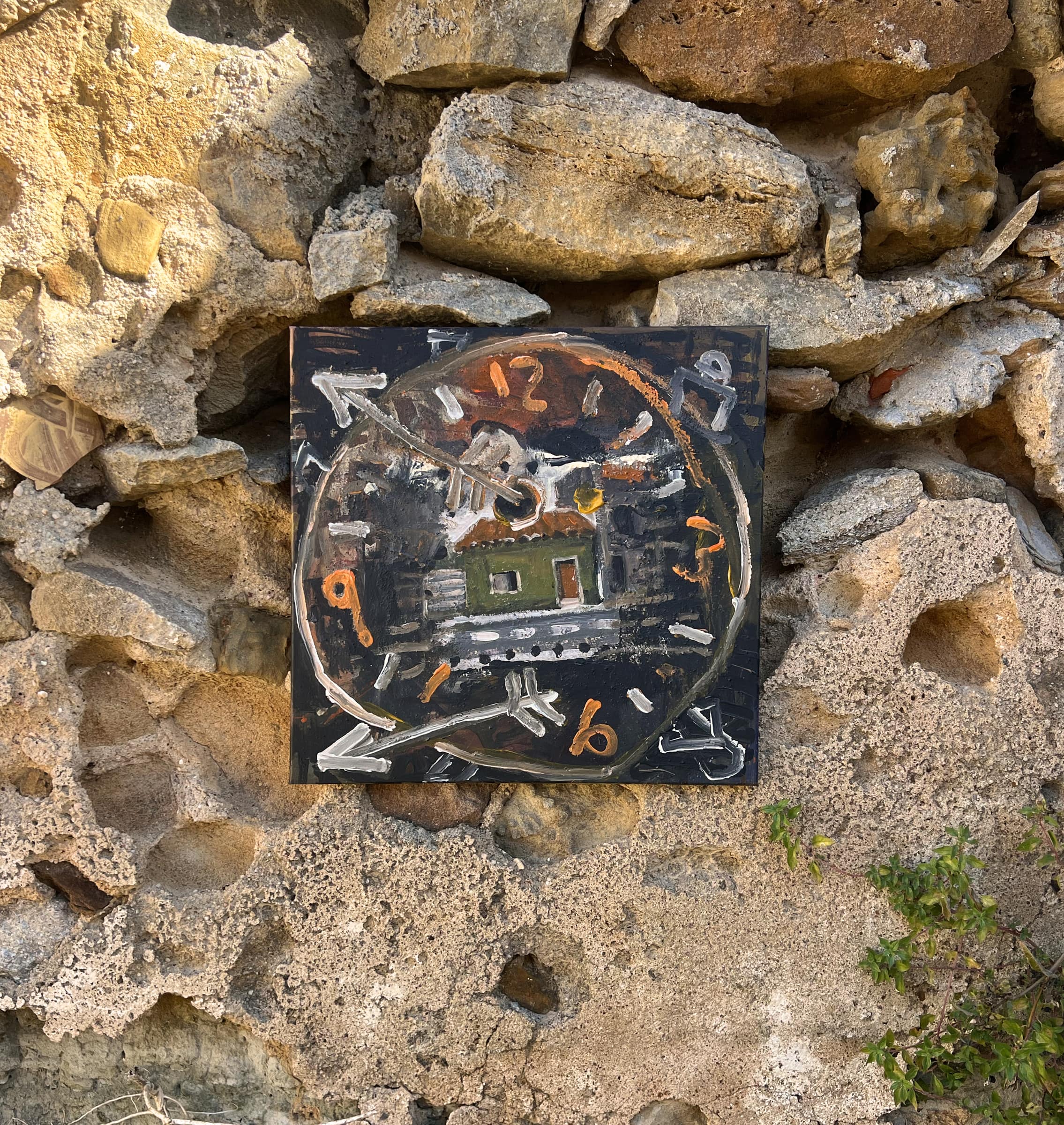
Clocks and tally marks keep turning up in the work. Rhys has painted memento mori before, and time is still the thread. "Mortality and presence are constants in my work," he says.
This body of work narrows in on something specific: "fragility, growth and the effects of time, particularly the tension between our capacity for spiritual or mental growth and our increasing physical vulnerability."
Devotion
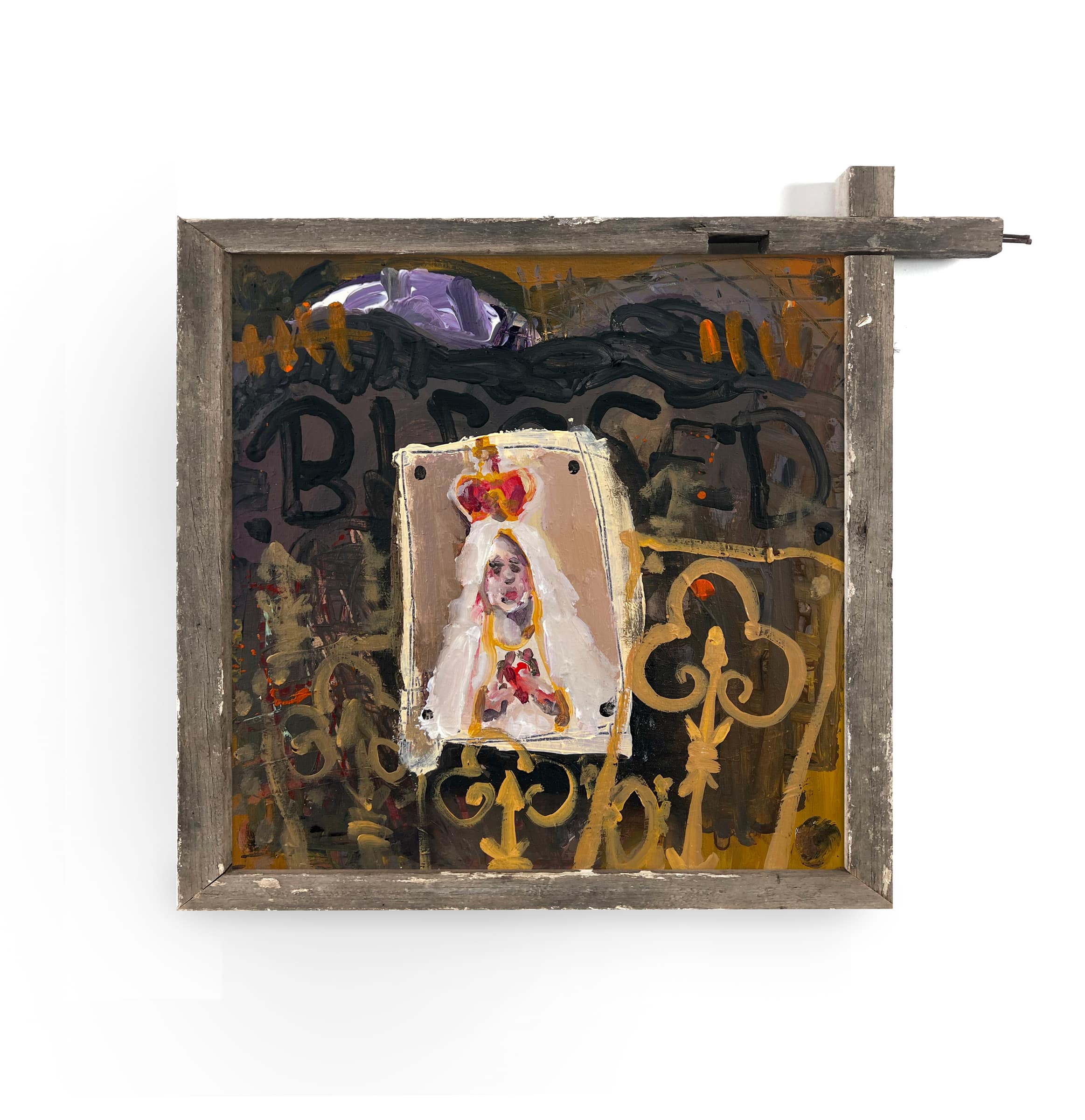
One piece has "Blessed" written across it, around a small crowned figure. Portugal's religious imagery made its way in, he says, but that isn't really what he's after.
“I'm less interested in specific religious imagery than in the human capacity for devotion and belief.”
What interests him is what that imagery shows "about human nature and the things people choose to give themselves to."
A ruin, not a white wall
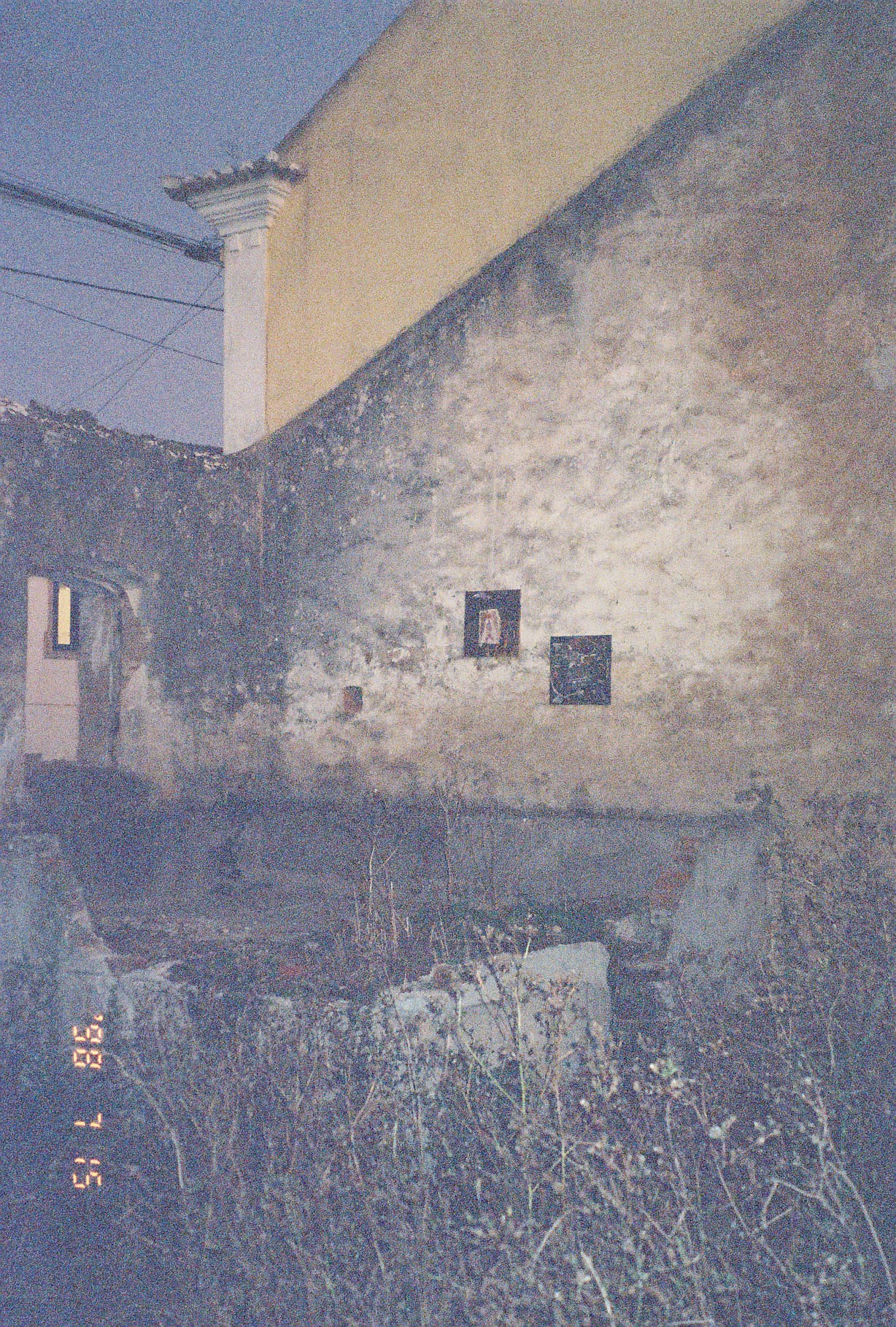
When it came to showing the work, Rhys skipped the gallery. "The ruins seemed like the perfect fit for this work," he says. "The space holds such a strong sense of fragility and history, which created a much more powerful context for the work than a white wall could."
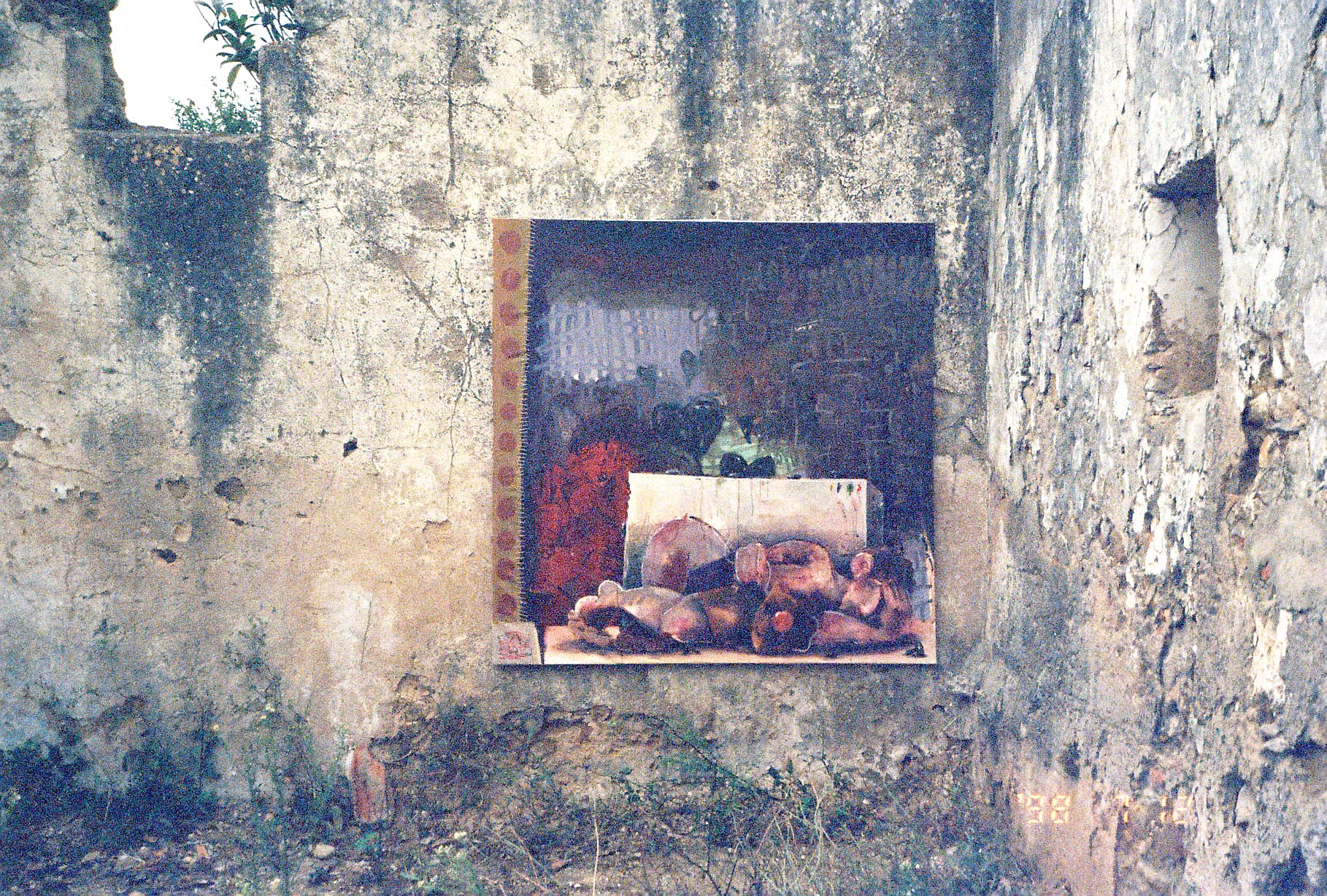
He felt the site had its own sense of time. "The site felt as though it held multiple layers of time," he says. "You could see the effects of age and change, but there was also a sense of what had existed there before."
“The past felt present in the space.”
Beyond the moment
Rhys has made film himself, with Signs Of Life, and he thinks documenting the work matters. It "allows the work to exist beyond the moment and place it was made or shown," he says.
It's never the same as standing in front of it. "It can never fully capture the experience of encountering a work in person, but film can offer context, make the work more accessible and create another way of experiencing it."
Next: Brisbane
Rhys's next show, At Eternity's Gate With Bolt Cutters, is part of Urbania #3 at Woolloongabba Art Gallery, alongside Hollie Cassidy, Jordache Gage and Padoke. It's mostly other work, not the Portugal pieces, so we'll leave that story for another day.
The opening is Saturday 24 October, 3pm to 6pm, at 613 Stanley St, Woolloongabba. Urbania #3 runs from 22 October to 7 November.
See more of Rhys's work at rhysviorr.com and on Instagram at @rhysviorr.
Related
Inside the Epic Studio of an Abstract Artist
A second chance, and the work that came out of it.
He drew Victoria's most stolen car 1,000 times
Three and a half years teaching art in youth justice, then a thousand Holden Commodores in six textas.
Nense Tango paints strays
Chilean muralist Nense Tango left home eight years ago and hasn't stopped moving. The dogs on the walls are strays, and so is the painter.
Why a Melbourne painter can't stop painting cartoons
Bright, loud, airbrushed cartoons, and the seven-year-old world underneath them.